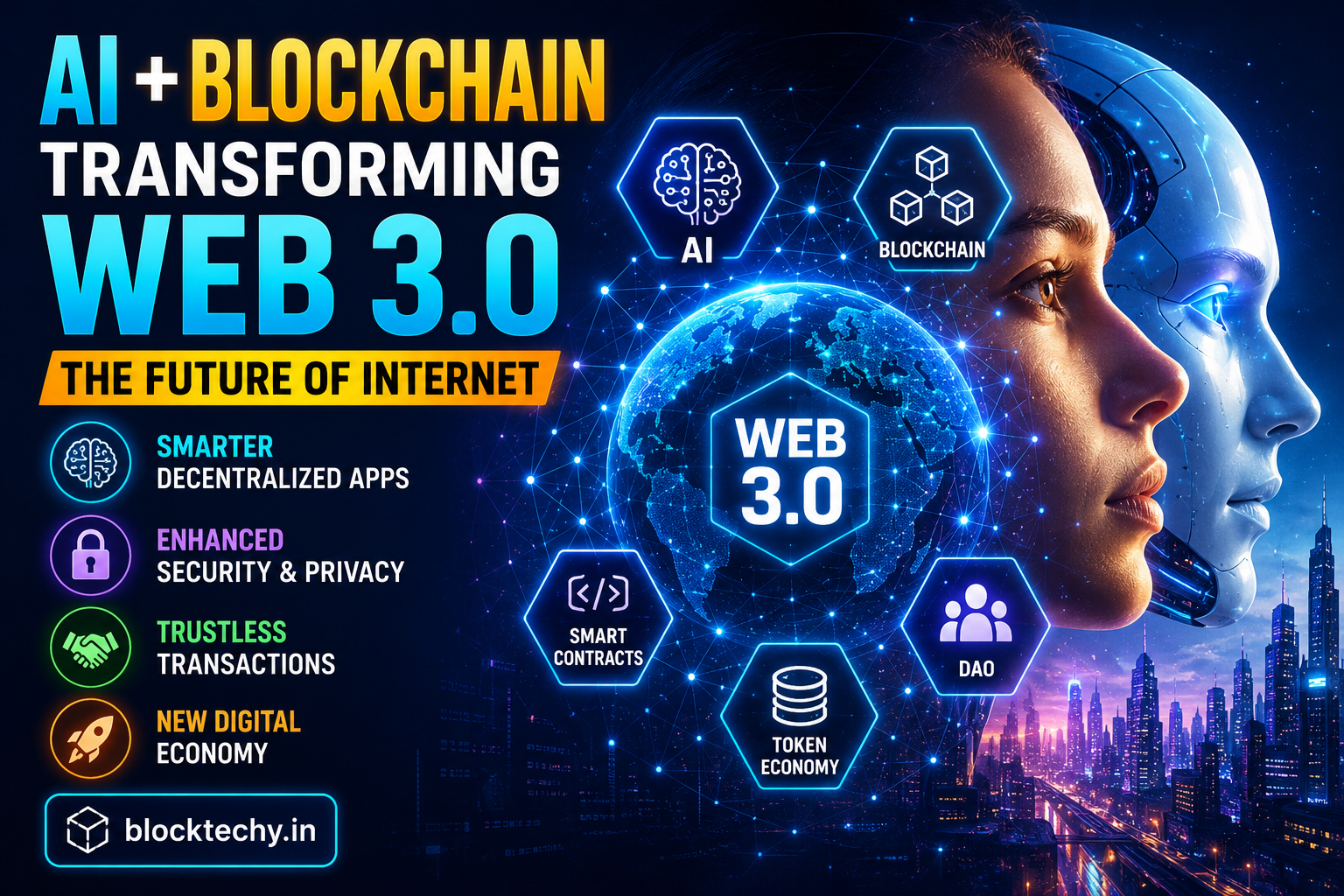
The internet is evolving rapidly, and two revolutionary technologies are driving this transformation: Artificial Intelligence (AI) and Blockchain. Together, they are reshaping the future of the decentralized internet, commonly known as Web3. While blockchain provides transparency, security, and decentralization, AI brings automation, intelligence, and data-driven decision-making. The combination of these technologies is creating a smarter, safer, and more efficient digital ecosystem.
In recent years, businesses, developers, and startups have started integrating AI with blockchain to solve some of the biggest challenges in the digital world. From decentralized finance (DeFi) to smart contracts, supply chain management, digital identity systems, and decentralized applications (dApps), AI and blockchain are unlocking possibilities that were once considered science fiction.
This article explores how AI and blockchain are transforming Web3, their benefits, real-world applications, challenges, and what the future may look like.
Understanding Web3
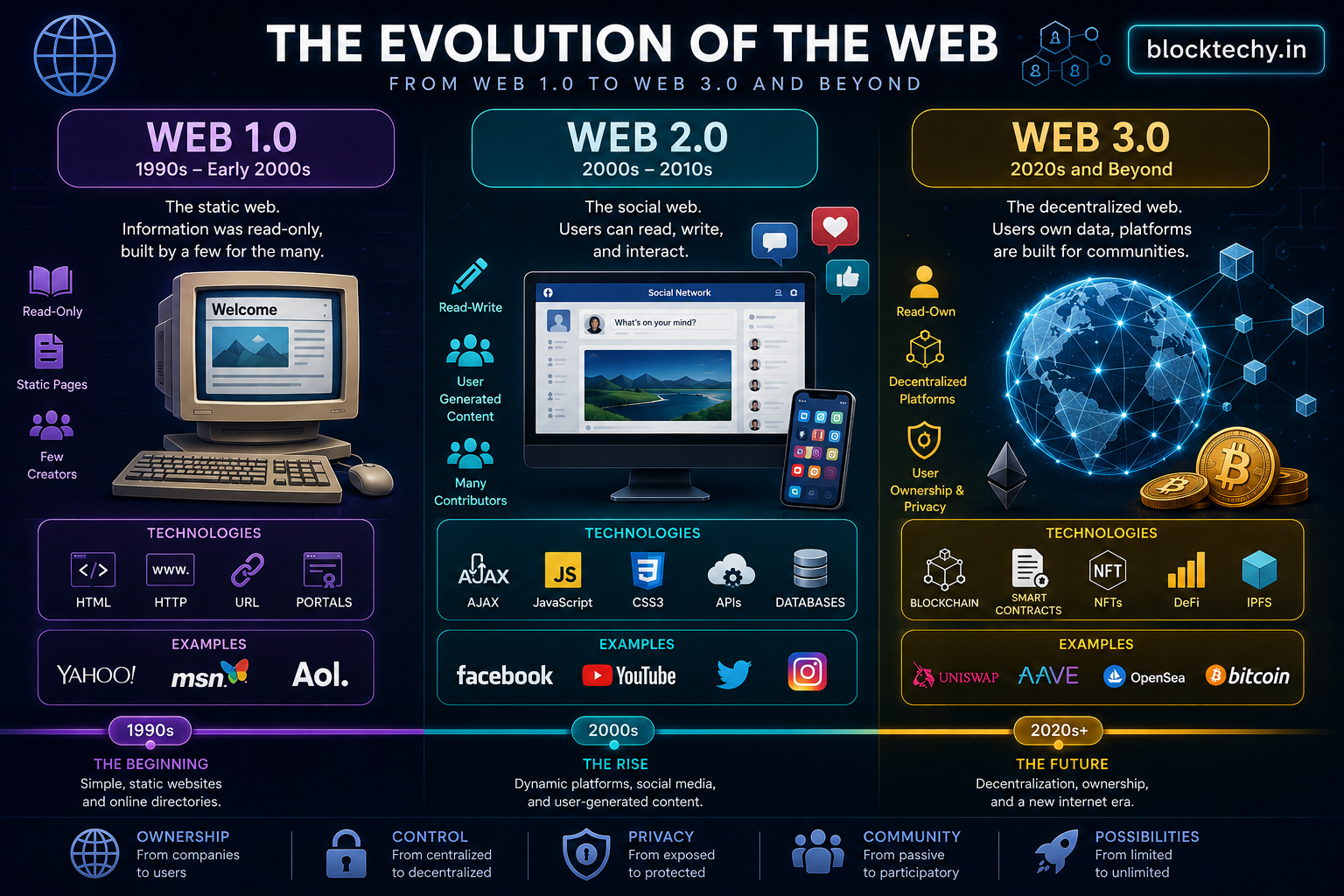
Before understanding the role of AI and blockchain, it is important to understand Web3 itself.
Web3 is the next generation of the internet built on blockchain technology. Unlike Web2 platforms, where large corporations control user data and online services, Web3 aims to create a decentralized internet where users own their data, digital assets, and identities.
Key features of Web3 include:
- Decentralization
- User ownership
- Transparency
- Security
- Token-based economies
- Smart contracts
- Peer-to-peer interactions
Blockchain acts as the foundation of Web3 by storing data in decentralized networks instead of centralized servers.
What is Blockchain Technology?
Blockchain is a decentralized digital ledger that records transactions across multiple computers. Once data is stored on the blockchain, it becomes extremely difficult to alter or manipulate.
Some major benefits of blockchain include:
- High security
- Transparency
- Immutability
- Decentralization
- Trustless transactions
Blockchain technology powers cryptocurrencies like Bitcoin and Ethereum, but its applications now extend far beyond digital currencies.
What is Artificial Intelligence?
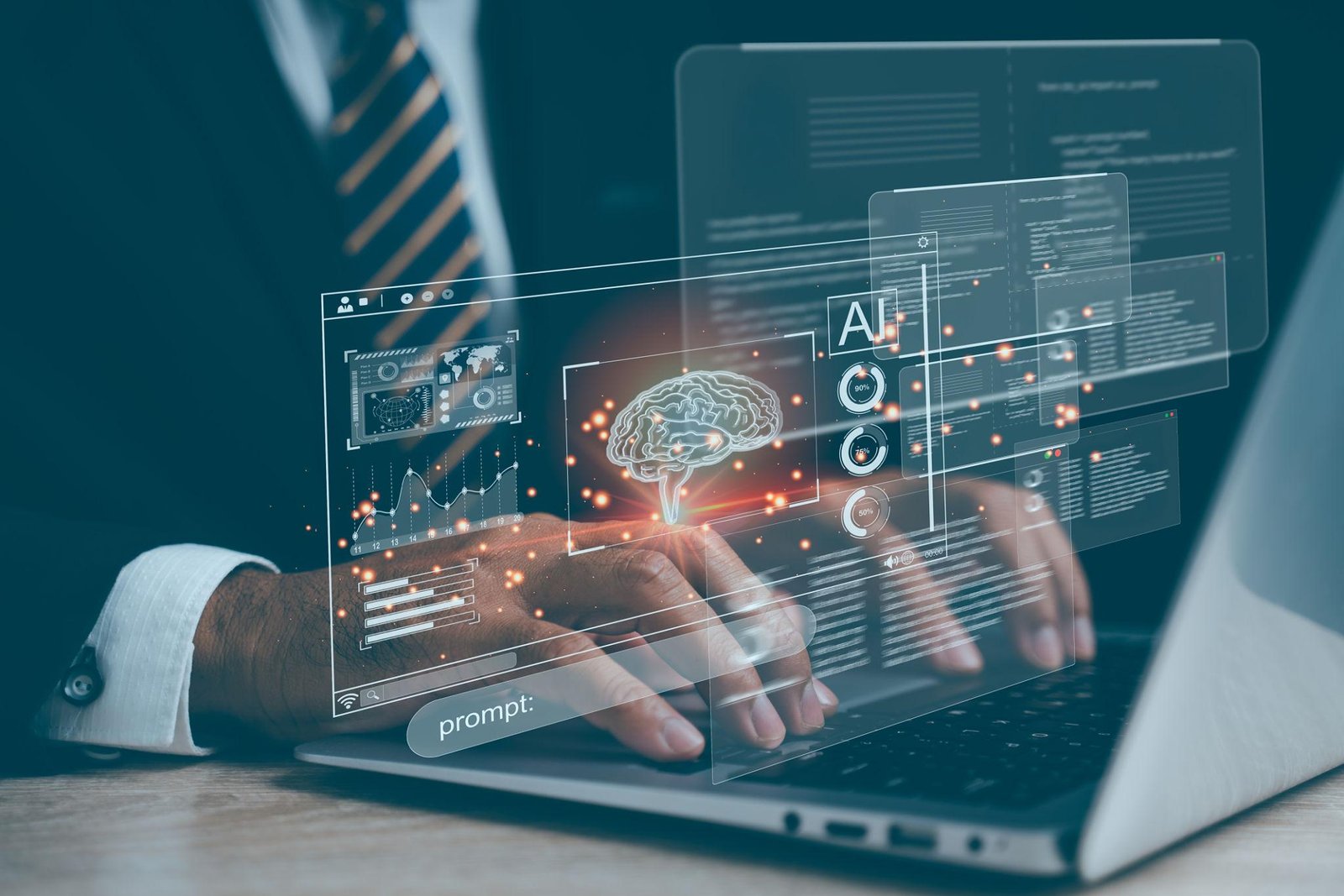
Artificial Intelligence refers to computer systems capable of performing tasks that normally require human intelligence. These tasks include:
- Learning
- Decision-making
- Pattern recognition
- Language understanding
- Problem-solving
- Automation
AI technologies such as machine learning, deep learning, and natural language processing are now widely used in industries like healthcare, finance, cybersecurity, and e-commerce.
When AI combines with blockchain, it creates intelligent decentralized systems capable of automating complex processes securely and transparently.
How AI and Blockchain Work Together
AI and blockchain complement each other perfectly.
Blockchain provides:
- Secure data storage
- Transparency
- Trust
- Decentralization
AI provides:
- Automation
- Intelligence
- Data analysis
- Prediction capabilities
Together, they solve several problems faced by traditional internet systems.
For example:
- Blockchain ensures AI data is trustworthy.
- AI improves blockchain efficiency and scalability.
- AI-powered smart contracts can automate complex decisions.
- Blockchain protects AI models from manipulation.
This powerful combination is transforming Web3 into a more intelligent and autonomous ecosystem.
Major Ways AI and Blockchain Are Transforming Web3
1. Smarter Smart Contracts

Smart contracts are self-executing contracts stored on a blockchain. They automatically execute actions when predefined conditions are met.
By integrating AI, smart contracts become smarter and more adaptive. AI can analyze real-time data and make intelligent decisions before executing transactions.
Examples include:
- Automated insurance claims
- AI-driven loan approvals
- Dynamic pricing systems
- Intelligent financial agreements
This reduces human intervention and increases efficiency.
2. Decentralized AI Platforms
Traditional AI systems are usually controlled by large tech companies. This creates concerns about privacy, bias, and data ownership.
Blockchain enables decentralized AI platforms where users maintain control over their data while contributing to AI training models.
Benefits include:
- Better privacy
- Reduced monopoly control
- Transparent AI models
- Fair compensation for data contributors
Decentralized AI marketplaces are becoming an important part of the Web3 ecosystem.
3. Improved Data Security and Privacy
Data privacy is one of the biggest concerns in today’s digital world.
AI systems require massive amounts of data to function effectively. Blockchain helps secure this data through decentralized storage and encryption.
This combination allows:
- Secure sharing of sensitive information
- Protection against cyberattacks
- Tamper-proof AI datasets
- Better identity verification systems
Industries like healthcare and finance benefit significantly from these improvements.
4. AI-Powered DeFi (Decentralized Finance)
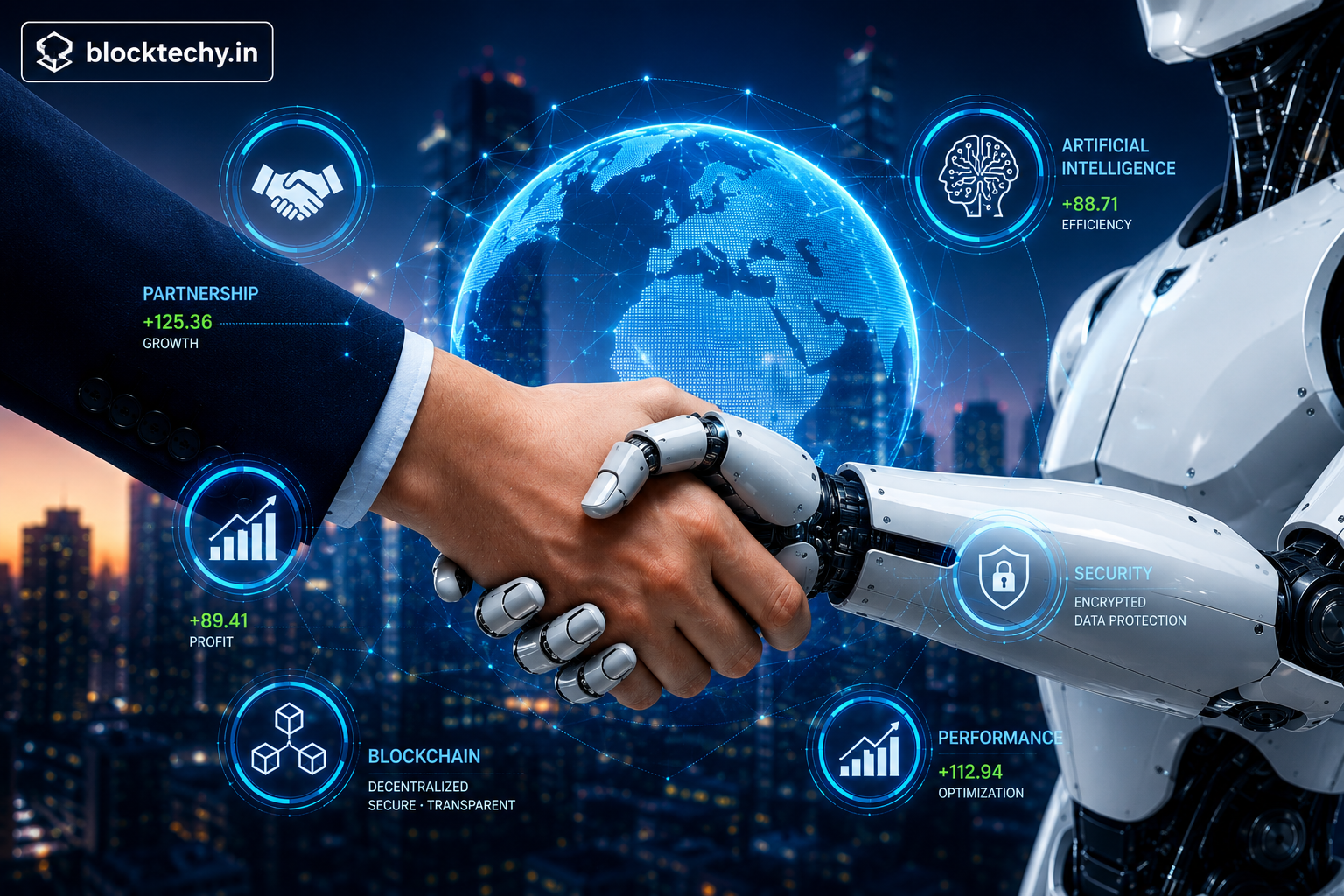
DeFi is one of the fastest-growing sectors in Web3. AI is making DeFi platforms smarter by improving:
- Fraud detection
- Risk assessment
- Automated trading
- Portfolio management
- Market predictions
AI algorithms can analyze market trends and help investors make better decisions.
Meanwhile, blockchain ensures transparency and trust in financial transactions.
5. Enhanced Cybersecurity
Cybersecurity threats are increasing every year. AI and blockchain together provide powerful protection mechanisms.
AI can:
- Detect unusual activities
- Identify hacking attempts
- Predict cyber threats
Blockchain can:
- Secure data records
- Prevent unauthorized access
- Create tamper-proof systems
This combination strengthens Web3 security infrastructure significantly.
6. NFT and Digital Asset Innovation
AI is revolutionizing the NFT market by generating unique digital art, music, videos, and collectibles.
Blockchain ensures:
- Ownership verification
- Scarcity
- Authenticity
AI-generated NFTs are becoming increasingly popular among creators and collectors.
Web3 creators can now monetize digital content more efficiently without relying on centralized platforms.
7. Supply Chain Transparency
Blockchain provides transparent supply chain tracking, while AI improves logistics and demand forecasting.
Together they help businesses:
- Track products in real time
- Reduce fraud
- Optimize delivery systems
- Improve inventory management
Companies can ensure authenticity and improve operational efficiency.
Real-World Applications of AI and Blockchain in Web3
Several industries are already using AI and blockchain technologies together.
Healthcare
- Secure patient data management
- AI-based disease prediction
- Decentralized medical records
Finance
- AI-powered trading systems
- Fraud detection
- Secure cross-border payments
Gaming
- AI-driven game economies
- Blockchain-based ownership of in-game assets
Education
- Credential verification
- Personalized learning systems
Supply Chain
- Real-time shipment tracking
- Smart inventory systems
These applications demonstrate the enormous potential of AI and blockchain integration.
Challenges of Combining AI and Blockchain
Despite the benefits, there are still several challenges.
Scalability Issues
Blockchain networks can become slow when processing large amounts of AI data.
High Energy Consumption
AI training and blockchain mining require significant computing power.
Regulatory Uncertainty
Governments are still developing rules for AI and blockchain technologies.
Data Quality Problems
AI systems are only as good as the data they receive.
Technical Complexity
Combining AI and blockchain requires advanced technical expertise.
However, ongoing innovation is helping overcome these obstacles.
The Future of AI and Blockchain in Web3
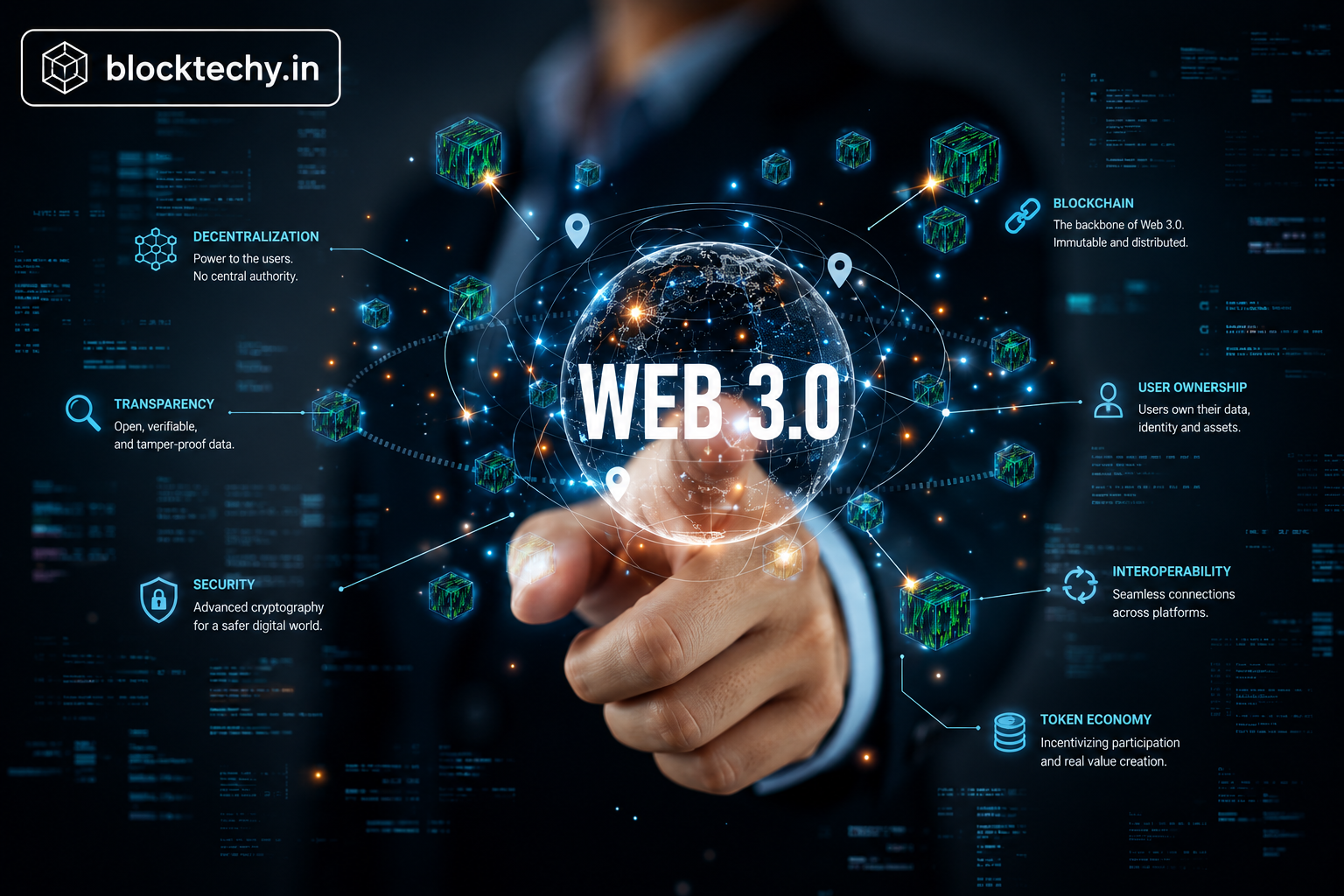
The future of Web3 will likely be driven by intelligent decentralized systems powered by AI and blockchain.
Some future possibilities include:
- Autonomous decentralized organizations (DAOs)
- AI-driven decentralized social media
- Self-learning smart contracts
- Intelligent digital identities
- Decentralized AI assistants
- Fully automated digital economies
As adoption grows, AI and blockchain could fundamentally reshape how people interact online.
Large companies, startups, and governments are already investing heavily in these technologies. The next decade may witness a complete transformation of the internet ecosystem.
Conclusion
AI and blockchain are among the most transformative technologies of the modern era. Individually, they offer incredible capabilities, but together they have the potential to revolutionize Web3 completely.
Blockchain brings trust, transparency, and decentralization, while AI adds intelligence, automation, and predictive capabilities. Their integration is creating smarter decentralized applications, safer digital systems, advanced financial platforms, and innovative digital economies.
Although challenges such as scalability, regulation, and technical complexity still exist, the future looks extremely promising. As Web3 continues to evolve, AI and blockchain will play a central role in shaping the next generation of the internet.
Businesses, developers, investors, and content creators who understand these technologies today will likely become leaders in tomorrow’s digital economy.
The transformation has already begun, and the combination of AI and blockchain may define the future of the internet itself.
Follow this link to join my WhatsApp group: https://chat.whatsapp.com/JvmrMTxkdgt9u6kGMT73XY
Excellent read. The convergence of AI and blockchain is the true catalyst for Web3. While blockchain provides the secure, decentralized infrastructure, AI delivers the intelligence needed to make it scalable and user-friendly. Together, they are shifting us from a passive web to an autonomous, trustless digital economy.
Great breakdown of a powerful synergy. AI and blockchain solve each other’s biggest hurdles—blockchain introduces data integrity and transparency to AI models, while AI optimizes smart contracts and network efficiency. This intersection is where the next generation of digital innovation will happen.
An insightful look into the future. AI brings data-driven intelligence, while blockchain ensures decentralized security and ownership. The combination of these two technologies is fundamentally redefining what Web3 can achieve. Fantastic piece
“Great breakdown! Seeing the actual [mention a feature, e.g., speed test / UI change] in action really helps me decide if it’s worth making the switch.”