Introduction
The financial world is undergoing one of the biggest technological transformations since the invention of the internet. Blockchain technology, initially introduced as the foundation for Bitcoin, has evolved far beyond cryptocurrencies. Today, one of its most promising innovations is Real-World Asset (RWA) Tokenization, a concept that has the potential to reshape global finance by bringing trillions of dollars worth of physical and traditional financial assets onto blockchain networks.
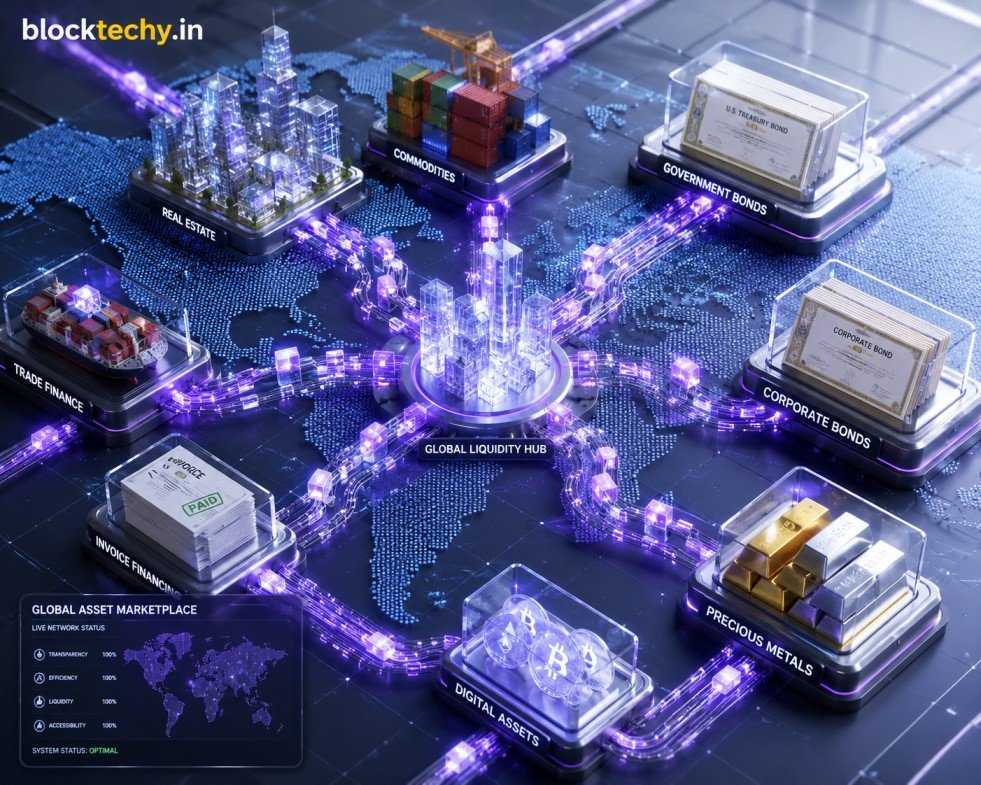
From real estate and gold to government bonds, stocks, invoices, and even artwork, virtually any valuable asset can now be represented digitally using blockchain technology. This process, known as asset tokenization, allows assets to become more accessible, liquid, transparent, and efficient than ever before.
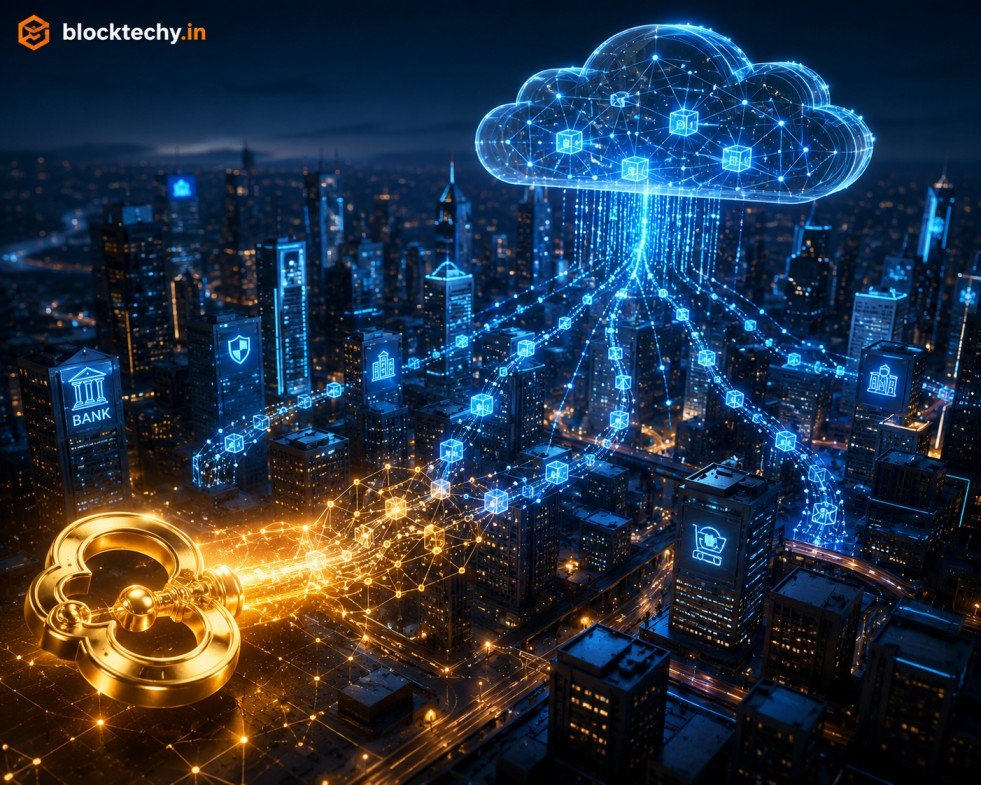
Many financial experts believe that RWA tokenization will become one of the largest sectors in the blockchain industry over the next decade, bridging the gap between traditional finance (TradFi) and decentralized finance (DeFi).
In this article, we’ll explore what RWA tokenization is, how it works, its benefits, challenges, real-world applications, and why it is considered the future of global finance.
What is Real-World Asset (RWA) Tokenization?
Real-World Asset (RWA) tokenization is the process of converting ownership rights of physical or traditional financial assets into digital tokens that exist on a blockchain.
These blockchain-based tokens represent ownership or a share of an underlying asset.
Instead of relying on paper certificates or centralized databases, ownership records are securely stored on decentralized blockchain networks.
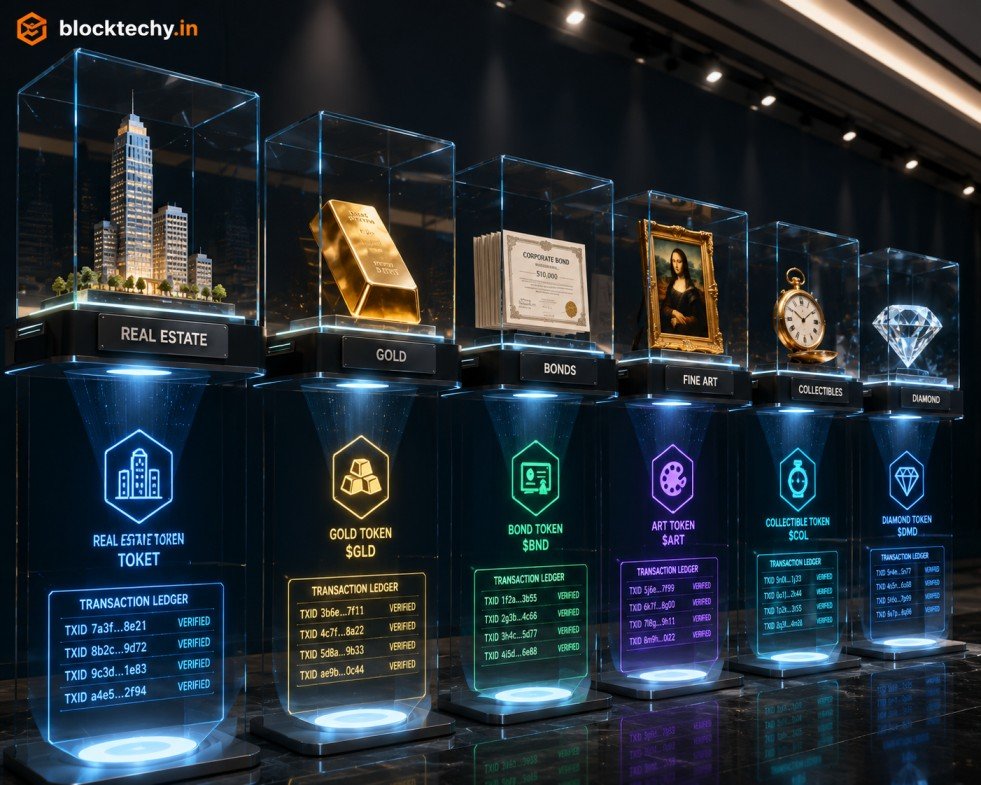
Examples of tokenized assets include:
- Real Estate
- Gold and Precious Metals
- Government Bonds
- Corporate Bonds
- Stocks
- Commodities
- Luxury Watches
- Fine Art
- Collectibles
- Carbon Credits
- Intellectual Property
- Music Royalties
- Private Equity
- Trade Finance Assets
Each token represents a specific ownership stake, making investing easier and more accessible for people around the world.
Why RWA Tokenization Matters
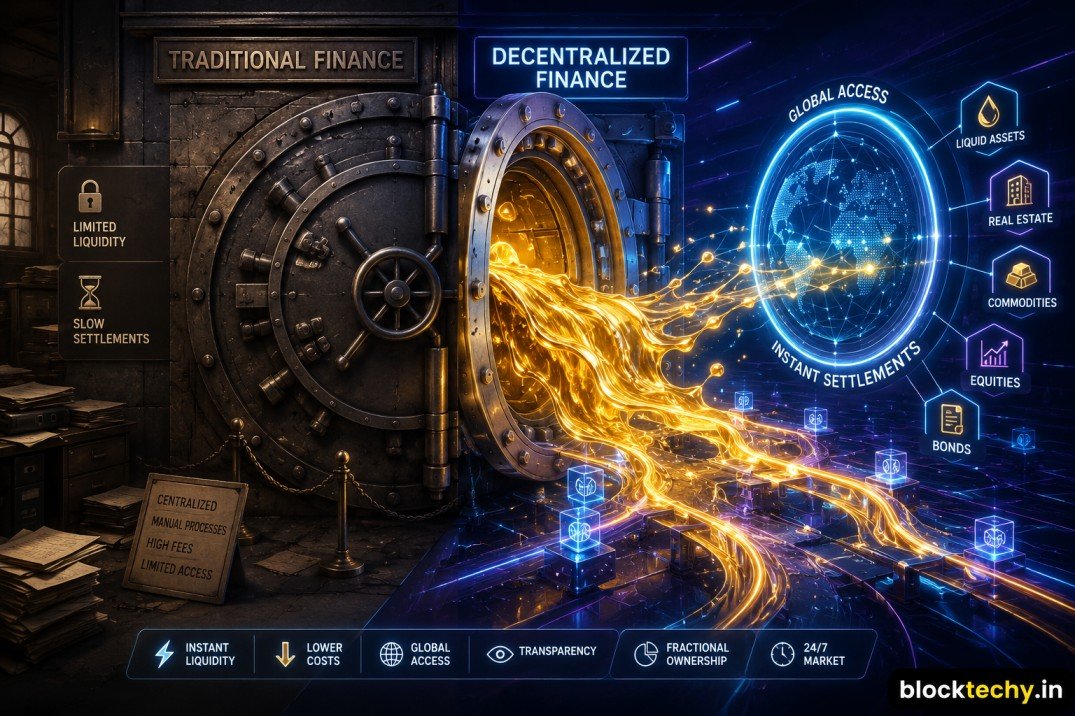
Traditional financial systems suffer from several limitations:
- High transaction costs
- Slow settlement times
- Limited accessibility
- Low liquidity
- Heavy paperwork
- Cross-border restrictions
- Complex legal processes
Blockchain technology addresses these problems by enabling programmable digital ownership.
Instead of waiting days or weeks for settlements, blockchain transactions can occur within minutes while maintaining transparency and security.
How RWA Tokenization Works
The tokenization process involves several steps:
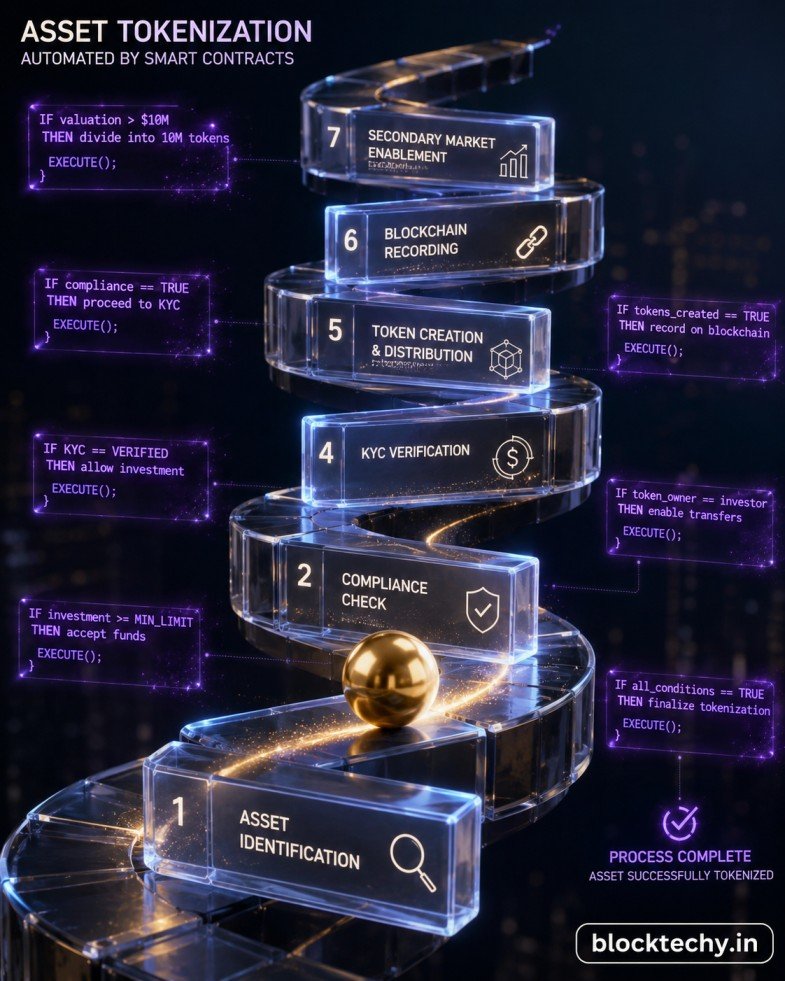
Step 1: Asset Identification
A real-world asset is selected for tokenization.
Example:
- Apartment
- Gold reserve
- Government bond
- Artwork
Step 2: Legal Ownership
Ownership rights are legally documented.
The issuer ensures the asset actually exists and complies with local regulations.
Step 3: Asset Valuation
Professionals determine the market value of the asset.
For example:
A building worth $10 million can be divided into 10 million digital tokens worth $1 each.
Step 4: Smart Contract Creation
Developers create blockchain-based smart contracts that define:
- Ownership rules
- Transfer conditions
- Dividend distribution
- Compliance requirements
- Voting rights (if applicable)
Step 5: Token Issuance
Digital tokens are created and issued on blockchain platforms such as:
- Ethereum
- Polygon
- Avalanche
- Solana
- Stellar
Step 6: Investor Participation
Investors purchase tokens using cryptocurrency or fiat currency.
Each investor owns a fraction of the real-world asset.
Step 7: Trading
Tokens can be traded on compliant exchanges or secondary markets, providing greater liquidity than traditional ownership structures.
Types of Real-World Assets That Can Be Tokenized
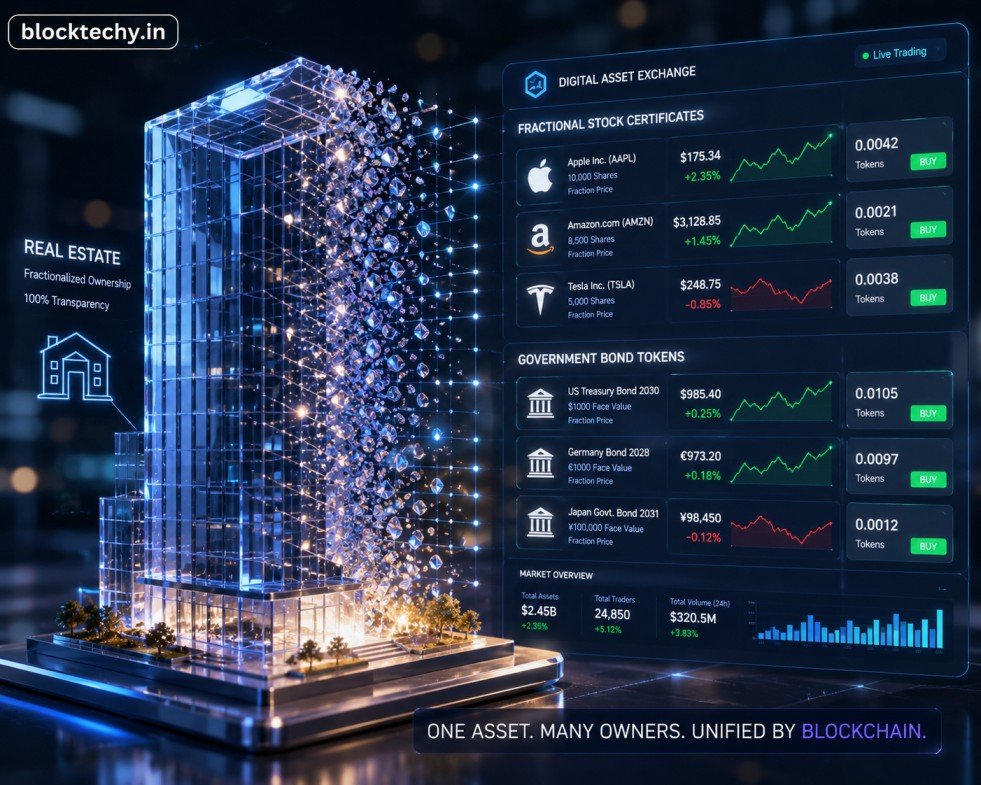
1. Real Estate
Real estate is one of the fastest-growing RWA sectors.
Instead of purchasing an entire building, investors can buy small fractions.
Benefits include:
- Lower investment amount
- Passive rental income
- Global investment opportunities
- Increased liquidity
2. Gold and Precious Metals
Gold-backed tokens represent ownership of physical gold stored in secure vaults.
Advantages include:
- Easy transfer
- Lower storage concerns
- Fractional ownership
- Global accessibility
3. Government Bonds
Governments are exploring tokenized bonds to reduce administrative costs and improve efficiency.
Benefits:
- Faster settlements
- Reduced paperwork
- Transparent ownership
- Automated interest payments
4. Stocks
Traditional shares can be represented as blockchain tokens.
Potential advantages include:
- 24/7 trading
- Faster settlement
- Lower brokerage fees
- Fractional investing
5. Art and Collectibles
Expensive artwork can be divided into thousands of digital shares.
Investors can own fractions of:
- Paintings
- Sculptures
- Rare collectibles
- Historical artifacts
6. Carbon Credits
Tokenized carbon credits improve transparency while helping companies track environmental commitments.
Benefits of RWA Tokenization
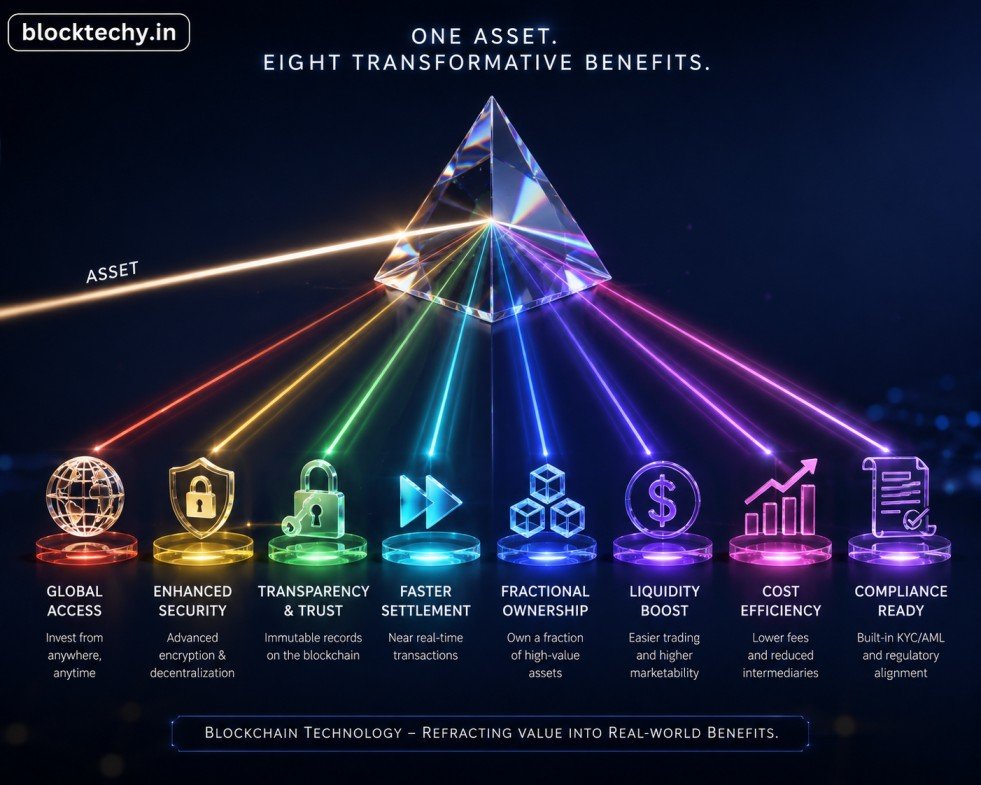
1. Fractional Ownership
One of the biggest advantages is fractional investing.
Instead of investing millions in commercial real estate, investors can purchase small ownership portions.
This democratizes investing.
2. Increased Liquidity
Many physical assets are difficult to sell.
Blockchain creates digital marketplaces where ownership can change hands much faster.
3. Global Accessibility
Anyone with internet access can potentially invest in tokenized assets, subject to local regulations.
This removes geographical barriers.
4. Transparency
Every transaction is permanently recorded on blockchain.
This reduces fraud and improves trust.
5. Lower Costs
Smart contracts automate many manual processes.
This reduces:
- Administrative expenses
- Broker fees
- Legal paperwork
- Settlement costs
6. Faster Settlement
Traditional securities may require several business days to settle.
Blockchain can reduce settlement times significantly.
7. Better Security
Blockchain uses cryptographic technology that makes transaction records highly resistant to tampering.
8. Programmability
Smart contracts enable automatic:
- Dividend payments
- Interest distribution
- Compliance checks
- Ownership transfers
Real-World Examples of RWA
Tokenization
Several organizations are already exploring or implementing tokenized assets:
Tokenized Treasury Bonds
Financial institutions have introduced blockchain-based access to U.S. Treasury products, enabling faster settlement and broader digital distribution.
Real Estate Platforms
Multiple companies now offer fractional ownership of residential and commercial properties using blockchain tokens.
Gold-Backed Tokens
Some digital assets are backed by physical gold stored in secure vaults, allowing investors to gain gold exposure without handling the metal directly.
Tokenized Money Market Funds
Asset managers are experimenting with blockchain-based fund shares to improve operational efficiency and transparency.
These developments demonstrate that tokenization is moving from theory to practical adoption.
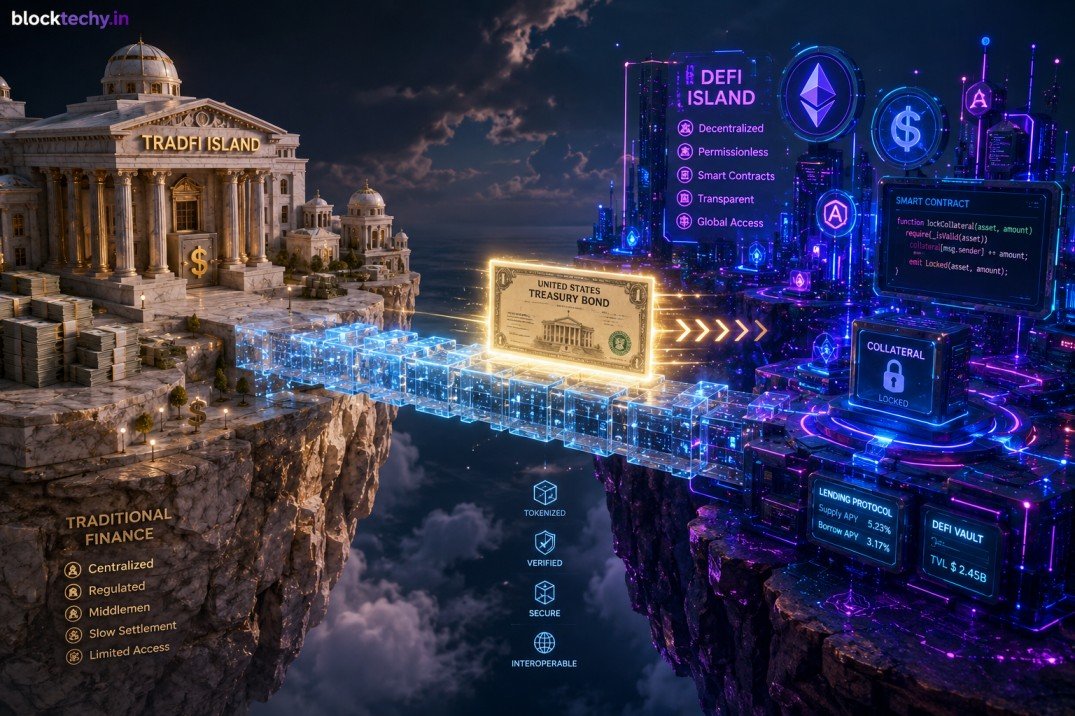
How RWA Connects Traditional Finance and DeFi
Decentralized Finance (DeFi) primarily uses crypto-native assets like Bitcoin and Ethereum.
RWA tokenization introduces traditional financial assets into DeFi ecosystems.
This enables:
- Borrowing against tokenized assets
- Lending
- Yield generation
- On-chain collateral
- Stable investment opportunities
As a result, blockchain-based financial systems become more connected to the real economy.
Challenges of RWA Tokenization
Although promising, RWA tokenization still faces several challenges.
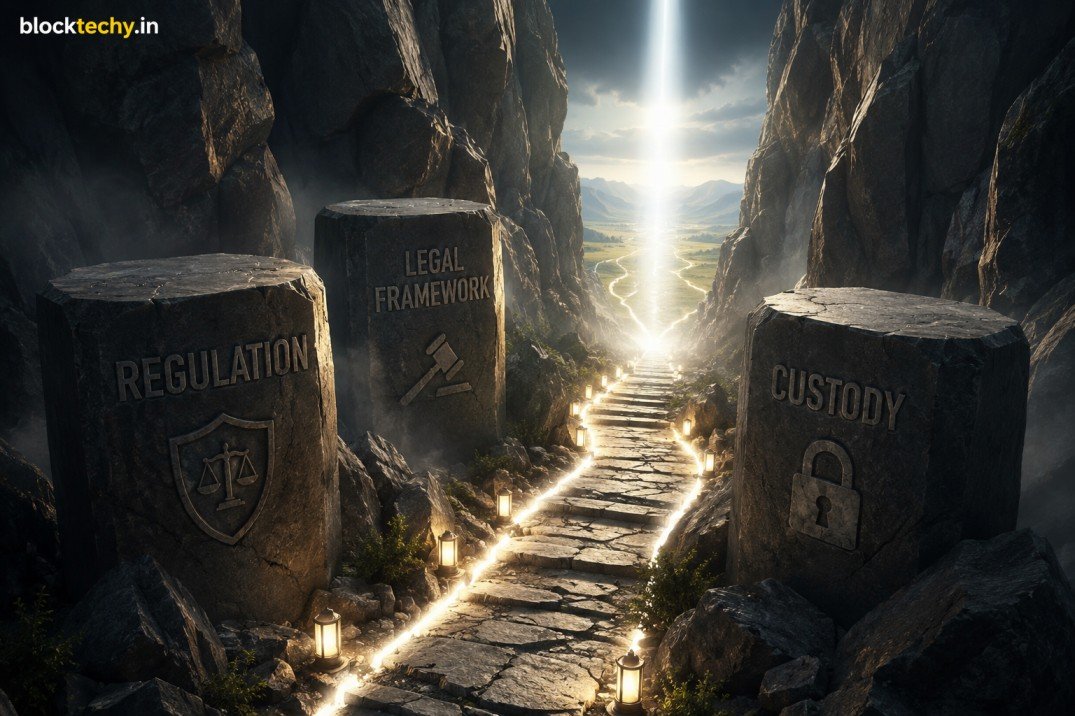
Regulatory Uncertainty
Different countries have different rules regarding securities and digital assets.
Compliance remains one of the biggest hurdles.
Legal Enforcement
Blockchain records ownership digitally, but legal systems must also recognize those ownership rights.
Proper legal frameworks are essential.
Custody
Physical assets still require trusted custodians.
For example:
- Gold must remain securely stored.
- Real estate requires property management.
Market Adoption
Many traditional institutions are still learning about blockchain technology.
Wider adoption will take time.
Technology Risks
Smart contract bugs, cybersecurity threats, and operational errors can create financial risks if not properly managed.
The Future of RWA Tokenization
Industry analysts expect tokenized real-world assets to become a major part of global financial infrastructure over the coming decade.
Several trends are accelerating this growth:
- Institutional blockchain adoption
- Government digital asset initiatives
- Growth of regulated digital exchanges
- Improved blockchain scalability
- Better compliance technology
- Increasing demand for fractional investing
Banks, asset managers, fintech companies, and governments are investing heavily in tokenization infrastructure.
As regulations mature, tokenized assets could become a standard way to issue, trade, and manage financial products.
Why Investors Are Paying Attention
Investors see RWA tokenization as an opportunity because it combines the stability of traditional assets with the efficiency of blockchain technology.
Potential advantages include:
- Diversified portfolios
- Greater market access
- Lower entry barriers
- Improved liquidity
- Faster transactions
- Transparent ownership records
However, investors should always evaluate regulatory requirements, platform credibility, and the risks associated with both the underlying asset and the blockchain infrastructure before investing.
Conclusion
Real-World Asset (RWA) tokenization is rapidly emerging as one of the most significant innovations in blockchain technology. By converting physical and traditional financial assets into digital blockchain-based tokens, it opens the door to a more efficient, transparent, and inclusive financial system.
Whether it’s real estate, government bonds, precious metals, or investment funds, tokenization has the potential to unlock liquidity, reduce costs, automate complex financial processes, and expand investment opportunities to people around the world.
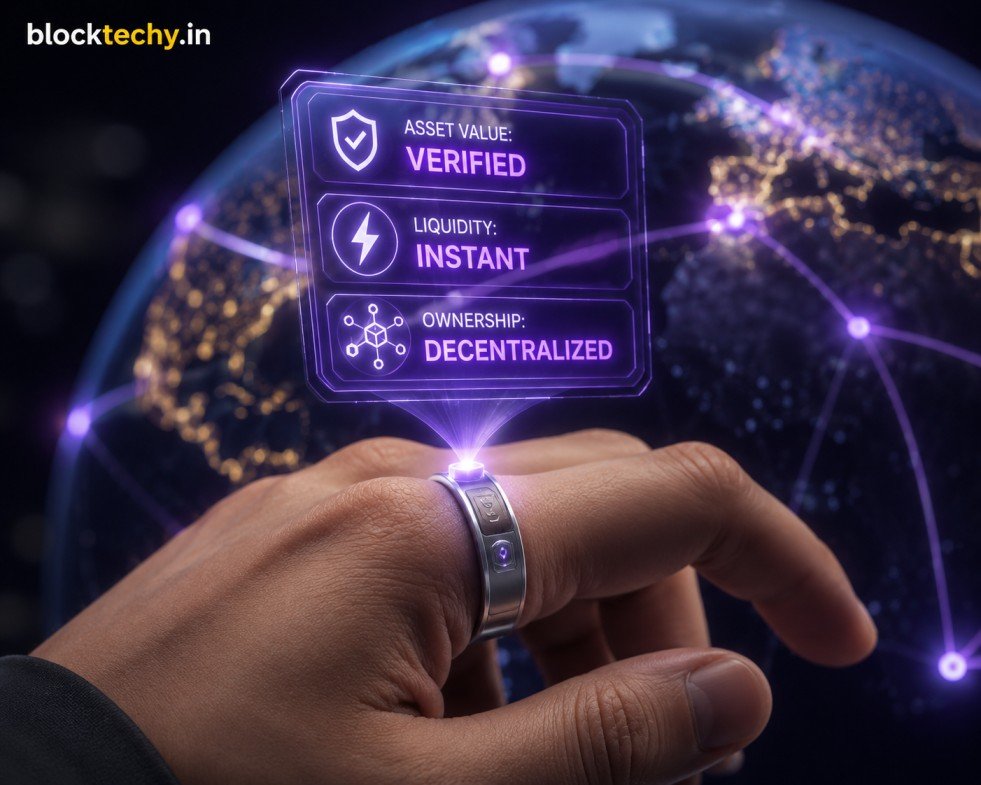
While challenges such as regulation, legal recognition, and technology risks still need to be addressed, momentum continues to build as financial institutions and technology companies invest in blockchain-powered infrastructure.
As blockchain adoption grows, Real-World Asset tokenization is likely to become a cornerstone of modern finance, connecting traditional markets with decentralized technologies and reshaping how value is created, owned, and exchanged in the digital economy.
For investors, businesses, and technology enthusiasts, understanding RWA tokenization today could provide valuable insight into the future of global finance.
Frequently Asked Questions (FAQs)
1. What is Real-World Asset (RWA) tokenization?
RWA tokenization is the process of representing ownership of physical or traditional financial assets as blockchain-based digital tokens.
2. Which assets can be tokenized?
Real estate, gold, bonds, stocks, artwork, commodities, carbon credits, private equity, and intellectual property are among the many assets that can be tokenized.
3. What are the main benefits of tokenization?
The key benefits include fractional ownership, increased liquidity, lower transaction costs, faster settlement, greater transparency, and improved global accessibility.
4. Is RWA tokenization safe?
Blockchain provides strong security and transparency, but risks such as regulatory uncertainty, smart contract vulnerabilities, and custody issues still need to be carefully managed.
5. Why is RWA considered the future of finance?
RWA tokenization combines the trust and value of traditional assets with the speed, efficiency, and programmability of blockchain technology, making financial markets more accessible and efficient worldwide.