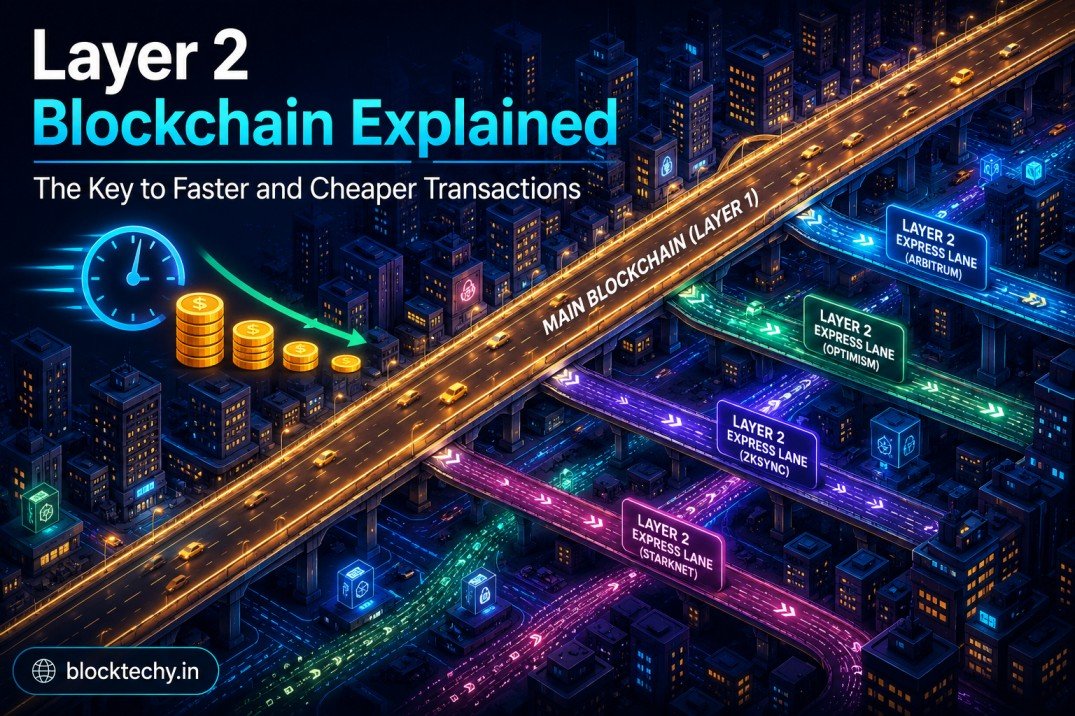
Introduction
Blockchain technology has transformed the way people think about digital money, decentralized applications (dApps), and online ownership. Networks like Bitcoin and Ethereum have proven that decentralized systems can securely process transactions without relying on banks or centralized organizations.
However, as blockchain adoption has grown, a major challenge has become increasingly obvious: scalability.
Popular blockchain networks often become congested when millions of users attempt to transact simultaneously. This congestion results in slow confirmation times and high transaction fees, making everyday blockchain usage expensive and impractical.
This is where Layer 2 (L2) blockchain solutions come into play.
Layer 2 technologies are designed to make blockchain networks significantly faster, cheaper, and more scalable while maintaining the security of the underlying blockchain.
In this comprehensive guide, we’ll explore everything you need to know about Layer 2 blockchains, including how they work, their benefits, popular examples, use cases, challenges, and why they are considered the future of blockchain scalability.
What is Layer 2 Blockchain?
A Layer 2 blockchain is a secondary protocol built on top of an existing blockchain (known as Layer 1). Its primary purpose is to process transactions more efficiently without changing the core blockchain.
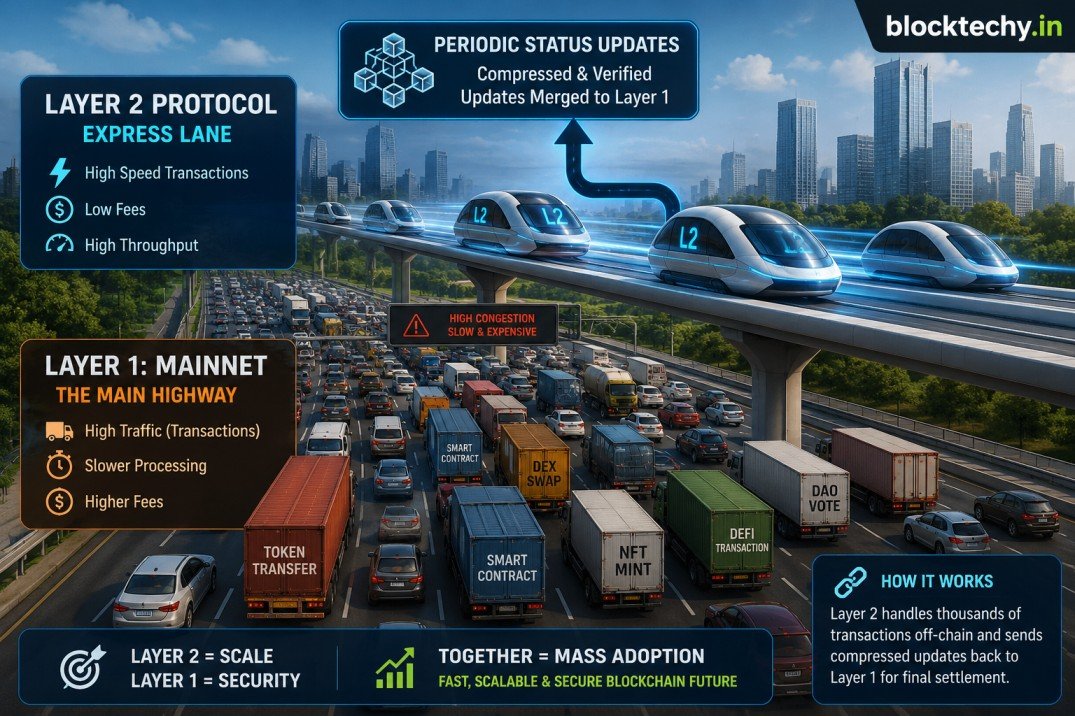
Think of Layer 1 as a busy national highway.
When too many vehicles use the highway, traffic slows down.
Layer 2 acts like an express lane that handles most of the traffic separately before reporting the final results back to the main highway.
This approach dramatically reduces congestion while preserving the security of the main blockchain.
For example:
- Ethereum is a Layer 1 blockchain.
- Arbitrum is a Layer 2 built on Ethereum.
- Optimism is another Ethereum Layer 2.
- Base is a Layer 2 network developed using the OP Stack.
- Lightning Network is a Layer 2 built for Bitcoin.
Instead of processing every transaction directly on the main blockchain, Layer 2 networks execute transactions off-chain or in batches and then submit summarized data to Layer 1.
Why Do We Need Layer 2?
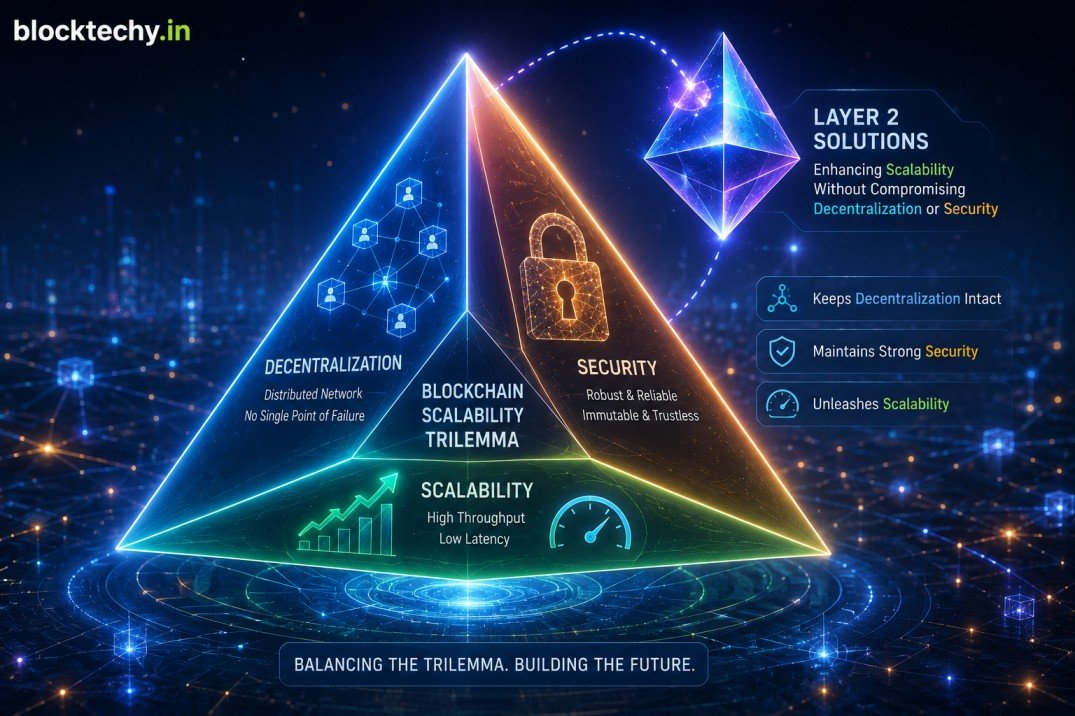
Blockchain networks face what is known as the Blockchain Scalability Trilemma, which states that a blockchain can only optimize two of the following three characteristics:
- Decentralization
- Security
- Scalability
Bitcoin and Ethereum prioritize decentralization and security.
As a result, transaction speed is limited.
For example:
| Blockchain | Average TPS |
|---|---|
| Bitcoin | 7 |
| Ethereum | 15–30 |
| Visa | 24,000+ |
This gap highlights why Layer 2 solutions have become essential.
Without Layer 2, blockchain would struggle to support global-scale applications such as gaming, payments, social media, and decentralized finance (DeFi).
Problems Layer 2 Solves
Layer 2 addresses several key issues:
1. High Gas Fees
During periods of heavy network activity, Ethereum gas fees can become very expensive.
Layer 2 networks significantly reduce these costs by batching many transactions together.
2. Slow Transactions
Instead of waiting several minutes for confirmation, Layer 2 often processes transactions within seconds.
3. Network Congestion
Large-scale NFT launches or DeFi activity can overload Layer 1.
Layer 2 reduces congestion by moving much of the transaction processing away from the main chain.
4. Better User Experience
Fast confirmations and lower fees create a smoother experience for users and developers.
How Does Layer 2 Work?
Although different Layer 2 technologies work differently, the overall process follows a similar pattern:
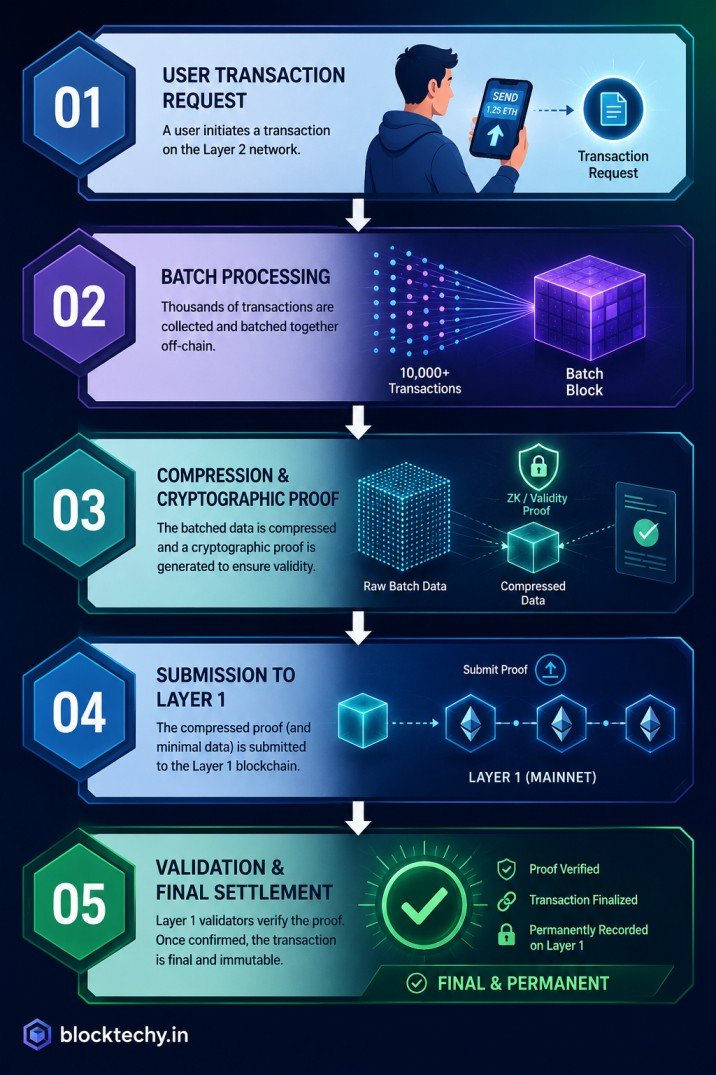
Step 1
Users submit transactions to the Layer 2 network.
↓
Step 2
Layer 2 processes thousands of transactions quickly.
↓
Step 3
Transactions are compressed or batched.
↓
Step 4
Only the summarized proof is submitted to Layer 1.
↓
Step 5
Layer 1 validates the proof and stores it permanently.
This design reduces the workload of the main blockchain while preserving its security guarantees.
Types of Layer 2 Solutions
There are several approaches to Layer 2 scaling.
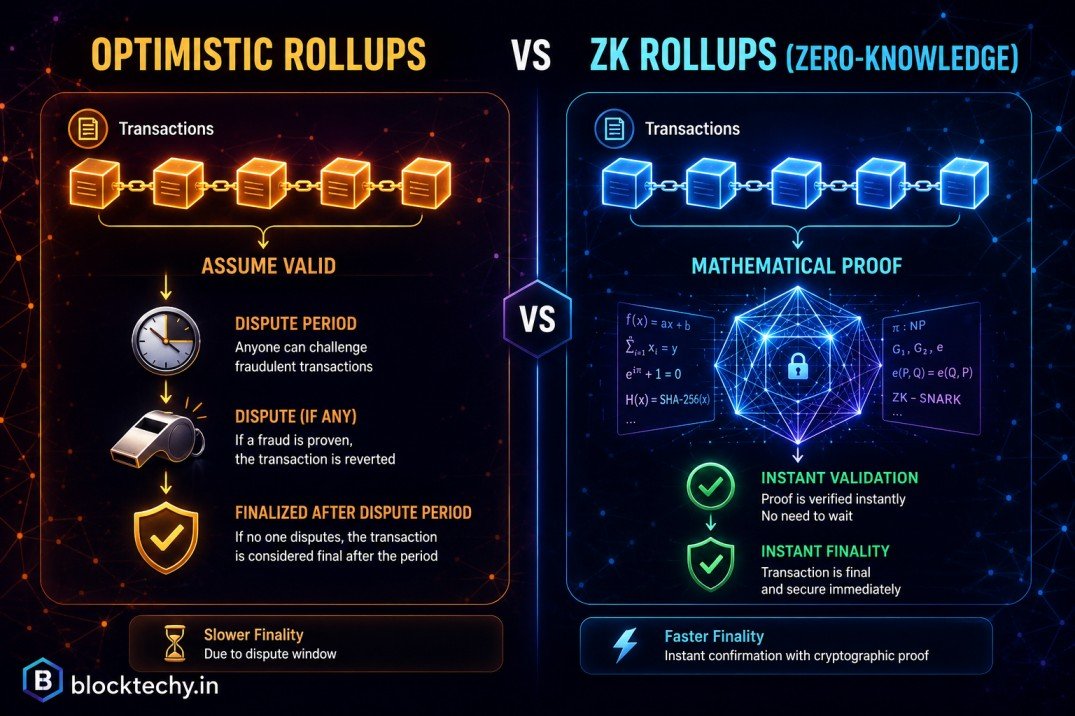
1. Optimistic Rollups
Optimistic Rollups assume transactions are valid unless someone challenges them.
Instead of verifying every transaction immediately, they allow a dispute period.
Examples include:
- Arbitrum
- Optimism
- Base
Advantages
- Very low fees
- High compatibility with Ethereum
- Easy migration for developers
Disadvantages
- Withdrawal delays
- Fraud-proof waiting period
2. ZK Rollups (Zero-Knowledge Rollups)
ZK Rollups generate cryptographic proofs that mathematically prove transaction correctness.
Instead of waiting for challenges, Layer 1 verifies the proof instantly.
Examples include:
- zkSync
- Starknet
- Polygon zkEVM
- Scroll
Advantages
- Very high security
- Faster withdrawals
- Lower fees
- Better scalability
Disadvantages
- More complex technology
- Harder for developers
3. State Channels
State channels allow users to transact privately off-chain before publishing only the final result.
Example:
Bitcoin Lightning Network
Ideal for:
- Micropayments
- Gaming
- Frequent transactions
4. Sidechains
Although technically different from true Layer 2 solutions, sidechains are often grouped with them.
Sidechains operate independently while connecting to the main blockchain through bridges.
Examples:
- Polygon PoS
- Gnosis Chain
Advantages:
- Fast
- Cheap
Tradeoff:
- Independent security model
Popular Layer 2 Networks
Arbitrum
Arbitrum is currently one of the largest Ethereum Layer 2 ecosystems.
Features:
- Low gas fees
- Fast transactions
- Excellent DeFi support
- Strong developer ecosystem
Popular applications include decentralized exchanges, lending platforms, and NFT marketplaces.
Optimism
Optimism uses Optimistic Rollups.
Its OP Stack has also become the foundation for multiple blockchain ecosystems.
Key benefits:
- Lower fees
- Ethereum compatibility
- Growing ecosystem
Base
Base is a modern Ethereum Layer 2 built using the OP Stack.
It focuses on onboarding millions of new users into Web3 through simple, low-cost transactions.
zkSync
zkSync uses Zero-Knowledge Rollups.
Advantages include:
- Fast settlement
- Lower gas costs
- Advanced cryptographic security
Starknet
Starknet uses STARK proofs.
It enables scalable decentralized applications while maintaining Ethereum-level security.
Lightning Network
Bitcoin’s Lightning Network enables near-instant payments with extremely low fees.
It is ideal for:
- Coffee payments
- Streaming payments
- Gaming
- International transfers
Benefits of Layer 2 Blockchain
Lower Transaction Costs
Many Layer 2 transactions cost only a few cents or less.
This makes blockchain practical for everyday use.
Higher Speed
Layer 2 networks process transactions in seconds instead of minutes.
Greater Scalability
Thousands of transactions can be processed simultaneously.
Enhanced User Experience
Users no longer need to worry about extremely high gas fees.
Supports Mass Adoption
Gaming, social media, NFTs, and financial applications become practical when transactions are inexpensive.
Real-World Applications
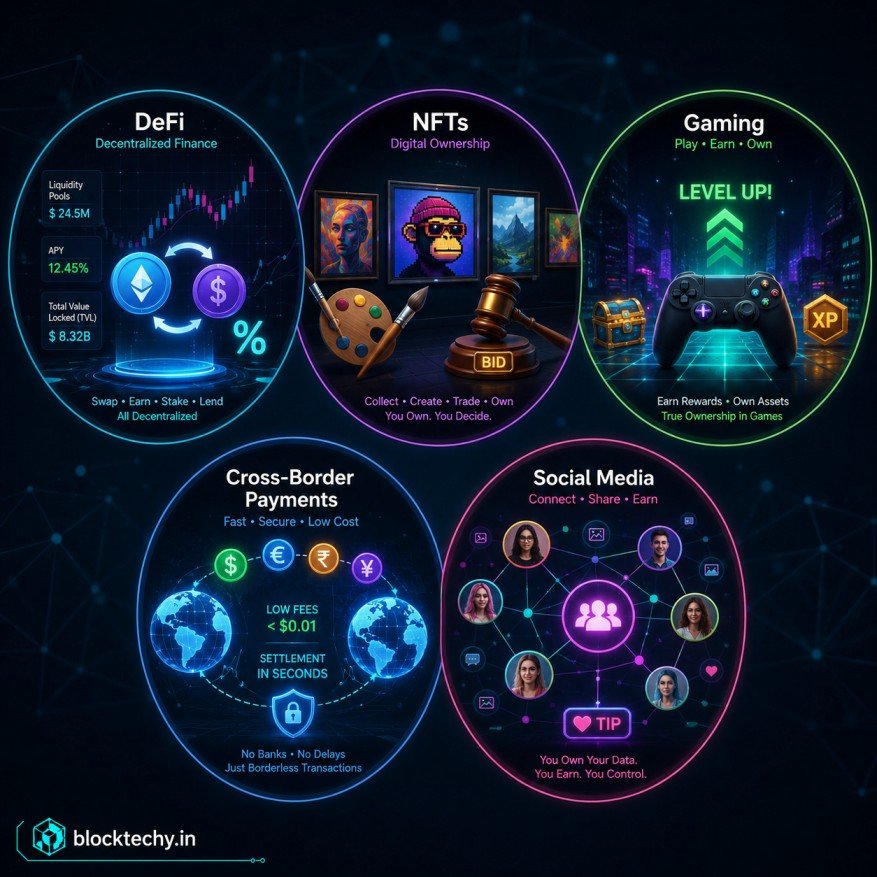
Decentralized Finance (DeFi)
Protocols like decentralized exchanges and lending platforms benefit enormously from low fees.
Users can:
- Swap tokens
- Borrow assets
- Provide liquidity
- Earn staking rewards
without spending large amounts on transaction costs.
NFT Marketplaces
Buying or selling NFTs becomes much cheaper.
Artists can mint digital assets without paying excessive gas fees.
Blockchain Gaming
Games require frequent in-game transactions.
Layer 2 enables:
- Fast gameplay
- Asset trading
- Token rewards
without slowing the network.
Cross-Border Payments
International payments become:
- Faster
- Cheaper
- More accessible
This is particularly valuable for remittances and global commerce.
Social Media
Decentralized social platforms generate millions of interactions daily.
Layer 2 makes these interactions economically feasible.
Layer 1 vs Layer 2
| Feature | Layer 1 | Layer 2 |
|---|---|---|
| Purpose | Base blockchain | Scaling solution |
| Security | Native | Inherits Layer 1 security (for rollups) |
| Speed | Slower | Much faster |
| Fees | Higher | Lower |
| Scalability | Limited | Very high |
| Examples | Bitcoin, Ethereum | Arbitrum, Optimism, Base, zkSync |
Challenges of Layer 2
Despite their advantages, Layer 2 solutions also face some challenges.
Bridge Risks
Moving assets between Layer 1 and Layer 2 often requires blockchain bridges.
Poorly designed bridges have historically been targets for exploits, making security a key consideration.
Liquidity Fragmentation
Assets spread across multiple Layer 2 networks can reduce liquidity in a single ecosystem.
Cross-chain interoperability is helping address this issue.
User Experience
New users may find it confusing to:
- Bridge funds
- Choose a network
- Manage wallets
Wallet providers are working to simplify these processes.
Centralization Concerns
Some Layer 2 networks currently rely on centralized sequencers to order transactions.
Many projects plan to decentralize these components over time.
The Future of Layer 2 Blockchain
The future of blockchain is closely tied to Layer 2 innovation.
Several trends are shaping the next generation of blockchain infrastructure:
AI + Layer 2
Artificial Intelligence can optimize transaction routing, improve fraud detection, and automate decentralized applications.
Layer 3 Networks
Some developers are already building Layer 3 solutions on top of Layer 2 to support specialized applications like gaming, privacy, or enterprise services.
Improved Interoperability
Future protocols will make moving assets between Layer 2 ecosystems faster and more seamless.
Enterprise Adoption
Businesses increasingly require scalable blockchain infrastructure for payments, supply chains, tokenization, and digital identity.
Layer 2 provides the performance needed for enterprise-scale applications.
Better Developer Tools
Modern frameworks and software development kits (SDKs) are making it easier than ever to build on Layer 2 networks.
As development becomes more accessible, we can expect a broader range of decentralized applications.
Frequently Asked Questions (FAQs)
Is Layer 2 more secure than Layer 1?
Layer 2 rollups inherit much of the security of the underlying Layer 1 blockchain. However, users should still evaluate the specific architecture, bridge design, and operational maturity of each network.
Can I use MetaMask with Layer 2?
Yes. Popular wallets such as MetaMask support many Layer 2 networks, including Arbitrum, Optimism, Base, and others. Users simply need to add the appropriate network or use wallet features that do it automatically.
Is Layer 2 only for Ethereum?
No. While Ethereum has the largest Layer 2 ecosystem, Bitcoin also has Layer 2 solutions like the Lightning Network. Other blockchain ecosystems are developing their own scaling solutions as well.
Why are Layer 2 transaction fees lower?
Layer 2 networks process transactions off-chain or in batches and submit compressed data to Layer 1. This significantly reduces the amount of blockchain space required per transaction, lowering costs.
Will Layer 2 replace Layer 1?
No. Layer 1 and Layer 2 complement each other. Layer 1 provides security, decentralization, and final settlement, while Layer 2 enhances scalability, speed, and affordability.
Conclusion
Layer 2 blockchain technology is transforming the blockchain industry by addressing one of its biggest limitations: scalability. By processing transactions more efficiently while relying on the security of Layer 1 networks, Layer 2 solutions enable faster confirmations, significantly lower fees, and a much better user experience.
From decentralized finance and NFTs to blockchain gaming, cross-border payments, and enterprise applications, Layer 2 networks are making blockchain practical for millions of users. Technologies such as Optimistic Rollups, Zero-Knowledge Rollups, State Channels, and the Lightning Network each contribute to a more scalable ecosystem, offering different trade-offs to suit various use cases.
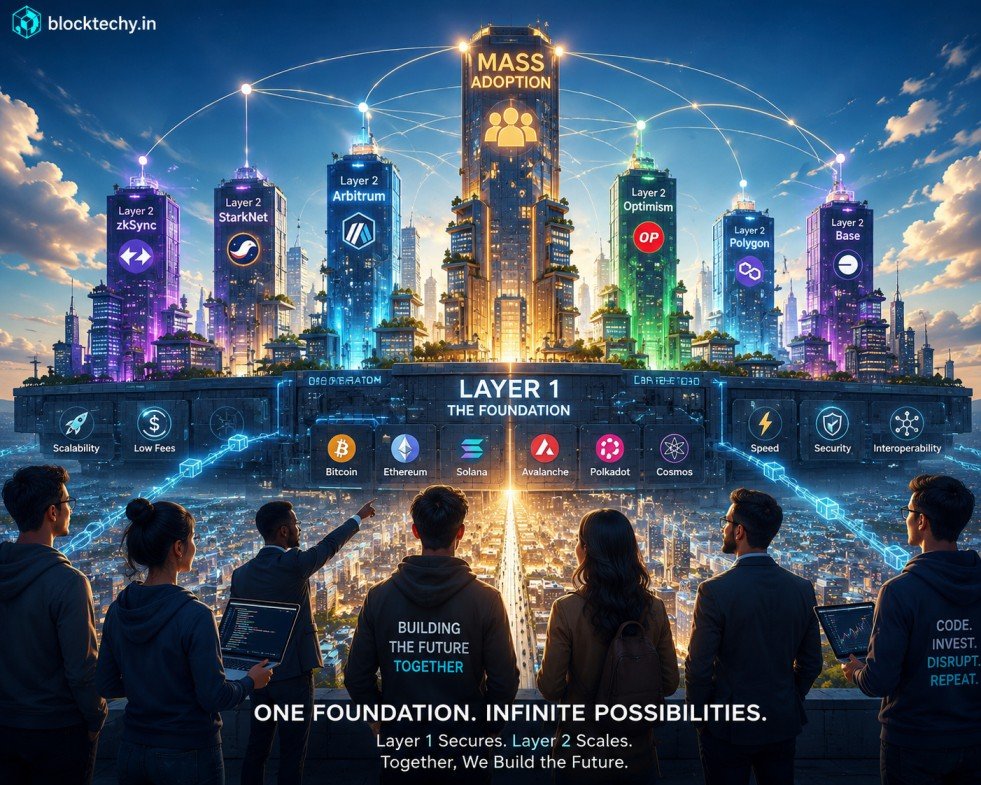
As adoption continues to grow, Layer 2 is expected to play a central role in the evolution of Web3. Combined with innovations in interoperability, developer tools, and emerging Layer 3 architectures, these solutions are paving the way for blockchain applications that can serve global audiences without sacrificing security or decentralization.
Whether you’re a blockchain enthusiast, developer, investor, or business leader, understanding Layer 2 technology is essential for navigating the next generation of decentralized systems. The future of blockchain isn’t just about stronger Layer 1 networks—it’s about building efficient, scalable ecosystems where Layer 2 solutions unlock the full potential of decentralized technology.