Introduction
Artificial Intelligence (AI) and blockchain technology have been among the most transformative innovations of the last decade. While AI has revolutionized how machines process information and make decisions, blockchain has introduced decentralized trust and transparent digital ownership. Today, a new trend is emerging at the intersection of these technologies: AI agents powered by blockchain and stablecoins.
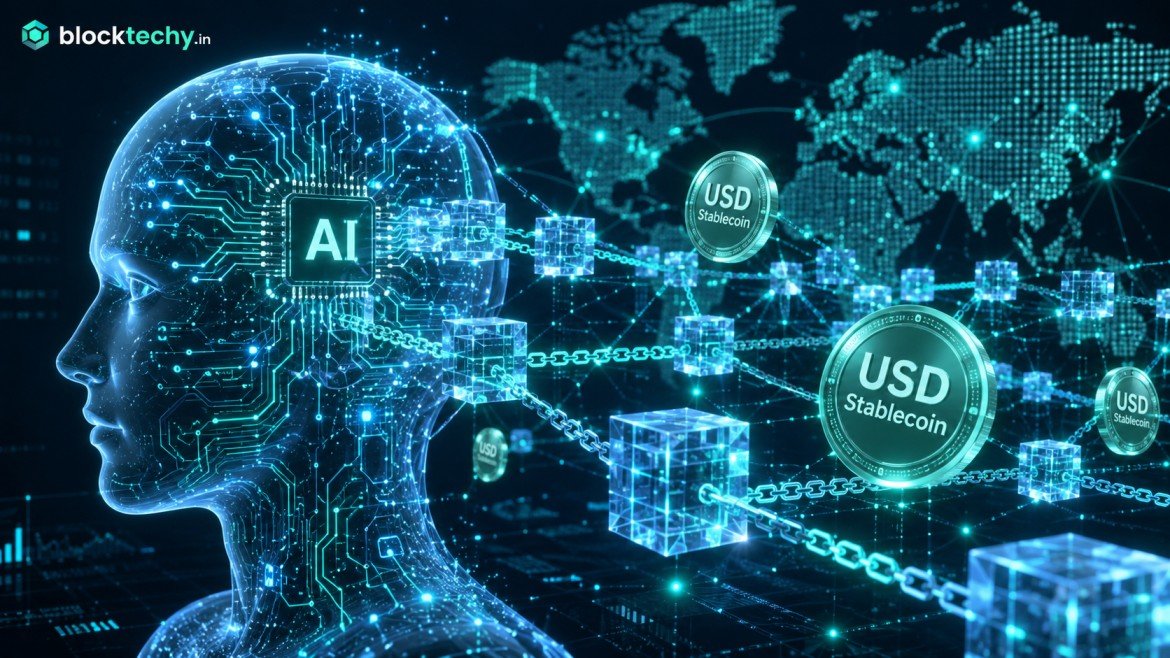
This convergence is creating what many experts call the “Autonomous Digital Economy”—a future where intelligent software agents can earn, spend, negotiate, and transact without human intervention. As businesses and developers explore this new frontier, understanding how AI, blockchain, and stablecoins work together has become increasingly important.
What Are AI Agents?
AI agents are software systems capable of performing tasks independently. Unlike traditional software, AI agents can analyze data, make decisions, learn from experience, and interact with users or other systems.
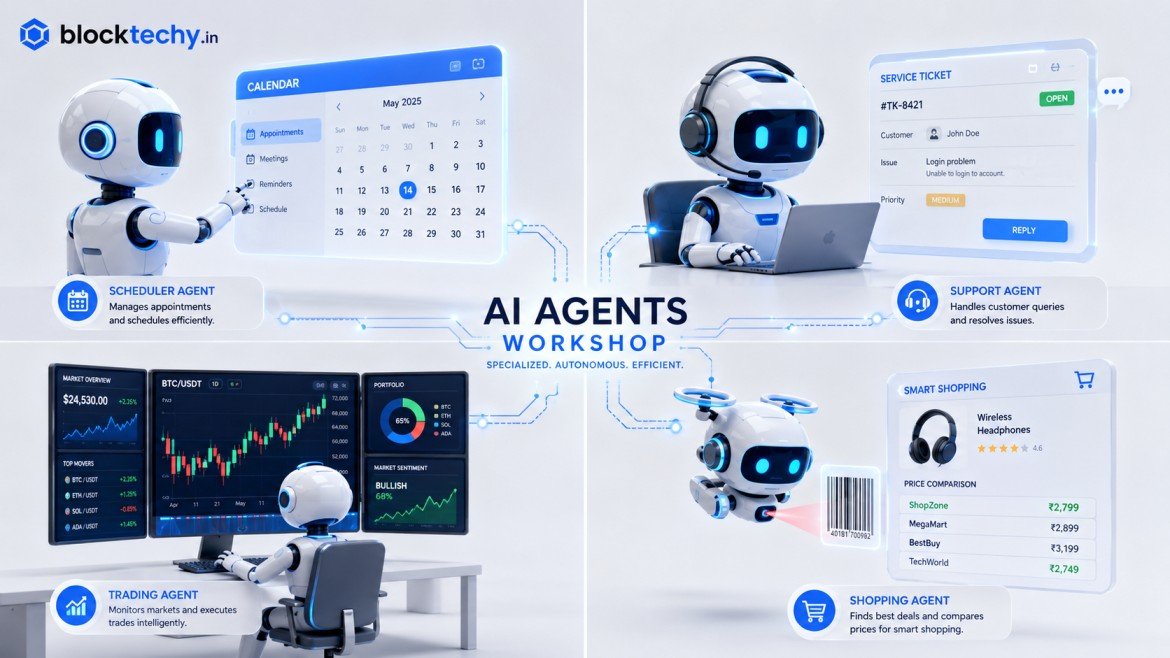
Examples of AI agents include:
* Virtual assistants that schedule meetings and manage emails
* Customer support bots that resolve user issues
* Trading algorithms that buy and sell assets automatically
* Personal shopping assistants that compare prices and make purchases
The next generation of AI agents is expected to operate with even greater autonomy. These agents will not only perform tasks but also manage resources, execute contracts, and participate in digital marketplaces.
However, one major challenge remains: how can AI agents securely exchange value without relying on centralized institutions?
This is where blockchain technology enters the picture.
The Role of Blockchain
Blockchain provides a decentralized infrastructure that enables trustless transactions. Instead of relying on banks, payment processors, or centralized platforms, blockchain allows participants to interact directly through secure and transparent networks.
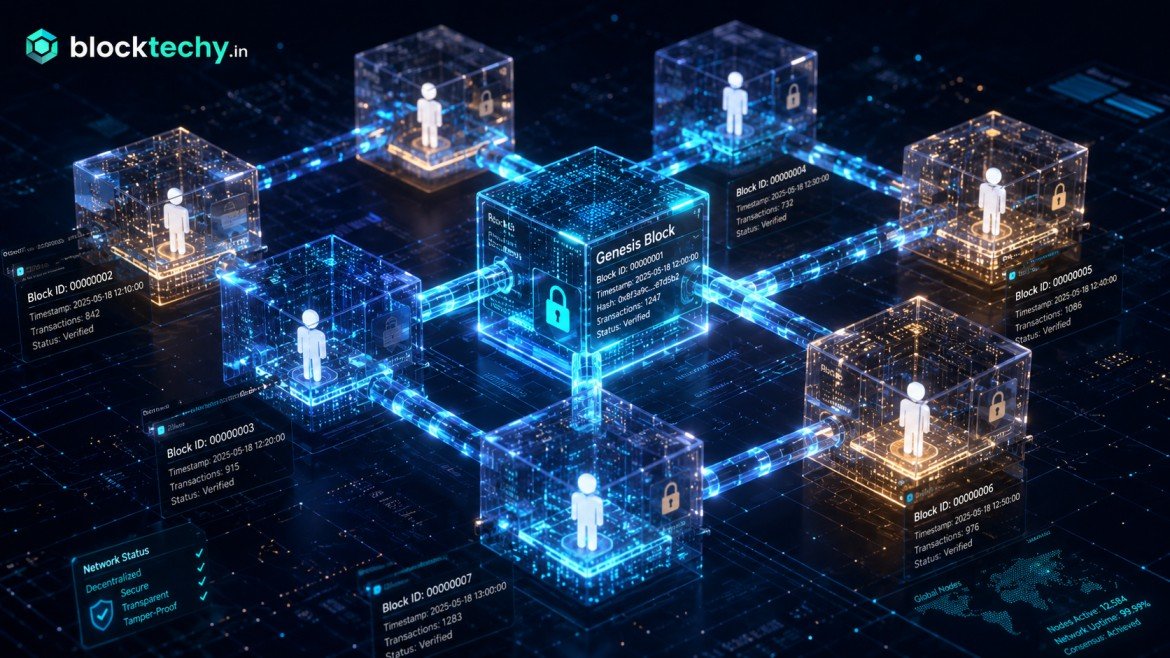
For AI agents, blockchain offers several advantages:
1. Digital Ownership
AI agents can own blockchain wallets and digital assets. This allows them to receive payments, store funds, and manage resources independently.
2. Transparency
Every transaction is recorded on a public ledger, making activities auditable and verifiable.
3. Security
Blockchain networks use cryptographic mechanisms that protect transactions from unauthorized modification.
4. Smart Contracts
Smart contracts are self-executing agreements stored on a blockchain. They automatically perform actions when predefined conditions are met.
For example, an AI agent could hire another AI service through a smart contract and release payment automatically after successful task completion.
Why Stablecoins Matter
Although cryptocurrencies such as Bitcoin and Ethereum are widely known, their price volatility makes them unsuitable for many business transactions.
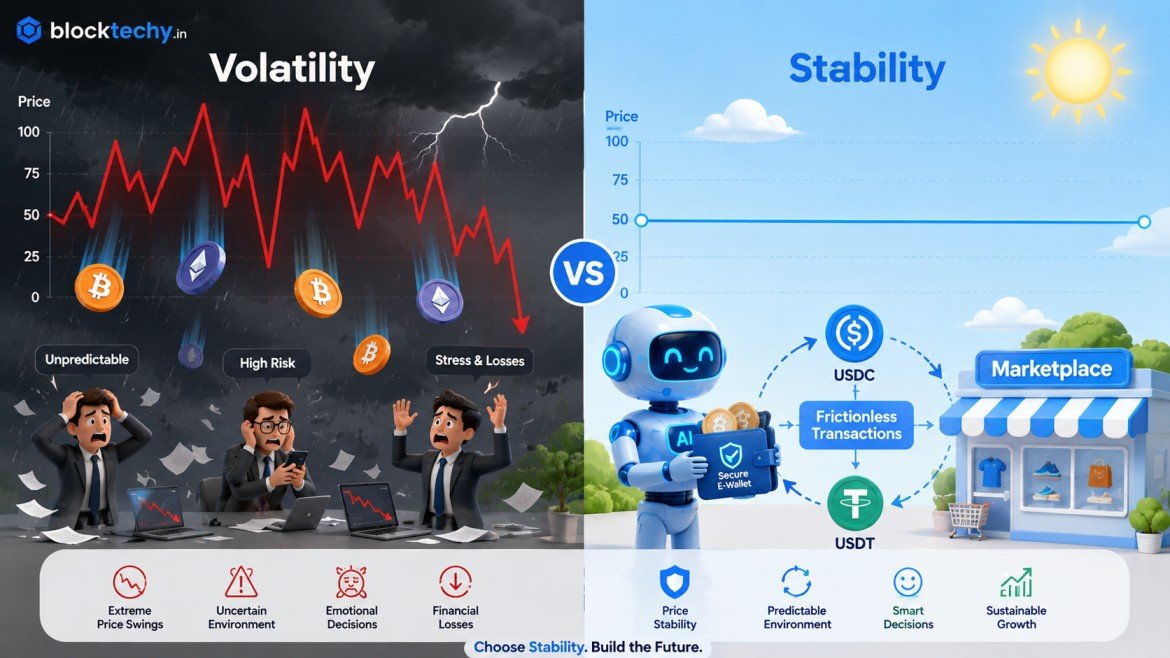
Stablecoins solve this problem.
Stablecoins are digital assets designed to maintain a stable value, usually pegged to a fiat currency such as the U.S. dollar.
Popular examples include:
* USDT (Tether)
* USDC
* DAI
Because stablecoins maintain relatively stable prices, they provide an ideal payment mechanism for AI agents.
Imagine an AI-powered marketing assistant that generates content for businesses. Instead of requiring manual invoicing and bank transfers, the AI agent could automatically receive payment in stablecoins upon completing its work.
This creates a frictionless digital economy where transactions occur instantly and globally.
The Emergence of Autonomous Economic Agents
The combination of AI, blockchain, and stablecoins is giving rise to Autonomous Economic Agents (AEAs).
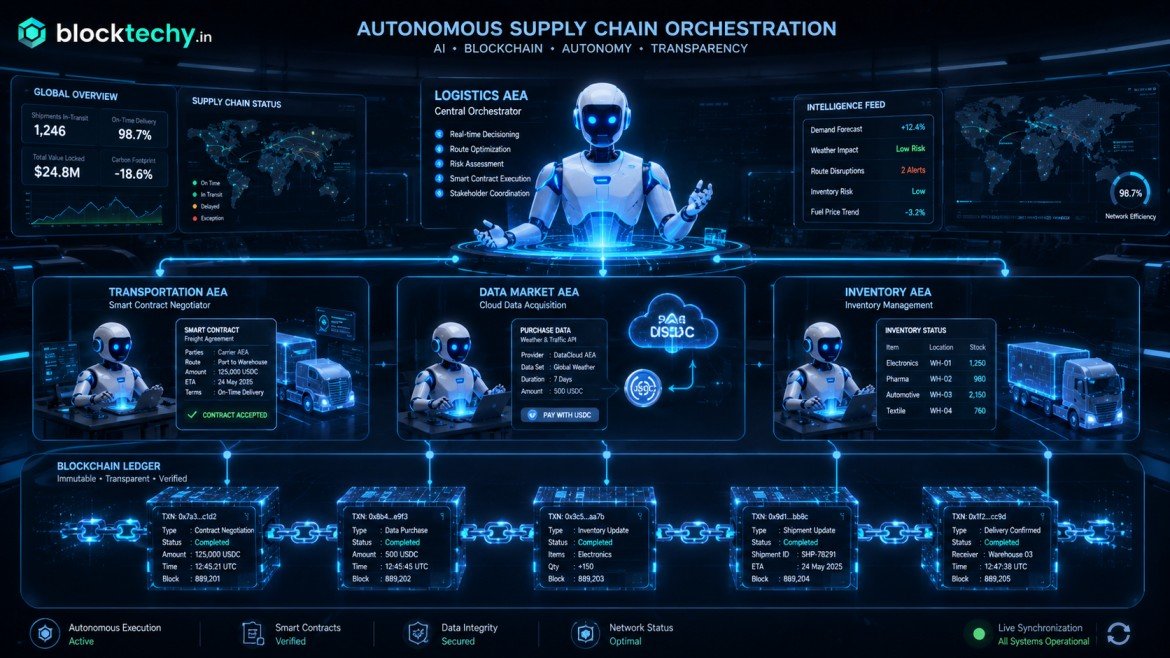
An Autonomous Economic Agent is an AI system capable of:
* Performing services
* Negotiating prices
* Entering agreements
* Receiving payments
* Purchasing resources
* Managing budgets
All without direct human involvement.
For example, consider a logistics company that uses AI agents to manage deliveries.
A delivery agent might:
1. Analyze shipping demand.
2. Negotiate transportation costs with another AI service.
3. Purchase cloud computing resources.
4. Pay suppliers using stablecoins.
5. Record all transactions on a blockchain.
This entire process could occur automatically, reducing costs and improving efficiency.
Real-World Applications
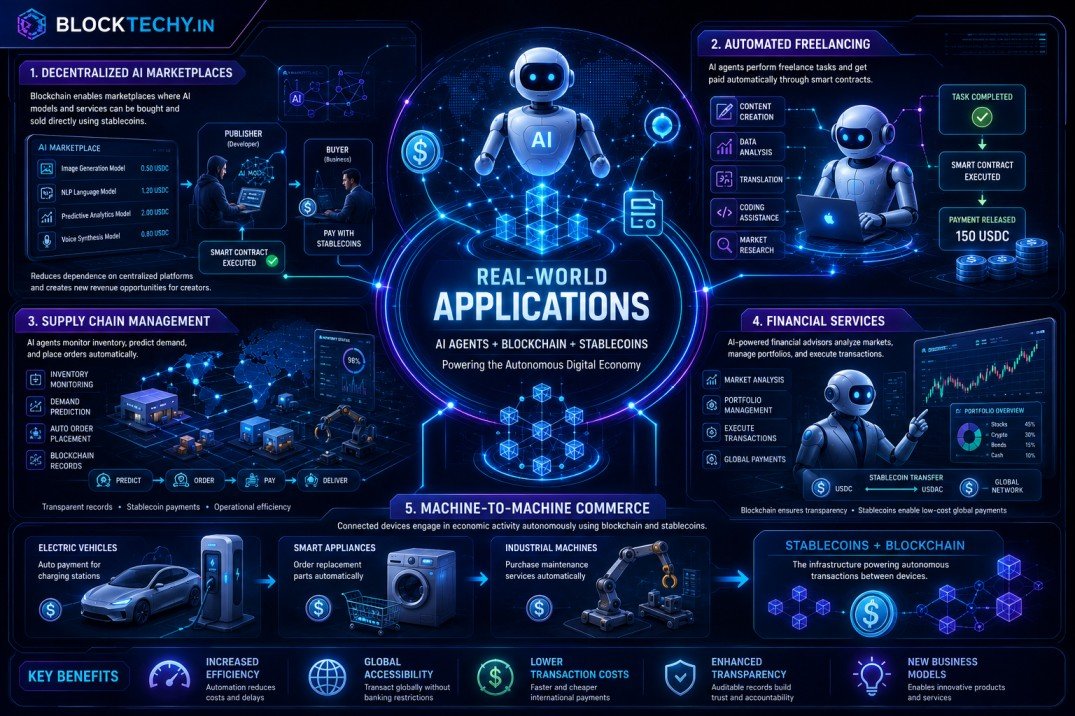
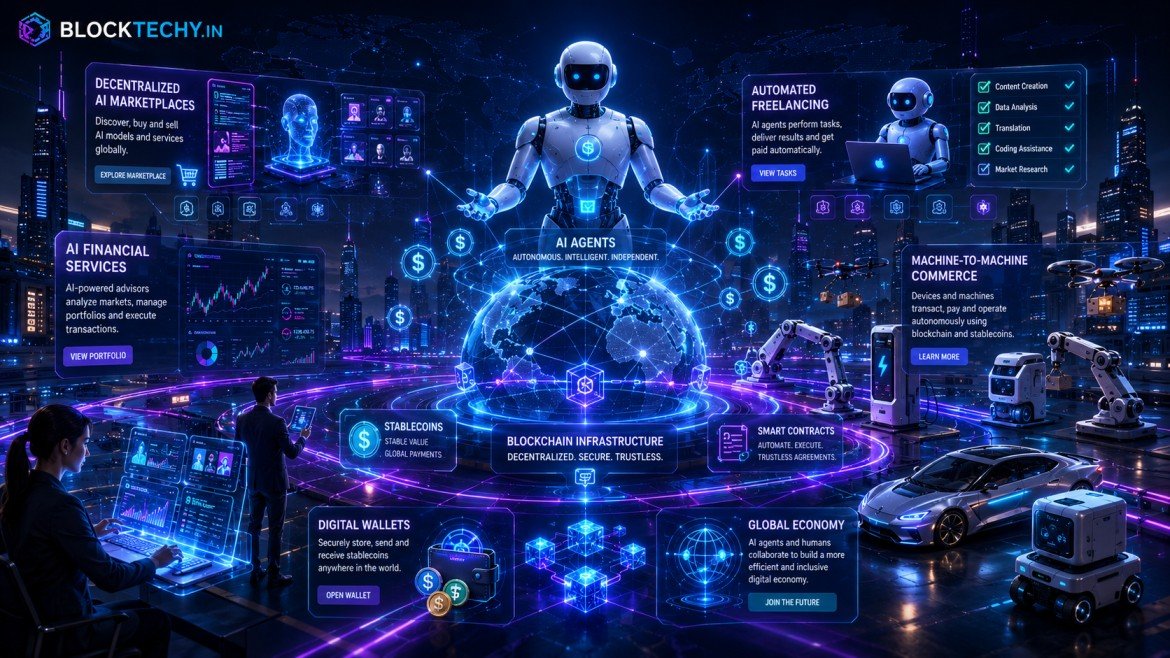
Decentralized AI Marketplaces
Blockchain enables marketplaces where AI models and services can be bought and sold directly.
Developers can publish AI tools, while users and businesses pay for usage through stablecoin transactions.
This reduces dependence on centralized technology platforms and creates new revenue opportunities for creators.
Automated Freelancing
AI agents may eventually perform many freelance tasks such as:
* Content creation
* Data analysis
* Translation
* Coding assistance
* Market research
Upon task completion, payment can be automatically released through smart contracts.
Supply Chain Management
AI agents can monitor inventory, predict demand, and place orders automatically.
Using blockchain records and stablecoin payments, businesses can achieve greater transparency and operational efficiency.
Financial Services
AI-powered financial advisors can analyze markets, manage portfolios, and execute transactions.
Blockchain ensures transparency, while stablecoins facilitate low-cost global payments.
Machine-to-Machine Commerce
In the future, connected devices may engage in economic activity without human intervention.
For instance:
* Electric vehicles could automatically pay charging stations.
* Smart appliances could order replacement parts.
* Industrial machines could purchase maintenance services.
Stablecoins and blockchain provide the infrastructure needed for these autonomous transactions.
Benefits of the Autonomous Digital Economy

Increased Efficiency
Automation eliminates many manual processes, reducing operational delays and administrative costs.
Global Accessibility
Blockchain networks operate across borders, enabling AI agents to transact globally without traditional banking restrictions.
Lower Transaction Costs
Stablecoin transfers are often faster and cheaper than conventional international payment systems.
Enhanced Transparency
Blockchain records create auditable transaction histories, improving accountability and trust.
New Business Models
The integration of AI and blockchain opens opportunities for entirely new industries and services that were previously impossible.
Challenges and Risks
Despite its potential, the autonomous digital economy faces several challenges.
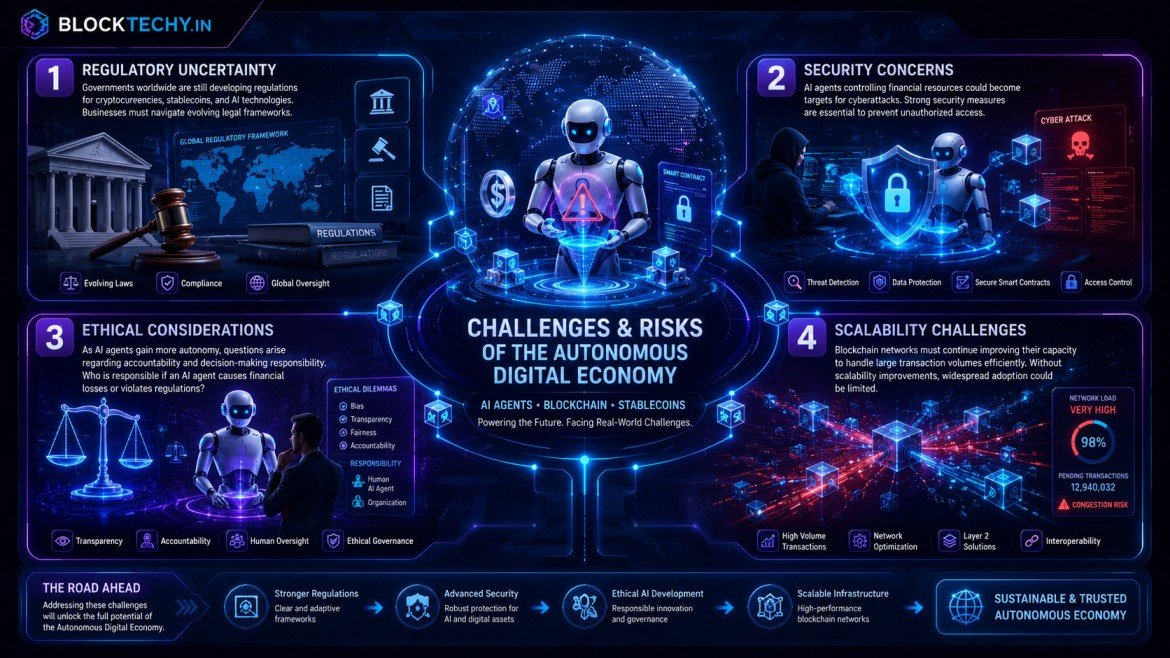
Regulatory Uncertainty
Governments worldwide are still developing regulations for cryptocurrencies, stablecoins, and AI technologies.
Businesses must navigate evolving legal frameworks.
Security Concerns
AI agents controlling financial resources could become targets for cyberattacks.
Strong security measures are essential to prevent unauthorized access.
Ethical Considerations
As AI agents gain more autonomy, questions arise regarding accountability and decision-making responsibility.
Who is responsible if an AI agent causes financial losses or violates regulations?
Scalability
Blockchain networks must continue improving their capacity to handle large transaction volumes efficiently.
Without scalability improvements, widespread adoption could be limited.
The Future Outlook
The integration of AI, blockchain, and stablecoins represents one of the most exciting technological developments of the decade.
As AI systems become more sophisticated and blockchain infrastructure matures, autonomous economic agents are likely to become increasingly common.

Businesses may deploy AI employees that operate continuously, negotiate contracts, manage budgets, and execute transactions around the clock.
Consumers could benefit from personalized AI assistants capable of purchasing products, managing finances, and coordinating services automatically.
While challenges remain, the momentum behind this trend continues to grow. Major technology companies, financial institutions, blockchain projects, and startups are actively investing in solutions that combine AI and decentralized finance.
Conclusion
The convergence of AI agents, blockchain technology, and stablecoins is laying the foundation for a new autonomous digital economy. By combining intelligence, trustless infrastructure, and programmable money, these technologies enable software systems to participate directly in economic activities.
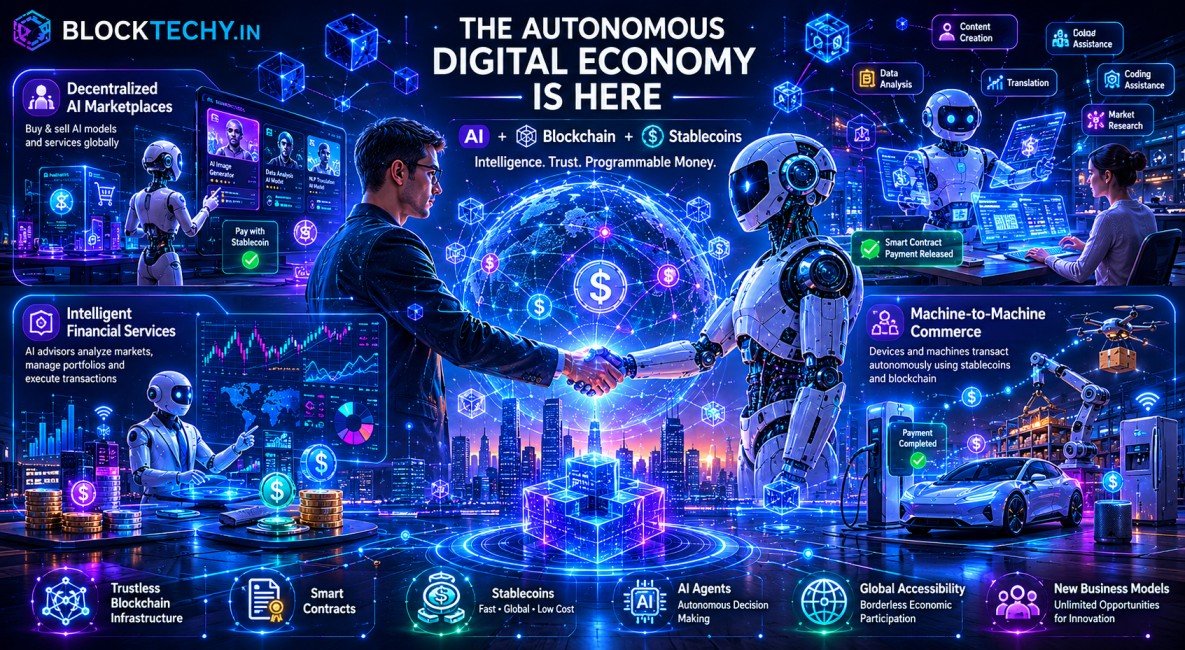
From decentralized marketplaces and automated freelancing to machine-to-machine commerce and intelligent financial services, the potential applications are vast. As innovation accelerates, organizations that understand and adopt these technologies early may gain a significant competitive advantage.
The future may not simply involve humans using technology—it may involve technology actively participating in the economy alongside humans. The autonomous digital economy is no longer a distant concept; it is rapidly becoming a reality.
Follow this link to join my WhatsApp group:
https://chat.whatsapp.com/JvmrMTxkdgt9u6kGMT73XY
This Blog is very useful for me, Thank you Sir