Introduction
Blockchain technology has evolved far beyond cryptocurrencies. In 2026, it powers decentralized finance (DeFi), tokenized real-world assets (RWAs), decentralized identity, gaming, supply chain management, healthcare, artificial intelligence (AI), and enterprise solutions. As businesses continue to adopt blockchain, the demand for skilled blockchain developers is growing rapidly across the globe.
Whether you’re a student, software developer, or someone looking for a high-paying career in Web3, becoming a blockchain developer is one of the smartest career choices in 2026.
This comprehensive roadmap will guide you through the essential skills, programming languages, tools, learning path, certifications, and career opportunities you need to become a successful blockchain developer.
What is a Blockchain Developer?
A blockchain developer is a software engineer who designs, develops, tests, and maintains blockchain-based applications and decentralized systems.
Unlike traditional software developers, blockchain developers work with decentralized networks where data is stored across multiple nodes instead of centralized servers.
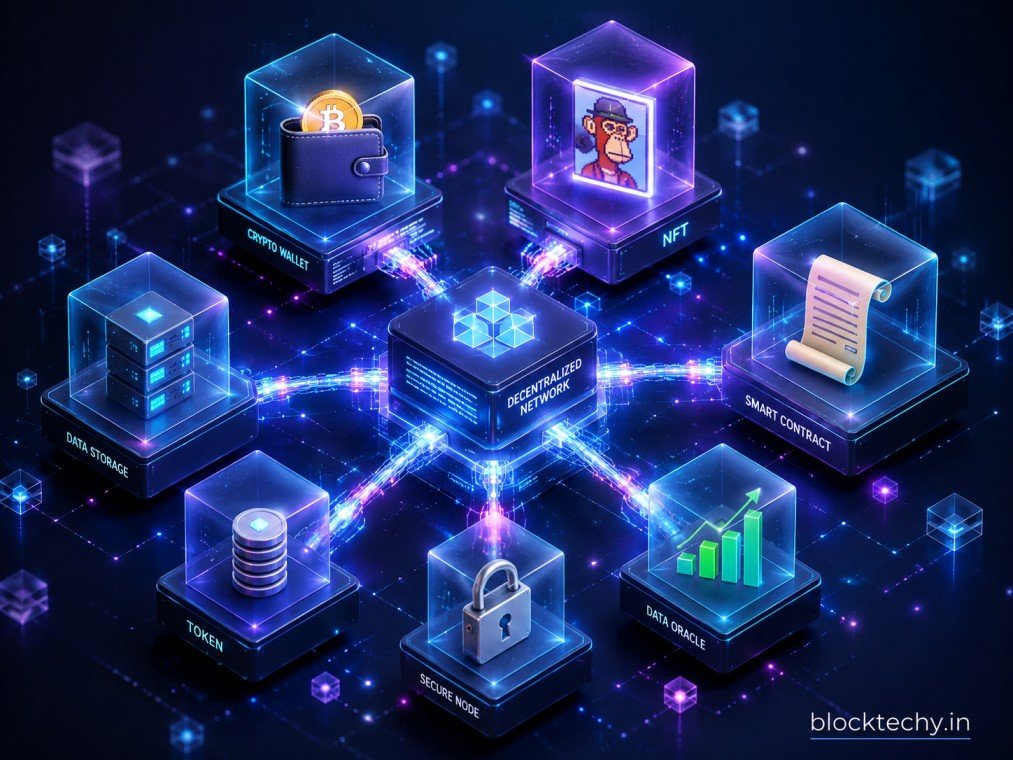
They create:
- Smart contracts
- Decentralized Applications (DApps)
- Cryptocurrency wallets
- NFT marketplaces
- DeFi protocols
- DAO platforms
- Cross-chain applications
- Enterprise blockchain solutions
Blockchain developers combine software engineering, cryptography, networking, and distributed systems knowledge to build secure decentralized applications.
Why Become a Blockchain Developer in 2026?
Blockchain continues to be one of the fastest-growing technologies worldwide.

Growing Demand
Thousands of startups and large enterprises are hiring blockchain developers to build innovative Web3 products.
Industries adopting blockchain include:
- Banking
- Healthcare
- Insurance
- Government
- Supply Chain
- Gaming
- Real Estate
- Education
- AI
- Cybersecurity
Attractive Salaries
Blockchain developers are among the highest-paid software professionals.
Approximate annual salaries:
- Beginner: $60,000–$90,000
- Mid-Level: $90,000–$150,000
- Senior: $150,000+
- Smart Contract Auditor: $180,000+
Freelancers and consultants can earn even more depending on experience and project complexity.
Future-Proof Career
Web3, tokenization, decentralized AI, and digital identity are expected to expand significantly over the coming years.
Blockchain developers will remain in high demand as organizations continue integrating decentralized technologies into their digital infrastructure.
Blockchain Developer Roadmap 2026
Let’s explore the complete learning path.
Step 1: Learn Programming Fundamentals
Before learning blockchain, build a strong programming foundation.
Essential concepts include:
- Variables
- Data types
- Functions
- Loops
- Conditional statements
- Object-Oriented Programming (OOP)
- Data Structures
- Algorithms
- Exception Handling
- File Handling
Popular beginner languages:
- Python
- JavaScript
- Java
- C++
- Go
Python is excellent for beginners, while JavaScript is essential for Web3 frontend development.
Step 2: Learn Computer Science Basics
Blockchain relies on core computer science concepts.
Master:
- Operating Systems
- Computer Networks
- Database Management
- Distributed Systems
- Networking Protocols
- HTTP
- REST APIs
- Client-Server Architecture
- Cloud Computing Basics
Understanding how distributed systems work makes blockchain concepts much easier.
Step 3: Understand Blockchain Fundamentals
Now begin learning blockchain itself.
Topics to study:
Blockchain Architecture
Learn:
- Blocks
- Transactions
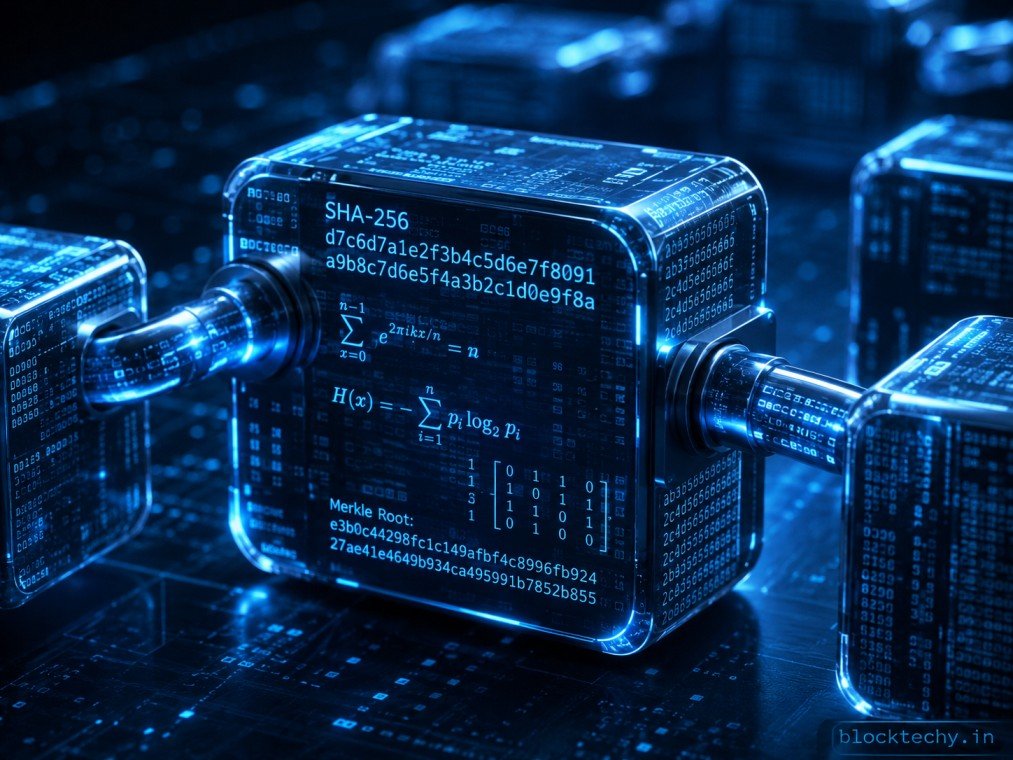
- Hashing
- Merkle Trees
- Genesis Block
- Consensus
- Nodes
Consensus Mechanisms
Understand different consensus algorithms:
- Proof of Work (PoW)
- Proof of Stake (PoS)
- Delegated Proof of Stake
- Proof of Authority
- Proof of History
- Byzantine Fault Tolerance
Each blockchain uses different mechanisms for validation.
Cryptography
Blockchain security depends heavily on cryptography.
Important concepts:
- SHA-256
- Keccak-256
- Digital Signatures
- Public Key Cryptography
- Private Keys
- Wallet Addresses
- Elliptic Curve Cryptography
Step 4: Learn Ethereum Development
Ethereum remains the largest smart contract ecosystem.
Learn:
- Ethereum Virtual Machine (EVM)
- Gas Fees
- Accounts
- Transactions
- ERC Standards
- Smart Contracts
- Tokens
Popular Ethereum standards include:
- ERC-20
- ERC-721
- ERC-1155
- ERC-4626
Step 5: Learn Solidity
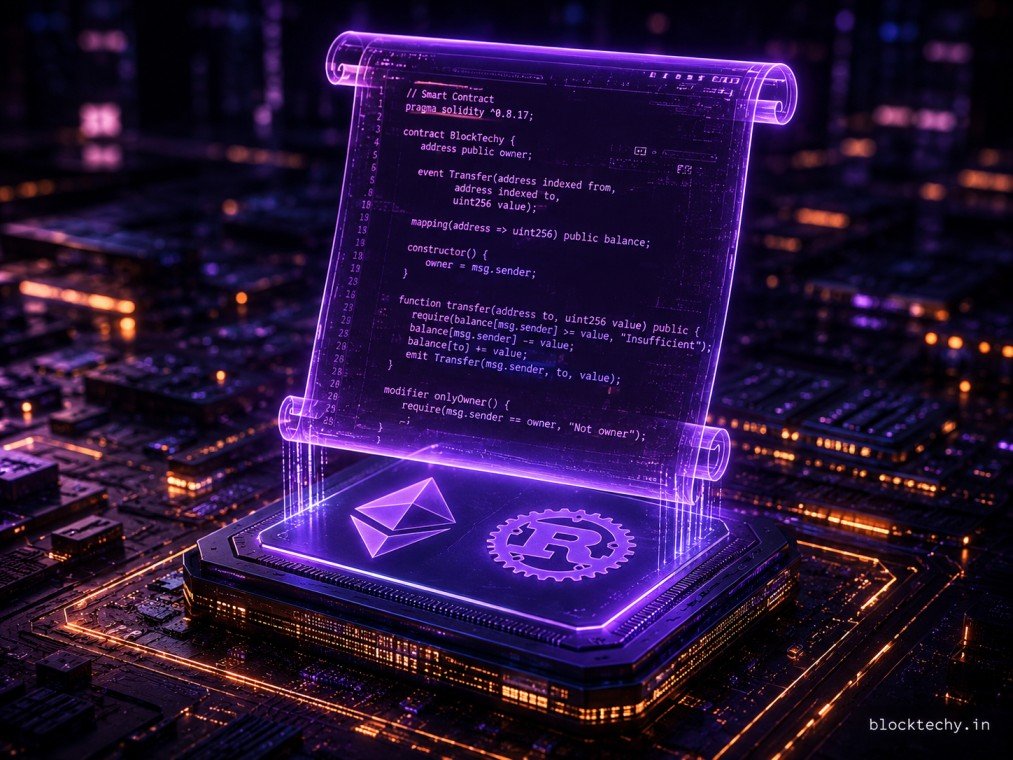
Solidity is the primary programming language for Ethereum smart contracts.
Topics:
- Variables
- Functions
- Events
- Structs
- Enums
- Arrays
- Mappings
- Modifiers
- Inheritance
- Interfaces
- Libraries
- Error Handling
Advanced topics:
- Proxy Contracts
- Upgradeable Contracts
- Gas Optimization
- Security Patterns
Step 6: Learn Smart Contract Security
Security is one of the most important blockchain skills.
Common vulnerabilities:
- Reentrancy
- Integer Overflow
- Underflow
- Flash Loan Attacks
- Oracle Manipulation
- Front Running
- Signature Replay
- Access Control Errors
Learn secure coding practices before deploying contracts to production.
Step 7: Learn Web Development
Blockchain applications require modern frontend skills.
Frontend technologies:
- HTML
- CSS
- JavaScript
- TypeScript
- React
- Next.js
Backend technologies:
- Node.js
- Express.js
- REST APIs
- GraphQL
Understanding full-stack development makes you far more valuable as a blockchain developer.
Step 8: Learn Web3 Libraries
Web3 applications connect users’ wallets to blockchain networks.
Popular libraries:
- Ethers.js
- Web3.js
- Wagmi
- Viem
You’ll learn how to:
- Connect wallets
- Send transactions
- Read blockchain data
- Call smart contracts
- Listen to events
Step 9: Learn Wallet Integration
Most decentralized applications rely on wallet authentication.
Popular wallets:
- MetaMask
- Rabby Wallet
- Phantom
- Coinbase Wallet
- Trust Wallet
Users authenticate by signing cryptographic messages instead of entering passwords.
Step 10: Learn Blockchain Development Tools
Professional developers use many specialized tools.
Development
- Remix IDE
- VS Code
- Hardhat
- Foundry
- Truffle
Testing
- Chai
- Mocha
- Jest
Deployment
- Hardhat
- Foundry
- Thirdweb
APIs
- Alchemy
- Infura
- QuickNode
Block Explorers
- Etherscan
- Blockscout
- Arbiscan
- Basescan
Step 11: Learn Different Blockchain Networks
Don’t limit yourself to Ethereum.
Important ecosystems include:
Ethereum
Best for:
- DeFi
- NFTs
- DAOs
Solana
Known for:
- High speed
- Low fees
- Rust development
Polygon
Popular for:
- Gaming
- Enterprise
- NFTs
Avalanche
Excellent for:
- DeFi
- Enterprise chains
BNB Chain
Popular for:
- DApps
- DeFi
Cosmos
Known for:
- Interoperability
- App Chains
Polkadot
Focuses on:
- Cross-chain communication
- Shared security
Sui & Aptos
Growing ecosystems using the Move programming language.
Step 12: Learn Rust
Rust has become increasingly important.
Used by:
- Solana
- Polkadot
- NEAR
- Fuel
- Many blockchain infrastructure projects
Rust developers are among the highest-paid in Web3.
Step 13: Learn Layer-2 Technologies
Ethereum scaling solutions continue to grow rapidly.
Learn about:
- Arbitrum
- Optimism
- Base
- zkSync
- Starknet
- Scroll
Understand:
- Rollups
- Zero-Knowledge Proofs
- Optimistic Rollups
- State Channels
Step 14: Learn DeFi Protocols
Understand how decentralized finance works.
Topics:
- Liquidity Pools
- Automated Market Makers (AMMs)
- Lending
- Borrowing
- Stablecoins
- Yield Farming
- Staking
- Flash Loans
Popular protocols:
- Uniswap
- Aave
- Curve
- MakerDAO
Step 15: Learn NFTs and Tokenization
NFTs now extend beyond digital art.
Applications include:
- Gaming
- Music
- Tickets
- Identity
- Certificates
- Real Estate
- Luxury Goods
Also learn about Real World Asset (RWA) tokenization.
Step 16: Learn Blockchain Security
Understand blockchain attacks.
Study:
- Wallet Security
- Private Key Protection
- Multisignature Wallets
- MPC Wallets
- Hardware Wallets
- Smart Contract Auditing
- Penetration Testing
Security knowledge greatly increases your career value.
Step 17: Learn AI + Blockchain
One of the hottest trends in 2026.
Applications include:
- Decentralized AI
- AI Agents
- Data Verification
- Autonomous Payments
- AI Marketplaces
- Verifiable Machine Learning
- Agent-to-Agent Payments
Developers who understand both AI and blockchain have a significant competitive advantage.
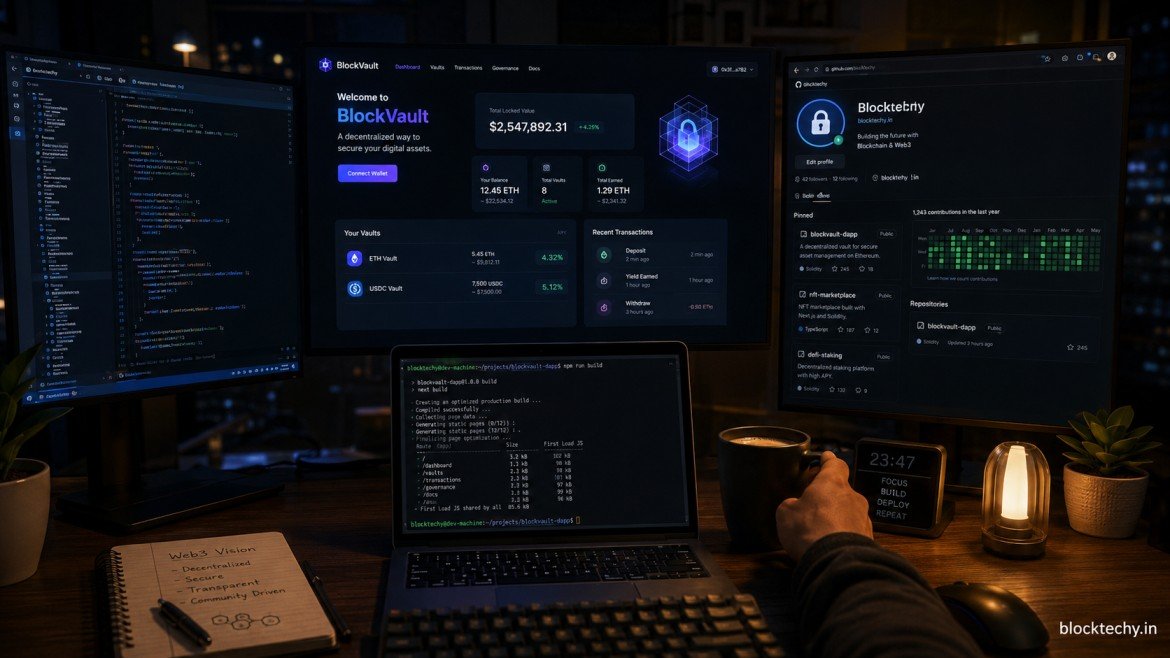
Step 18: Build Real Projects
Projects demonstrate practical skills far better than certificates.
Build:
Beginner Projects
- Simple Token
- Wallet App
- Voting System
- NFT Minting DApp
Intermediate Projects
- Decentralized Exchange
- Staking Platform
- DAO Governance
- Crowdfunding Platform
- Escrow Smart Contract
Advanced Projects
- Cross-chain Bridge
- Lending Protocol
- Yield Optimizer
- Blockchain Explorer
- Layer-2 Application
- RWA Marketplace
- AI Agent Marketplace
Host projects on GitHub and deploy live demos to showcase your abilities.
Step 19: Learn Git and GitHub
Version control is essential.
Master:
- Git
- GitHub
- Branches
- Pull Requests
- Code Reviews
- CI/CD
A strong GitHub profile acts as your technical portfolio.
Step 20: Contribute to Open Source
Many successful blockchain developers started by contributing to open-source projects.
Benefits:
- Practical experience
- Networking
- Better coding practices
- Community recognition
- Strong resume
Essential Skills Every Blockchain Developer Needs
Technical Skills
- Smart Contract Development
- Solidity
- Rust
- JavaScript
- React
- Node.js
- Cryptography
- Networking
- Security
- Database Design
- API Development
Soft Skills
- Problem Solving
- Communication
- Teamwork
- Continuous Learning
- Analytical Thinking
- Time Management
Technical expertise alone isn’t enough—collaboration and adaptability are equally important.
Best Tools for Blockchain Developers in 2026
| Category | Popular Tools |
|---|---|
| IDE | VS Code, Remix |
| Smart Contracts | Hardhat, Foundry |
| Frontend | React, Next.js |
| Backend | Node.js, Express |
| Wallet | MetaMask, Rabby |
| APIs | Alchemy, Infura |
| Database | PostgreSQL, MongoDB |
| Version Control | GitHub |
| Testing | Chai, Mocha |
| Monitoring | Tenderly |
| Containerization | Docker |
| Cloud | AWS, Google Cloud |
Blockchain Career Opportunities
Blockchain developers can specialize in many roles.
Popular careers include:
Smart Contract Developer
Build secure smart contracts for DeFi, NFTs, and DAOs.
Blockchain Software Engineer
Develop blockchain infrastructure and decentralized applications.
Web3 Full-Stack Developer
Build complete DApps using React, Solidity, and backend services.
Blockchain Security Engineer
Audit smart contracts and identify vulnerabilities.
Blockchain Research Engineer
Research consensus mechanisms, scalability, and cryptography.
Protocol Engineer
Develop Layer-1 and Layer-2 blockchain protocols.
DeFi Developer
Create decentralized exchanges, lending platforms, and staking systems.
NFT Platform Developer
Build NFT marketplaces, launchpads, and digital asset platforms.
Blockchain Consultant
Advise businesses on blockchain adoption, architecture, and implementation.
Enterprise Blockchain Developer
Develop permissioned blockchain solutions for industries like finance, healthcare, and supply chain.
Learning Resources
To stay updated and deepen your knowledge:
- Official blockchain documentation
- GitHub open-source repositories
- Technical blogs
- YouTube tutorials
- Developer communities
- Hackathons
- Coding challenges
- Online certification programs
Hands-on practice and continuous learning are more valuable than memorizing theory.
Common Mistakes Beginners Should Avoid
Many aspiring blockchain developers make avoidable mistakes.
Watch out for these:
- Learning Solidity before understanding programming basics.
- Ignoring smart contract security.
- Building only tutorial projects without creating original applications.
- Neglecting Git and version control.
- Focusing solely on one blockchain ecosystem.
- Skipping testing before deployment.
- Forgetting to optimize gas usage.
- Not participating in developer communities or hackathons.
- Overlooking documentation and best practices.
Avoiding these pitfalls will help you progress faster and build production-ready applications.
Future of Blockchain Development Beyond 2026
Blockchain development is moving toward a future where decentralized systems become part of everyday digital experiences. Key trends include:
- AI-powered decentralized applications
- Real-world asset tokenization
- Cross-chain interoperability
- Zero-knowledge privacy technologies
- Decentralized identity solutions
- Enterprise blockchain adoption
- Autonomous AI agents using blockchain payments
- Decentralized cloud infrastructure
- Web3 gaming ecosystems
- Green and energy-efficient blockchain networks
Developers who continuously learn and adapt to these emerging technologies will remain highly competitive in the years ahead.
Conclusion
The blockchain industry in 2026 offers tremendous opportunities for developers who are willing to invest time in building strong technical foundations and practical experience. Becoming a blockchain developer is no longer just about writing smart contracts—it requires understanding distributed systems, cryptography, security, modern web development, cloud infrastructure, and emerging technologies like AI and cross-chain interoperability.
Start with programming fundamentals, master blockchain concepts, learn Solidity and Rust, build real-world projects, contribute to open-source communities, and continuously improve your skills. A portfolio of practical projects, combined with a commitment to learning, will often open more doors than certifications alone.
Whether your goal is to work for a leading Web3 company, launch your own decentralized application, contribute to open-source protocols, or freelance for global clients, the blockchain ecosystem has room for innovators and problem-solvers. The journey may be challenging, but the rewards—both professionally and financially—can be significant.
As blockchain technology continues to reshape finance, identity, supply chains, gaming, healthcare, and countless other industries, developers with the right skills will play a central role in building the decentralized future. The best time to begin your blockchain development journey is now.
FAQs
1. Do I need a computer science degree to become a blockchain developer?
No. While a computer science background is helpful, many successful blockchain developers are self-taught and have learned through online courses, documentation, and hands-on projects.
2. Which programming language should I learn first?
Python or JavaScript are excellent starting points. Once you understand programming fundamentals, move on to Solidity for Ethereum development and Rust for ecosystems like Solana.
3. Is blockchain development a good career in 2026?
Yes. With growing adoption across finance, gaming, AI, enterprise software, and tokenization, blockchain development remains one of the most promising and well-paying technology careers.
4. How long does it take to become job-ready?
With consistent learning and project building, beginners can become job-ready in approximately 6–12 months. The timeline depends on your prior programming experience and the amount of time you dedicate to practice.
5. What is the most important skill for a blockchain developer?
Smart contract security is one of the most critical skills. Writing secure, efficient, and thoroughly tested code is essential for building trustworthy blockchain applications.