Introduction to AI and Blockchain
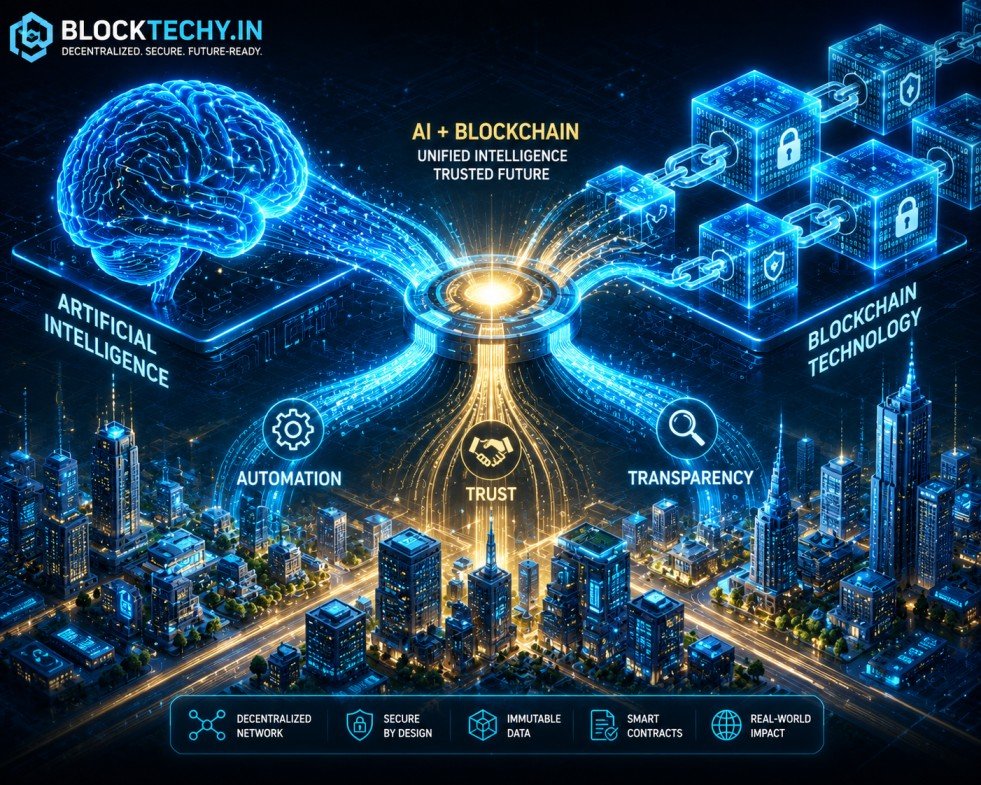
The world is witnessing a technological transformation unlike anything seen before. Two of the most disruptive technologies of the 21st century—Artificial Intelligence (AI) and Blockchain—are rapidly changing the way businesses operate, governments function, and individuals interact with digital systems. While each technology has independently demonstrated its transformative power, their convergence is creating a new wave of innovation that could redefine the future of the digital economy.
Artificial Intelligence enables machines to learn, reason, and make decisions based on data, while blockchain provides a decentralized, transparent, and secure framework for storing and verifying information. Together, these technologies address each other’s limitations and unlock opportunities that were previously unimaginable.
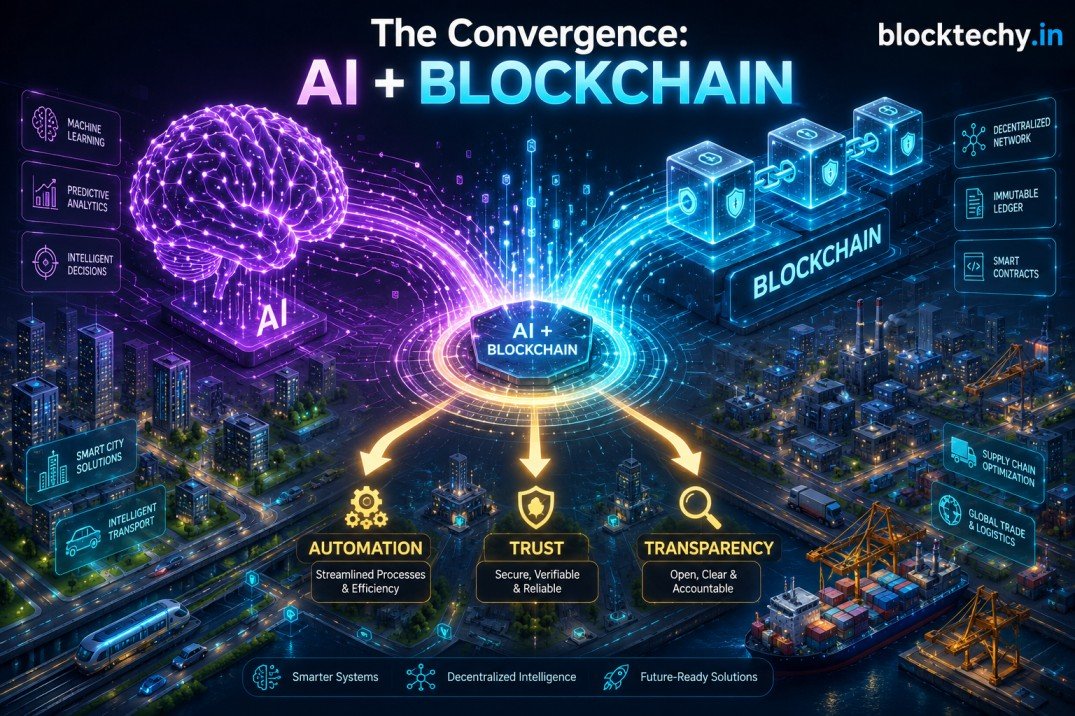
As industries seek greater automation, transparency, and trust, AI and blockchain are emerging as complementary technologies capable of solving complex global challenges. From healthcare and finance to supply chain management and cybersecurity, the combination of AI and blockchain is paving the way for a smarter and more secure future.
In this article, we explore how AI and blockchain work together, their benefits, real-world applications, challenges, and what the future holds for this revolutionary technological partnership.
Understanding Artificial Intelligence in the Age of AI and Blockchain
Artificial Intelligence refers to the ability of machines and software systems to simulate human intelligence. AI systems can analyze data, identify patterns, make decisions, and continuously improve their performance through machine learning.
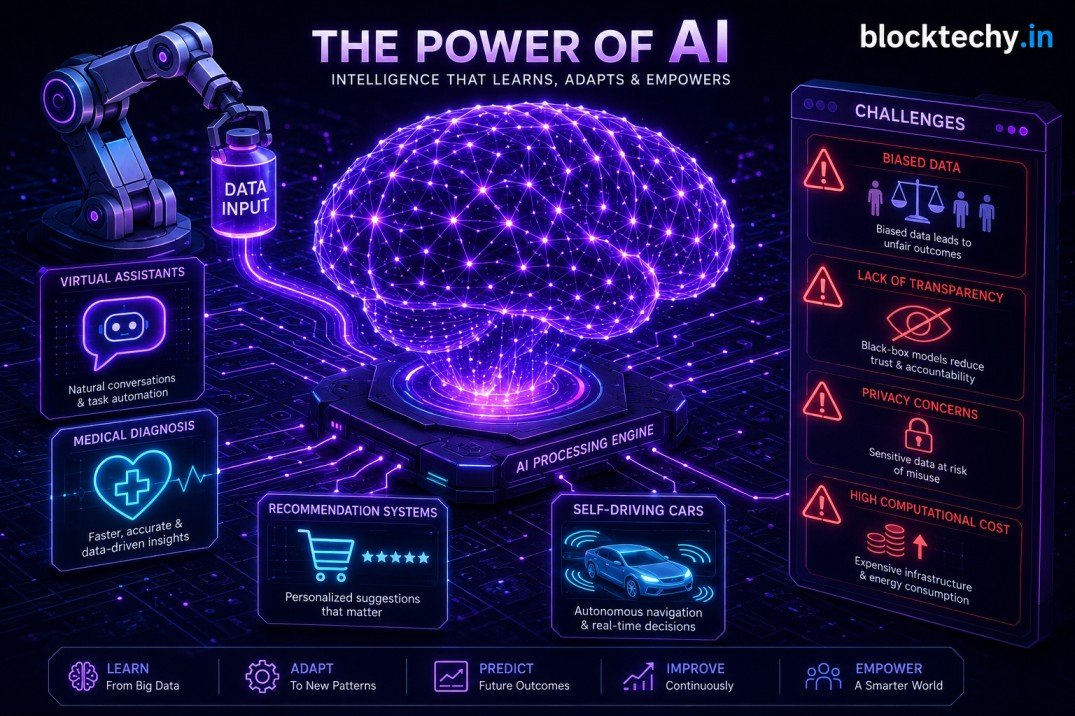
Common applications of AI include:
– Virtual assistants
– Chatbots
– Recommendation systems
– Autonomous vehicles
– Fraud detection
– Medical diagnosis
– Predictive analytics
The effectiveness of AI depends heavily on the quality and availability of data. The more accurate and reliable the data, the better the AI system performs.
However, AI faces significant challenges, including data privacy concerns, lack of transparency, bias in algorithms, and vulnerability to data manipulation. These challenges highlight the need for secure and trustworthy data infrastructures.
How Blockchain Supports AI and Blockchain Integration
Blockchain is a decentralized digital ledger that records transactions across multiple computers. Unlike traditional databases controlled by a central authority, blockchain operates through a distributed network where every participant maintains a copy of the ledger.
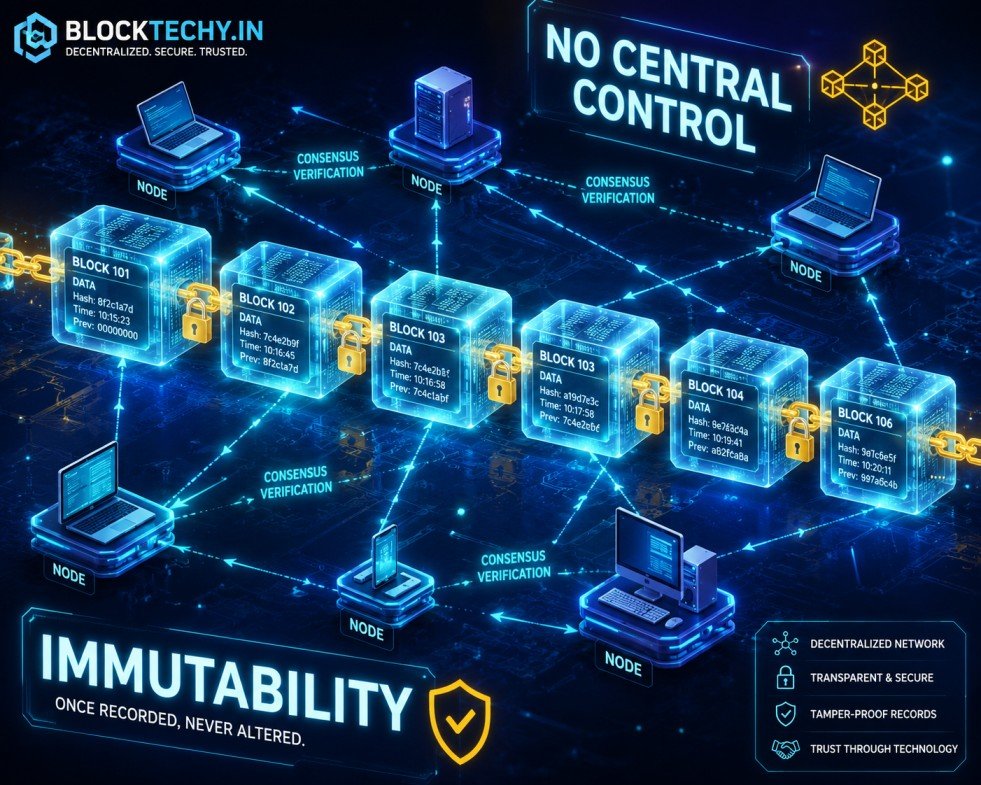
Key characteristics of blockchain include:
Decentralization
No single organization controls the network.
Transparency
Transactions can be verified by participants.
Security
Cryptographic mechanisms protect data integrity.
Immutability
Once recorded, data cannot be altered without network consensus.
Trust
Participants can transact without relying on intermediaries.
Blockchain has become the foundation for cryptocurrencies, decentralized finance, digital identity systems, and numerous enterprise applications.
Why AI and Blockchain Need Each Other
Although AI and blockchain are powerful technologies individually, combining them creates a synergistic relationship.
AI excels at analyzing data and making intelligent decisions, but it requires trustworthy data. Blockchain provides secure, transparent, and verifiable data sources.
Blockchain ensures trust, but it often lacks intelligent automation. AI brings decision-making and automation capabilities to blockchain systems.
Together, they create systems that are:
– More secure
– More transparent
– More efficient
– More intelligent
– More trustworthy
This partnership addresses some of the biggest technological challenges facing modern organizations.
Benefits of Combining AI and Blockchain
Enhanced Data Security
AI systems depend on large volumes of data. If that data is manipulated, corrupted, or inaccurate, the AI model can produce unreliable results.
Blockchain creates tamper-proof records that ensure data authenticity. Every transaction or data entry can be verified, reducing the risk of manipulation.
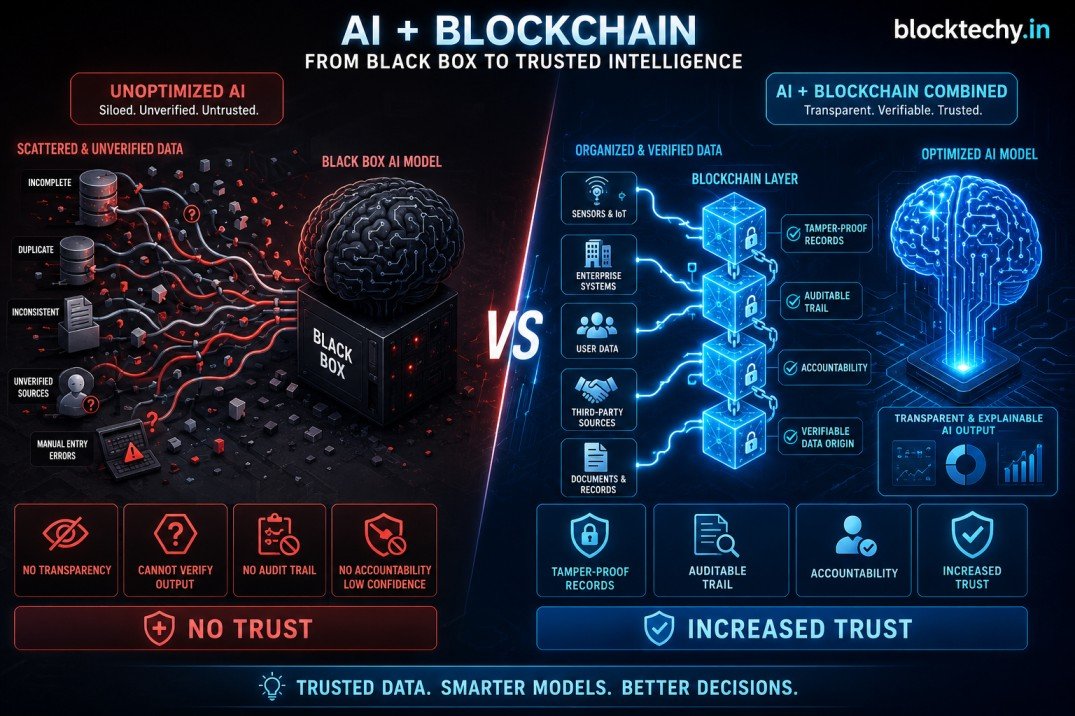
As a result, AI models can operate using trusted information, improving accuracy and reliability.
Improved Transparency
One criticism of AI is its “black box” nature. Many AI systems make decisions without providing clear explanations.
Blockchain can record AI processes and decision logs, creating an auditable trail. This allows organizations to understand how AI systems reach conclusions and ensures accountability.
Transparency is particularly important in industries such as healthcare, banking, and law enforcement.
Better Data Sharing
Organizations often hesitate to share data due to privacy concerns and security risks.
Blockchain enables secure and controlled data sharing while maintaining ownership and privacy.
This capability allows AI systems to access larger and more diverse datasets, improving model performance without compromising sensitive information.
Decentralized AI Networks
Traditional AI development is dominated by large technology companies with access to massive computational resources.
Blockchain enables decentralized AI ecosystems where individuals can contribute data, computing power, and algorithms.
This democratizes AI development and reduces dependence on centralized organizations.
Increased Trust
Trust is essential for the widespread adoption of AI technologies.
Blockchain creates verifiable records that prove the authenticity of AI-generated outcomes.
Users can independently verify data sources, model updates, and decision-making processes, increasing confidence in AI systems.
Real-World Applications of AI and Blockchain
Healthcare
Healthcare generates enormous amounts of sensitive patient data
AI helps doctors diagnose diseases, predict health risks, and develop personalized treatment plans. However, healthcare data must remain secure and private.
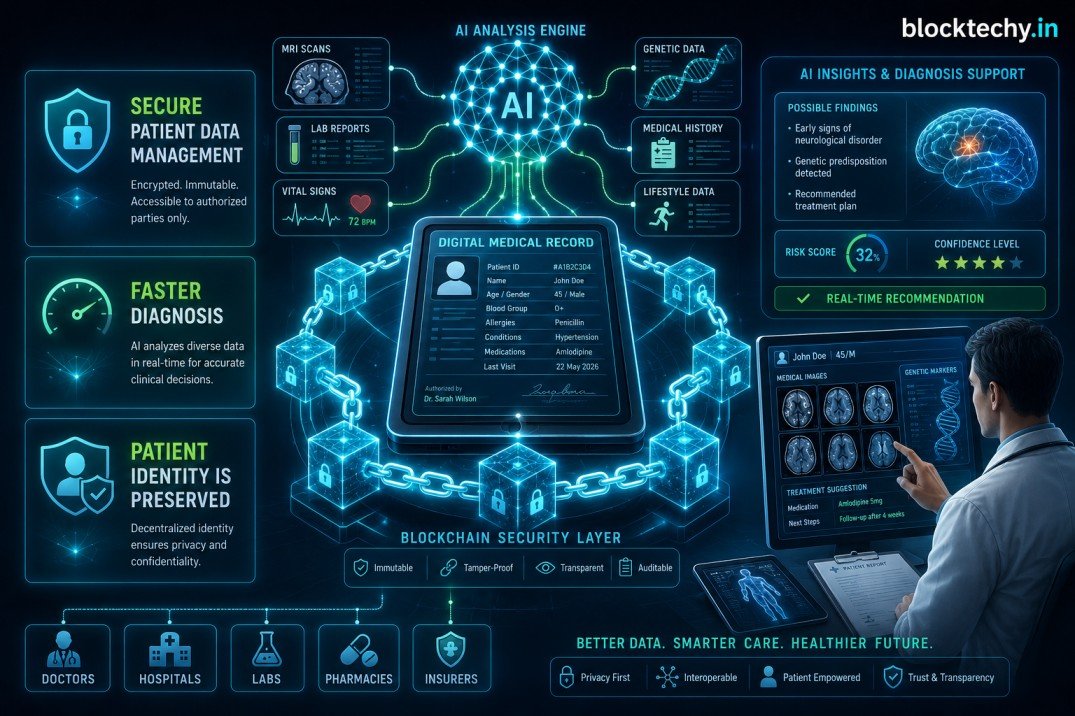
Blockchain provides secure storage and controlled access to medical records
Benefits include:
– Secure patient data management
– Faster diagnosis
– Reduced medical fraud
– Improved interoperability between hospitals
– Enhanced patient privacy
The combination of AI and blockchain is improving healthcare efficiency while maintaining strict security standards.
Financial Services
The financial industry is one of the largest adopters of both AI and blockchain technologies.
AI assists banks and financial institutions with:
– Fraud detection
– Risk assessment
– Algorithmic trading
– Customer service automation
Blockchain enhances financial systems by providing secure, transparent, and decentralized transaction processing.
Together they enable:
– Real-time fraud prevention
– Secure digital payments
– Automated compliance monitoring
– Smart investment strategies
– Reduced operational costs
Financial institutions increasingly view AI and blockchain as essential tools for future growth.
Supply Chain Management
Modern supply chains involve numerous stakeholders across multiple countries.
Tracking products and verifying authenticity can be challenging.
Blockchain provides end-to-end visibility by recording every stage of a product’s journey.
AI analyzes supply chain data to optimize logistics and predict disruptions.
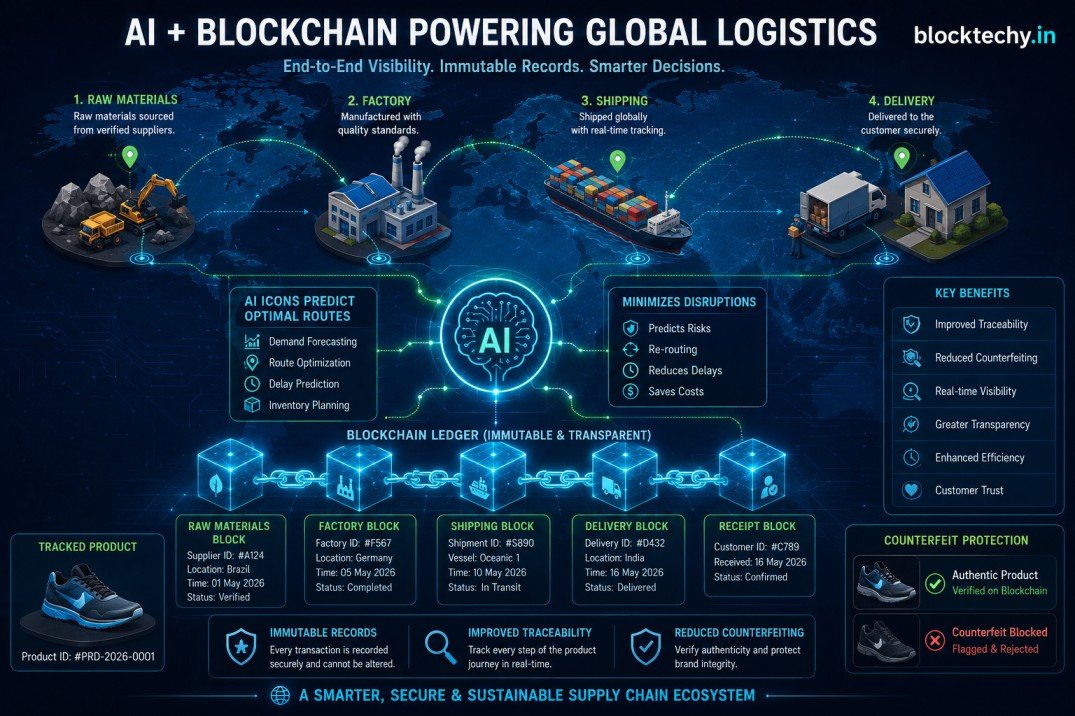
Benefits include:
– Improved traceability
– Reduced counterfeiting
– Better inventory management
– Enhanced operational efficiency
– Faster decision-making
Companies can deliver products more efficiently while increasing consumer trust.
Cybersecurity
Cyber threats continue to evolve, making cybersecurity a top priority for organizations worldwide.
AI helps identify unusual behavior, detect threats, and respond to attacks in real time.
Blockchain strengthens cybersecurity through decentralized data storage and cryptographic protection.
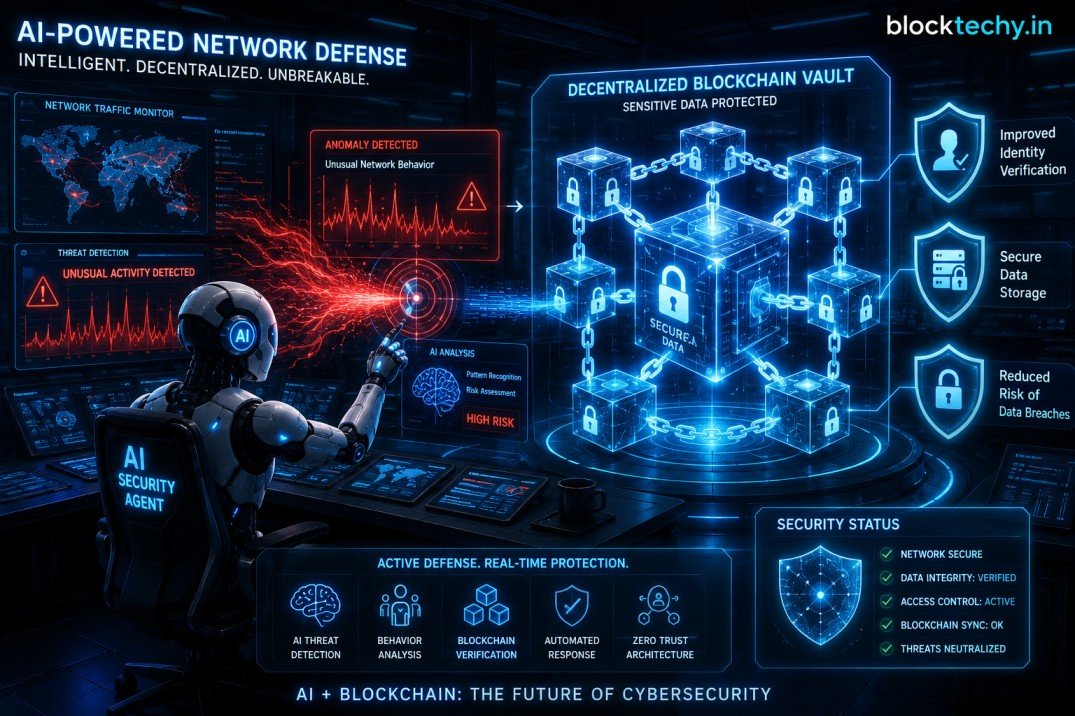
Together they offer:
– Enhanced threat detection
– Improved identity verification
– Secure data storage
– Reduced risk of data breaches
– Automated security monitoring
This combination creates more resilient digital infrastructures.
Smart Cities
Smart cities rely on connected devices, sensors, and data-driven decision-making.
AI processes large volumes of urban data to improve transportation, energy management, and public services.
Blockchain ensures the security and integrity of information generated by city systems.
Applications include:
– Traffic optimization
– Smart energy grids
– Waste management
– Public safety systems
– Digital identity services
AI and blockchain are helping cities become more sustainable, efficient, and responsive to citizens’ needs.
AI-Powered Smart Contracts
Smart contracts are self-executing agreements stored on blockchain networks
Traditional smart contracts follow predefined rules and execute automatically when conditions are met.
By integrating AI, smart contracts become more dynamic and intelligent.
For example:
– Insurance claims can be assessed automatically.
– Financial agreements can adapt to market conditions.
– Supply chain contracts can respond to real-time events.
AI-powered smart contracts increase automation, reduce administrative costs, and improve business efficiency.
Challenges of AI and Blockchain Integration
Despite their potential, combining AI and blockchain presents several challenges.
Scalability
Blockchain networks may struggle to process large amounts of AI-related data efficiently.
Developers are working on advanced scaling solutions to address this limitation.
Energy Consumption
Some blockchain networks consume significant energy resources.
Organizations are increasingly adopting energy-efficient consensus mechanisms to improve sustainability.
Data Privacy
Balancing transparency and privacy remains challenging.
Advanced cryptographic techniques such as Zero-Knowledge Proofs are helping solve this issue.
Regulatory Uncertainty
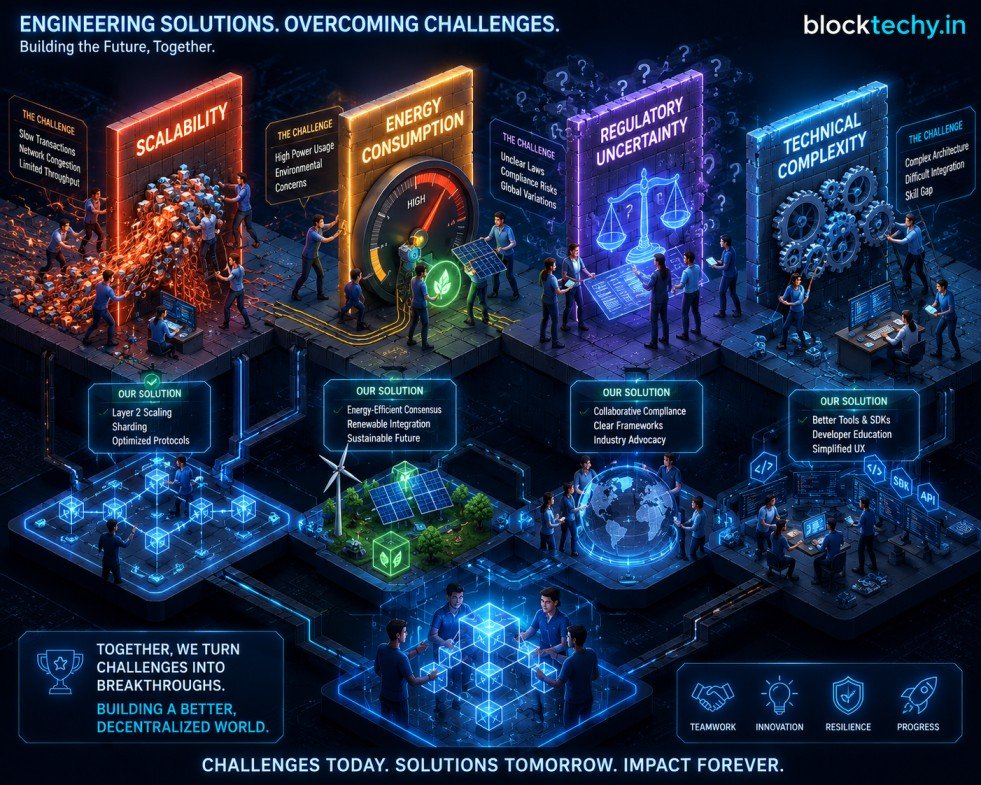
Governments are still developing regulations for AI and blockchain technologies.
Clear legal frameworks will be necessary to support broader adoption.
Technical Complexity
Integrating AI and blockchain requires expertise in both fields.
Organizations must invest in skilled professionals and infrastructure to implement these technologies effectively.
The Future of AI and Blockchain
The integration of AI and blockchain is still in its early stages, yet its potential is enormous.
Future developments may include:
Decentralized AI Marketplaces
Individuals and organizations will be able to buy, sell, and share AI models through blockchain-powered platforms.
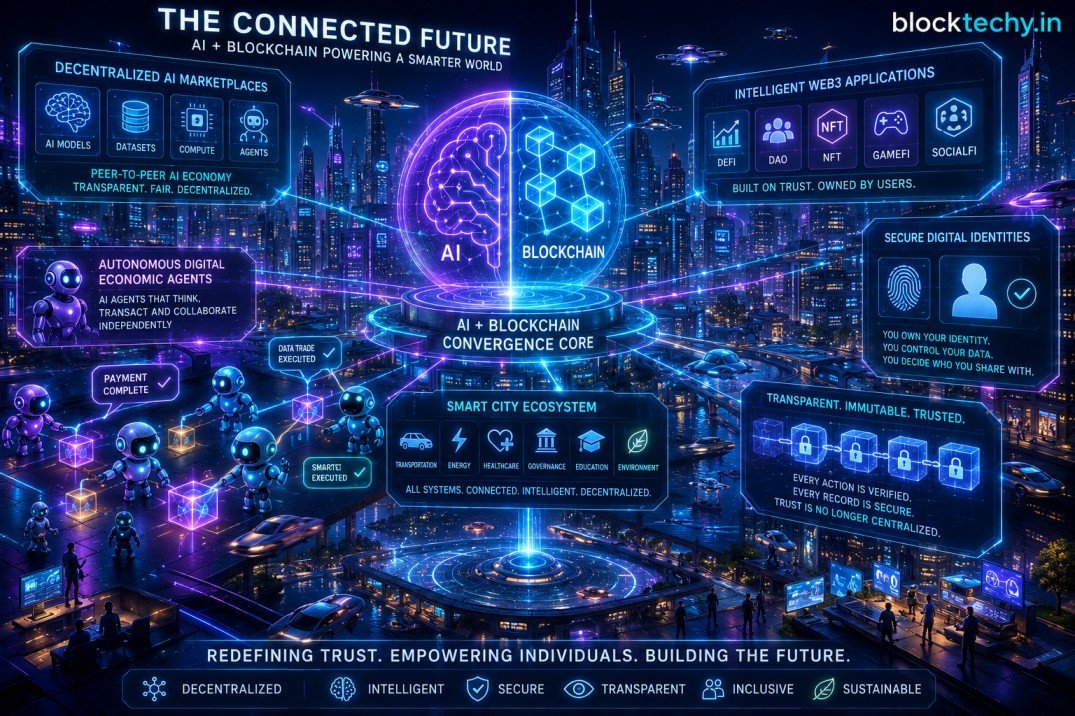
Autonomous Economic Agents
AI-powered digital agents may conduct transactions, negotiate contracts, and manage assets independently.
Trusted AI Ecosystems
Blockchain-based verification systems will improve transparency and accountability in AI applications.
Enhanced Digital Identity
Secure identity systems will enable safer online interactions while preserving user privacy.
Intelligent Web3 Applications
The next generation of decentralized applications will combine AI intelligence with blockchain security and ownership.
These innovations could fundamentally transform the global digital economy.
Conclusion: The Power of AI and Blockchain
Artificial Intelligence and Blockchain are among the most powerful technologies shaping the future. Individually, they offer remarkable capabilities. Together, they create a technological partnership capable of solving some of society’s most complex challenges.
AI brings intelligence, automation, and predictive capabilities, while blockchain provides security, transparency, and trust. Their integration is driving innovation across healthcare, finance, supply chains, cybersecurity, smart cities, and countless other industries.
Although challenges remain, rapid advancements in both fields continue to unlock new possibilities. Organizations that embrace AI and blockchain today will be better positioned to compete in tomorrow’s increasingly digital world.
The next technological revolution is not powered by AI alone or blockchain alone—it is powered by the combination of both. As these technologies continue to evolve, they will redefine how we work, transact, communicate, and build trust in the digital age.
Follow this link to join my WhatsApp group: https://chat.whatsapp.com/JvmrMTxkdgt9u6kGMT73XY