
Introduction
The rapid evolution of blockchain technology has transformed how people store value, exchange assets, and interact with digital applications. From cryptocurrencies and decentralized finance (DeFi) to NFTs and decentralized autonomous organizations (DAOs), Web3 has created an entirely new digital economy. However, this innovation has also introduced new cybersecurity challenges. As billions of dollars flow through blockchain networks every year, cybercriminals are constantly developing sophisticated techniques to exploit vulnerabilities.
Unlike traditional financial systems, blockchain transactions are irreversible, making security one of the most critical aspects of the Web3 ecosystem. A single mistake, compromised wallet, or vulnerable smart contract can lead to permanent financial loss. Therefore, understanding blockchain cybersecurity is no longer optional—it’s essential for developers, investors, businesses, and everyday users.

In this comprehensive guide, we’ll explore blockchain cybersecurity, common threats, best security practices, emerging technologies, and how blockchain itself is revolutionizing digital security.
What Is Blockchain Cybersecurity?
Blockchain cybersecurity refers to the collection of technologies, strategies, and best practices used to protect blockchain networks, smart contracts, digital wallets, decentralized applications (dApps), and crypto assets from cyberattacks.
While blockchain itself is inherently secure due to cryptographic algorithms and decentralized consensus mechanisms, the surrounding ecosystem is often vulnerable. Wallet software, exchanges, bridges, smart contracts, APIs, and user behavior frequently become the weakest links.
Blockchain cybersecurity focuses on protecting:
- Cryptocurrency wallets
- Private keys
- Smart contracts
- Blockchain nodes
- DeFi platforms
- NFT marketplaces
- Crypto exchanges
- Web3 applications
- Cross-chain bridges
- User identities
The objective is to maintain confidentiality, integrity, and availability while ensuring digital assets remain protected.
Why Cybersecurity Matters in the Web3 Era
The Web3 ecosystem has experienced explosive growth over the past few years. Millions of users now own cryptocurrencies, participate in decentralized finance, and interact with blockchain-based applications daily.

Unfortunately, this growth has attracted hackers worldwide.
Major reasons cybersecurity is becoming increasingly important include:
1. High-Value Digital Assets
Blockchain networks hold billions of dollars worth of cryptocurrencies.
Popular assets include:
- Bitcoin
- Ethereum
- Stablecoins
- NFTs
- Tokenized assets
These assets are attractive targets because transactions cannot be reversed after confirmation.
2. Decentralization Removes Central Protection
Traditional banks can freeze fraudulent transactions.
Blockchain networks cannot.
Once a transaction is signed using a private key, it becomes almost impossible to recover stolen funds.
3. Smart Contracts Handle Massive Funds
DeFi protocols often manage billions of dollars through smart contracts.
Even a tiny coding mistake may allow hackers to drain entire liquidity pools.
4. Growing Number of Web3 Applications
Gaming
Metaverse
Identity
Supply Chain
Healthcare
Real Estate
Voting Systems
All increasingly rely on blockchain, making cybersecurity more critical than ever.
Common Blockchain Cybersecurity Threats
Understanding attacks is the first step toward preventing them.
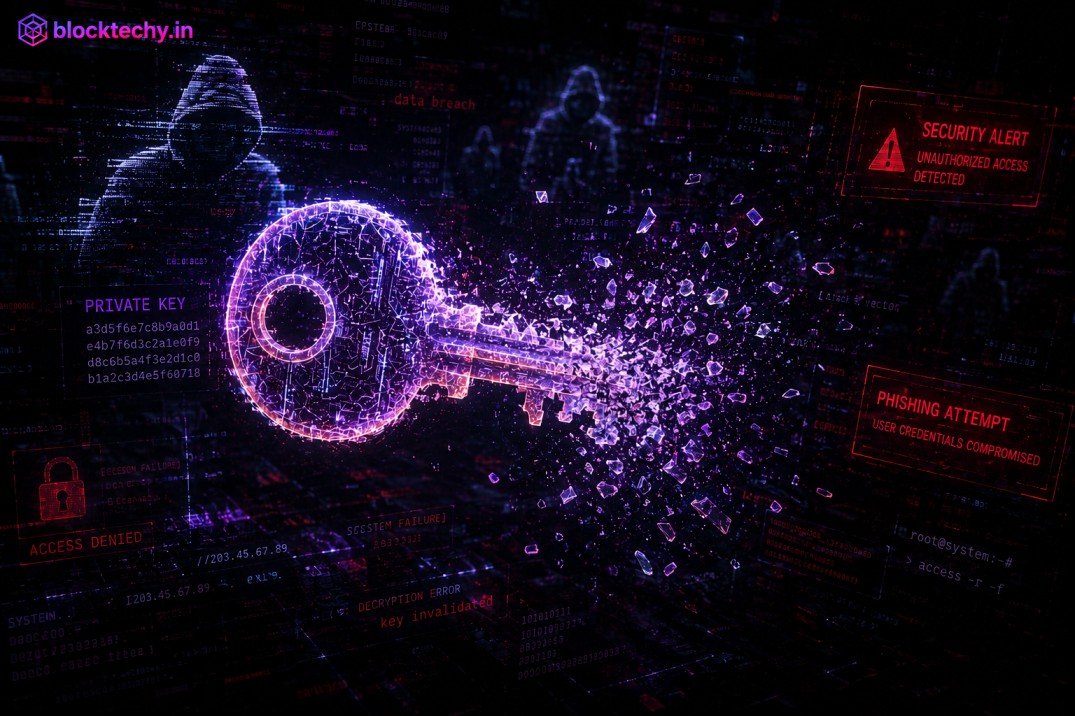
1. Private Key Theft
Private keys provide complete control over blockchain assets.
If someone steals your private key:
- They own your funds.
- Transactions cannot be reversed.
- No authority can recover your assets.
Attack methods include:
- Malware
- Fake wallets
- Clipboard hijacking
- Phishing websites
- Fake browser extensions
2. Phishing Attacks
Phishing remains one of the biggest threats in crypto.
Hackers create fake versions of:
- Wallet websites
- Crypto exchanges
- NFT marketplaces
- DeFi applications
Victims unknowingly enter:
- Seed phrases
- Wallet passwords
- Private keys
Once exposed, assets are stolen immediately.
3. Smart Contract Vulnerabilities
Smart contracts automate blockchain transactions.
Poor coding may introduce vulnerabilities like:
- Reentrancy attacks
- Integer overflow
- Access control flaws
- Logic errors
- Flash loan exploits
These bugs have resulted in billions of dollars in losses.
4. 51% Attacks
If attackers control more than half of a blockchain’s mining or staking power, they may:
- Reverse transactions
- Double-spend coins
- Block transactions
- Manipulate network consensus
Smaller blockchain networks are more vulnerable.
5. Rug Pulls
In a rug pull, project developers intentionally abandon a project after collecting investor funds.
Common signs include:
- Anonymous teams
- Unrealistic promises
- No code audit
- Locked liquidity absent
- Sudden liquidity removal
6. Cross-Chain Bridge Exploits
Bridges connect different blockchain networks.
Because they manage enormous amounts of locked assets, hackers frequently target them.
Bridge attacks have become one of the largest sources of crypto losses.
7. Exchange Hacks
Although blockchain itself may remain secure, centralized exchanges can be compromised.
Possible attack methods include:
- Database breaches
- Insider attacks
- API exploitation
- Credential theft
- Hot wallet compromise
8. Malware and Ransomware
Cybercriminals develop malware specifically designed for crypto users.
Examples include:
- Crypto wallet stealers
- Clipboard replacement malware
- Keyloggers
- Remote access trojans
- Browser wallet hijackers
How Blockchain Technology Enhances Cybersecurity
Interestingly, blockchain isn’t only something that needs protection—it also provides powerful cybersecurity solutions.
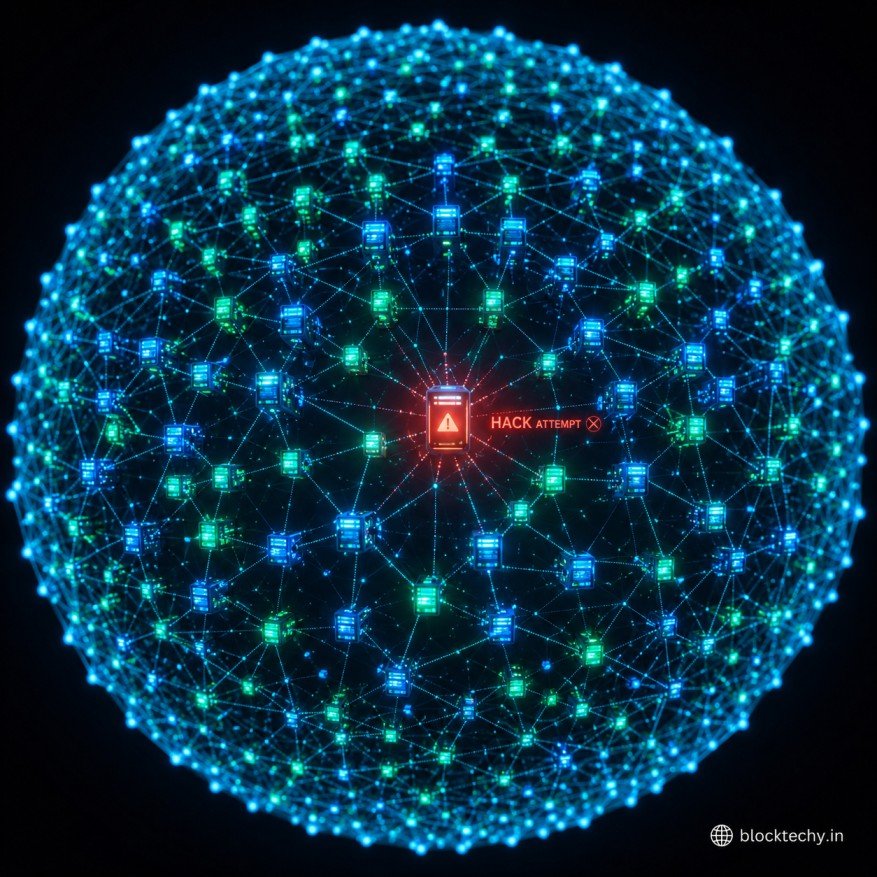
Decentralization
Instead of relying on one central database, blockchain distributes data across thousands of nodes.
This reduces:
- Single points of failure
- Centralized attacks
- Data tampering
Cryptographic Security
Blockchain uses advanced cryptographic algorithms including:
- SHA-256
- Elliptic Curve Cryptography (ECC)
- Digital signatures
- Hash functions
These technologies make altering transaction history practically impossible.
Immutable Records
Once information is added to the blockchain, it cannot easily be modified.
Benefits include:
- Auditability
- Fraud prevention
- Transparent record keeping
- Reliable digital evidence
Consensus Mechanisms
Networks verify transactions through consensus mechanisms such as:
- Proof of Work (PoW)
- Proof of Stake (PoS)
- Delegated Proof of Stake (DPoS)
- Proof of Authority (PoA)
Consensus prevents malicious actors from easily manipulating blockchain data.
Best Practices for Blockchain Security
Every Web3 user should follow essential cybersecurity practices.

Use Hardware Wallets
Hardware wallets store private keys offline.
Advantages include:
- Protection against malware
- Offline signing
- Physical security
- Better resistance against phishing
Enable Multi-Factor Authentication (MFA)
Whenever possible:
- Enable MFA
- Use authentication apps
- Avoid SMS authentication if possible
This provides an additional layer of security.
Never Share Your Seed Phrase
Your recovery phrase should never be shared.
Legitimate companies will never ask for:
- Private keys
- Seed phrases
- Recovery words
Store your seed phrase securely offline.
Verify URLs Carefully
Before connecting your wallet:
- Check website spelling
- Bookmark official websites
- Avoid clicking suspicious links
- Verify SSL certificates
Keep Software Updated
Always update:
- Wallet applications
- Browsers
- Operating systems
- Antivirus software
Updates often include important security patches.
Audit Smart Contracts
Developers should conduct:
- Internal testing
- External security audits
- Bug bounty programs
- Formal verification
Professional audits significantly reduce vulnerabilities.
Use Cold Storage
Long-term crypto holdings should remain offline.
Cold storage dramatically reduces exposure to online attacks.
Smart Contract Security Best Practices
Developers should prioritize secure coding from the beginning.
Key practices include:
Code Reviews
Multiple developers should inspect smart contracts before deployment.
Security Audits
Independent security firms can identify hidden vulnerabilities.
Automated Testing
Extensive testing helps identify edge cases.
Formal Verification
Mathematical proofs verify contract correctness.
Access Control
Limit privileged functions.
Emergency Pause Functions
Some protocols include emergency pause mechanisms that temporarily stop operations if suspicious activity is detected.
Securing Decentralized Finance (DeFi)
DeFi platforms process enormous transaction volumes daily.

Security recommendations include:
- Use audited protocols
- Diversify investments
- Monitor wallet permissions
- Revoke unnecessary token approvals
- Research project teams
- Avoid unrealistic yields
- Check protocol insurance options
Users should also understand that high returns often come with increased risk.
NFT Security Tips
NFT collectors should remain cautious.
Best practices include:
- Verify official collections
- Beware fake mint websites
- Use hardware wallets
- Avoid suspicious Discord links
- Double-check wallet permissions
- Research project authenticity
Scammers frequently impersonate popular NFT projects to steal funds.
Enterprise Blockchain Cybersecurity
Businesses adopting blockchain should implement enterprise-grade security.
Recommended measures include:
Identity Management
Implement decentralized identity solutions.
Network Monitoring
Continuously monitor blockchain infrastructure.
Zero Trust Architecture
Never automatically trust users or devices.
Verify every access request.
Secure APIs
Many blockchain systems interact with external applications through APIs.
API security is essential.
Compliance
Organizations should comply with:
- GDPR
- ISO 27001
- SOC 2
- PCI DSS (where applicable)
Emerging Technologies Strengthening Blockchain Security
Blockchain cybersecurity continues evolving.
Several technologies are improving protection.

Artificial Intelligence (AI)
AI can:
- Detect fraud
- Identify suspicious transactions
- Predict attacks
- Monitor blockchain activity
- Analyze network anomalies
Machine learning significantly improves threat detection.
Zero-Knowledge Proofs (ZKPs)
Zero-Knowledge Proofs enable users to verify information without revealing sensitive data.
Applications include:
- Privacy
- Identity verification
- Secure authentication
- Confidential transactions
Multi-Party Computation (MPC)
Instead of storing one private key, MPC splits cryptographic operations across multiple parties.
Benefits include:
- Reduced key theft risk
- Better institutional custody
- Enhanced enterprise security
Decentralized Identity (DID)
Traditional usernames and passwords are vulnerable.
Decentralized identities allow users to control their digital identities without relying on centralized databases.
Advantages include:
- Greater privacy
- Reduced identity theft
- Better authentication
- User ownership of credentials
The Human Factor in Blockchain Security
Technology alone cannot eliminate cyber risks.
Human error remains one of the leading causes of blockchain-related losses.

Common mistakes include:
- Clicking fake links
- Sharing recovery phrases
- Installing malicious browser extensions
- Using weak passwords
- Ignoring software updates
- Trusting fake customer support
Education and awareness are just as important as technical safeguards.
Future Trends in Blockchain Cybersecurity
As Web3 matures, blockchain security will continue to evolve.
Key trends include:
AI-Powered Threat Detection
Real-time monitoring systems will detect suspicious blockchain behavior before attacks escalate.
Quantum-Resistant Cryptography
Future quantum computers may challenge current cryptographic algorithms.
Researchers are developing post-quantum cryptography to secure blockchain networks against future threats.
Automated Smart Contract Auditing
AI-driven auditing tools will identify vulnerabilities faster than traditional manual reviews.
Regulatory Security Standards
Governments and regulatory bodies are expected to introduce stronger cybersecurity requirements for blockchain service providers.
Secure Cross-Chain Communication
Future interoperability protocols will incorporate stronger cryptographic verification and decentralized validation to reduce bridge-related exploits.
Challenges Facing Blockchain Cybersecurity
Despite continuous improvements, several challenges remain:
- Rapidly evolving attack techniques
- Shortage of blockchain security professionals
- Complex smart contract development
- User education gaps
- Cross-chain vulnerabilities
- Regulatory uncertainty
- Balancing privacy with compliance
- Securing decentralized governance systems
Addressing these issues will require collaboration among developers, security researchers, businesses, regulators, and users.
How Individuals Can Stay Safe in Web3
If you’re new to blockchain, following a few simple habits can significantly reduce your risk:
- Use reputable wallets and exchanges.
- Enable multi-factor authentication wherever possible.
- Store large crypto holdings in hardware wallets or cold storage.
- Never reveal your seed phrase or private keys.
- Verify websites before connecting your wallet.
- Be cautious of unsolicited messages, giveaways, or investment offers.
- Regularly review wallet permissions and revoke unnecessary token approvals.
- Keep all software and devices updated with the latest security patches.
- Stay informed about new scams and security advisories in the crypto community.
Good security practices are often the strongest defense against cyber threats.
Conclusion
Blockchain technology has redefined digital ownership, decentralized finance, and online trust, but it has also reshaped the cybersecurity landscape. While blockchain’s decentralized architecture, cryptographic foundations, and immutable ledgers provide a strong security framework, the broader Web3 ecosystem—including wallets, smart contracts, exchanges, bridges, and user interactions—remains a prime target for cybercriminals.
Protecting digital assets in the Web3 era requires a combination of secure technology, responsible user behavior, continuous monitoring, and regular security audits. Whether you’re an investor safeguarding cryptocurrency, a developer building decentralized applications, or an enterprise integrating blockchain solutions, cybersecurity must be treated as a fundamental priority rather than an afterthought.

As innovations such as Artificial Intelligence, Zero-Knowledge Proofs, Multi-Party Computation, decentralized identity systems, and quantum-resistant cryptography continue to mature, blockchain security will become even more resilient. However, attackers will evolve as well, making continuous education, proactive risk management, and adherence to best practices essential.
The future of Web3 depends not only on innovation but also on trust. By investing in robust cybersecurity measures today, individuals and organizations can confidently embrace the decentralized digital economy while minimizing risks and protecting the assets that power the next generation of the internet.
Follow this link to join my WhatsApp group: https://chat.whatsapp.com/JvmrMTxkdgt9u6kGMT73XY