Introduction
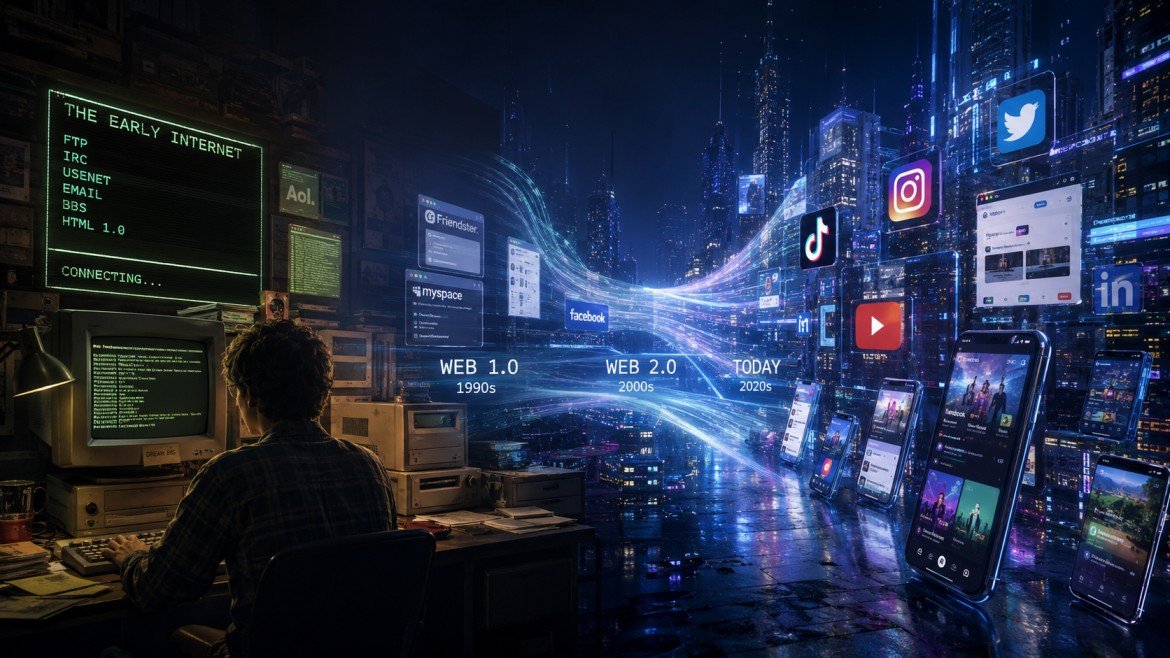
The internet has never stood still. It has continuously evolved, transforming how people communicate, work, shop, learn, and build businesses. From static web pages in the early days of the internet to social media-driven ecosystems dominated by technology giants, each phase has reshaped digital life in profound ways.
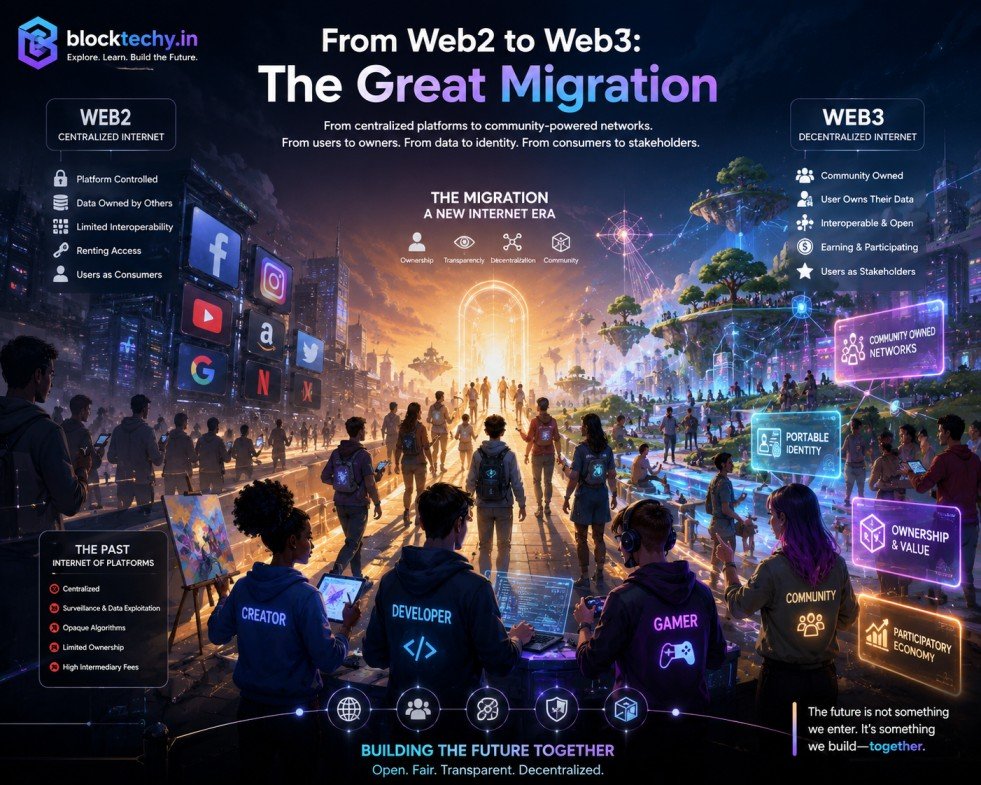
Today, another transformation is underway—one that many believe could be the most significant shift since the birth of social media. This transition is often described as the migration from Web2 to Web3.
Web2 created the modern internet experience: interactive applications, social networks, cloud computing, and global digital marketplaces. It made the web accessible, engaging, and commercially scalable. But it also concentrated power into the hands of a few dominant platforms.
Web3 promises something different: decentralization, user ownership, transparent systems, and permissionless innovation.
The move from Web2 to Web3 is not simply a technology upgrade. It is a philosophical and economic shift in how the internet operates.
This is the story of the great migration.
Understanding Web2: The Internet We Know Today
To understand where we are going, we must first understand where we are.
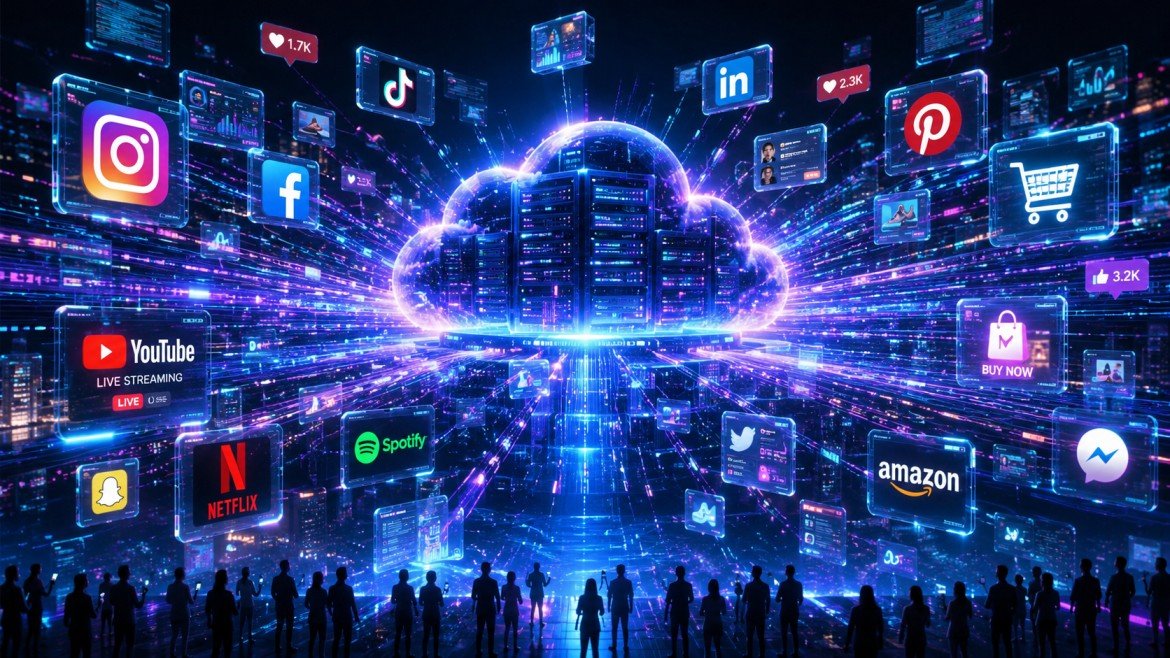
Web2 refers to the modern, interactive internet that emerged in the early 2000s.
Unlike the early web—which primarily consisted of static informational pages—Web2 introduced dynamic applications and user-generated content.
This era gave rise to:
- Social media platforms
- Search engines
- Streaming services
- E-commerce marketplaces
- Cloud-based SaaS products
- Mobile app ecosystems
- Digital advertising networks
Web2 changed passive internet users into active participants.
Users could:
- Create content
- Share experiences
- Build communities
- Conduct business online
- Access services instantly
This innovation created enormous economic growth.
Companies such as Google, Facebook, Amazon, Netflix, and Uber built trillion-dollar ecosystems on top of Web2 infrastructure.
But Web2’s success came with trade-offs.
The Problems with Web2
1. Centralized Control
A defining characteristic of Web2 is centralization.
A small number of companies control massive portions of internet infrastructure.
These platforms govern:
- User access
- Content moderation
- Monetization policies
- Data collection
- Algorithm visibility
- Payment systems
Users participate—but platforms own the environment.
A creator may build millions of followers on a social platform but still have limited control over their audience relationship.
If platform policies change, visibility can disappear overnight.
This dependency creates fragility.
2. Data Ownership Issues
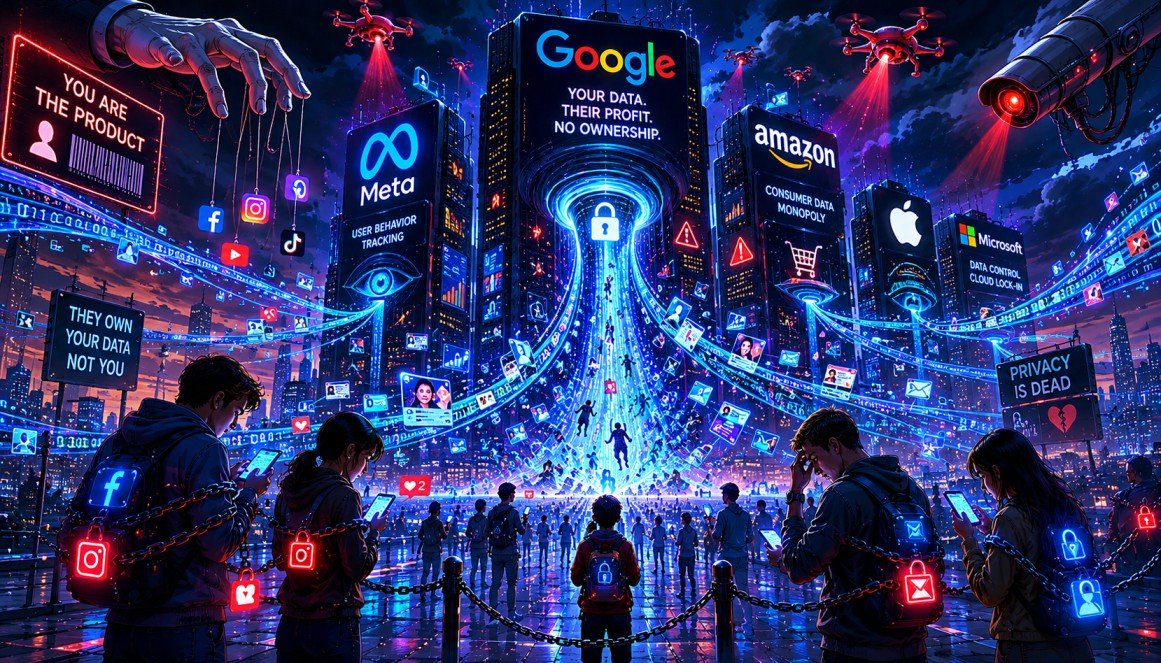
In Web2, user data has become one of the most valuable commodities.
Every click, search, interaction, preference, and purchase contributes to centralized data ecosystems.
Users generate the value.
Platforms capture the profits.
Most people do not truly own their digital identities.
Instead, they effectively rent access to online services while surrendering personal behavioral data.
This has led to:
- Privacy concerns
- Data exploitation
- Targeted surveillance advertising
- Security breaches
- Limited user transparency
Data became the oil of the digital economy—but users rarely benefit directly.
3. Platform Dependency
Businesses built on Web2 infrastructure face dependency risks.
Examples include:
- App developers dependent on app store rules
- Content creators reliant on algorithms
- Sellers dependent on marketplace commissions
- SaaS businesses vulnerable to API changes
Centralized gatekeepers can dictate terms.
Innovation remains possible—but only within approved ecosystems.
4. Monetization Inefficiency
Creators, developers, and communities often receive only a fraction of the value they generate.
Intermediaries absorb revenue through:
- Advertising cuts
- Subscription platform fees
- Marketplace commissions
- Payment processing fees
This creates inefficient value distribution.
Enter Web3: A New Internet Philosophy
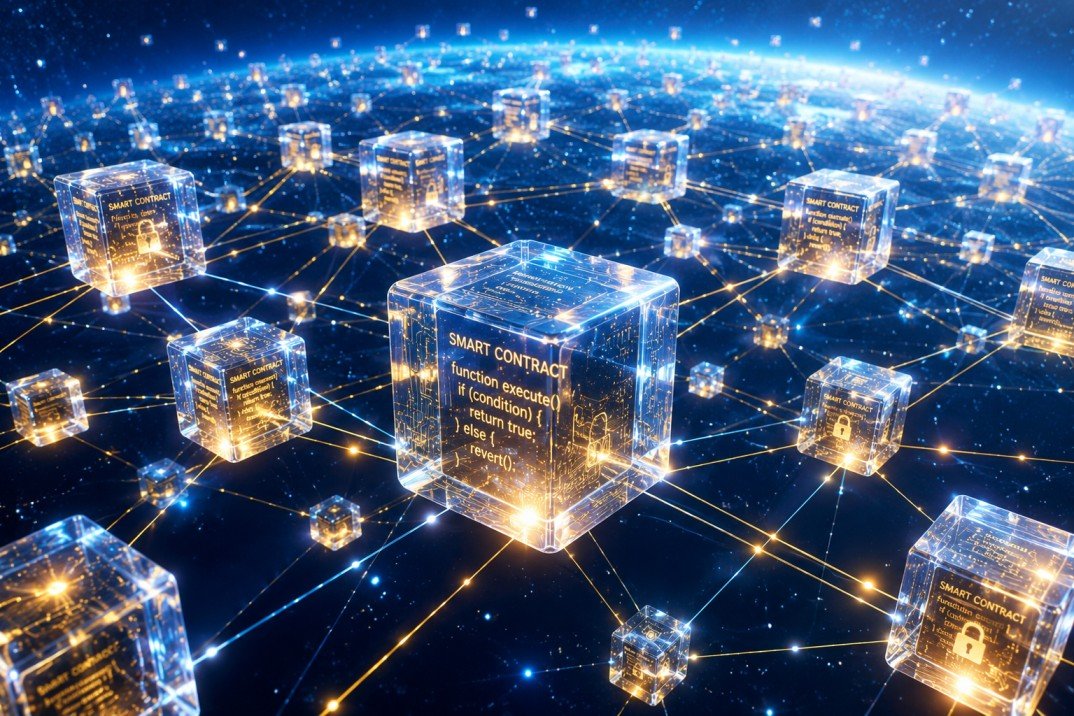
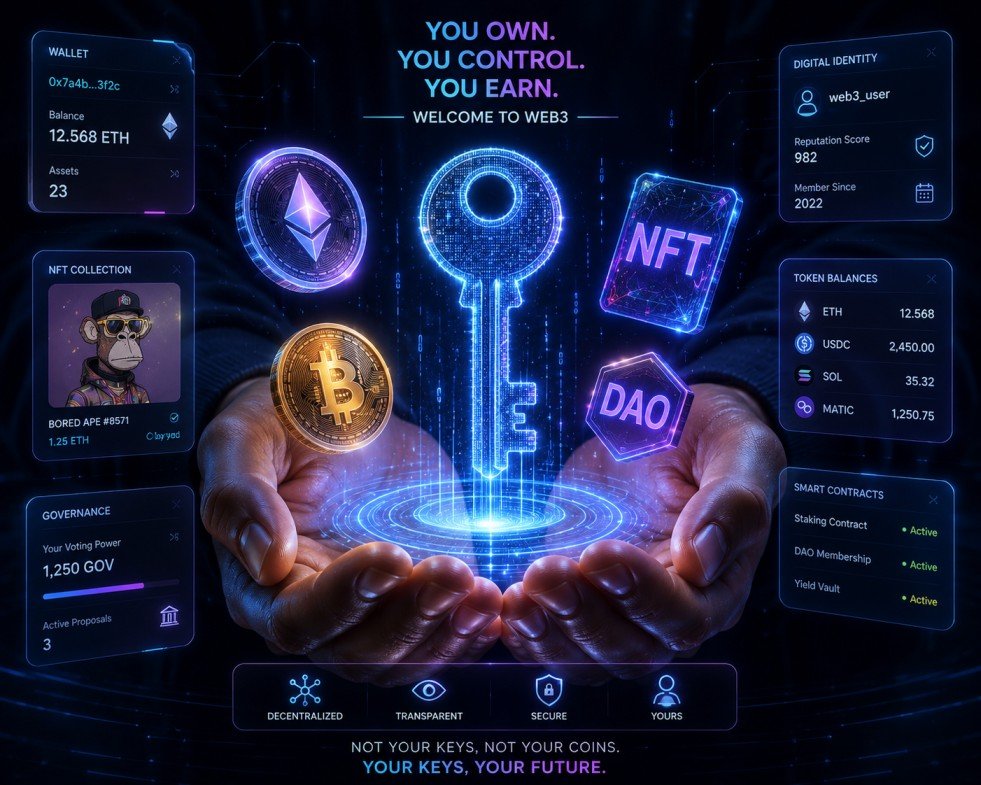
Web3 proposes a fundamentally different architecture.
Instead of centralized ownership, Web3 emphasizes decentralized systems powered by blockchain technology.
Core principles include:
- User ownership
- Permissionless access
- Open protocols
- Transparent governance
- Programmable value exchange
- Digital asset sovereignty
In Web3, trust shifts from institutions to code.
Instead of relying on a central company to manage rules, smart contracts automate execution.
Ownership becomes embedded in digital infrastructure.
What Makes Web3 Different?
Ownership Instead of Access
Web2 users typically access services without owning the underlying ecosystem.
Web3 changes this through digital ownership models.
Users can own:
- Tokens
- NFTs
- Digital identities
- Governance rights
- In-game assets
- Protocol participation stakes
Ownership creates economic alignment.
Users are no longer merely customers.
They become stakeholders.
Decentralized Infrastructure
Web3 applications operate on distributed blockchain networks instead of centralized servers.
This reduces reliance on a single controlling entity.
Benefits include:
- Greater resilience
- Reduced censorship risk
- Transparent operations
- Global accessibility
Open Protocols
Web2 platforms are closed ecosystems.
Web3 protocols are often open and composable.
Developers can build on shared infrastructure rather than starting from scratch.
This creates faster innovation.
Native Digital Payments
Web3 enables built-in internet-native financial systems.
Transactions can occur directly between participants without traditional intermediaries.
This enables:
- Micropayments
- Global transfers
- Token economies
- Automated incentives
- Machine-to-machine payments
Why the Great Migration Is Happening
Migration does not happen because of ideology alone.
It happens when incentives shift.
Several forces are accelerating the transition.
1. Demand for Digital Ownership
Users increasingly recognize the value they create online.
Creators want direct ownership of audiences.
Gamers want ownership of purchased assets.
Communities want participation rights.
Developers want open infrastructure.
Web3 offers these possibilities.
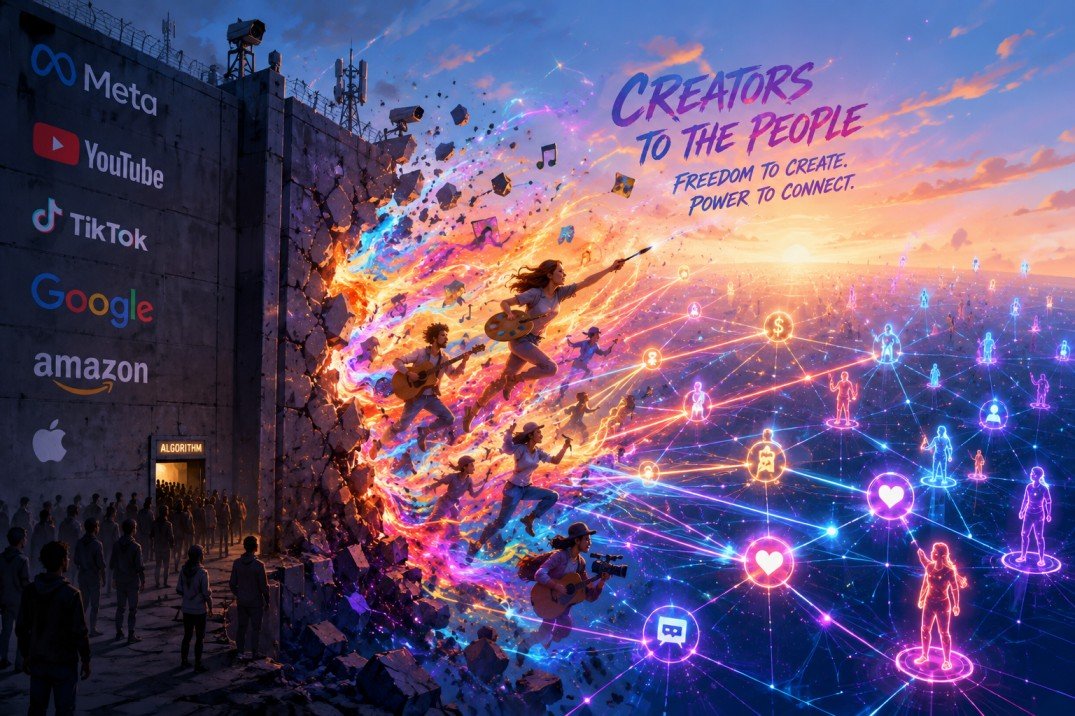
2. Creator Economy Frustration
The creator economy exposed Web2 limitations.
Creators often depend on:
- Algorithm reach
- Platform monetization rules
- Sponsorship dependency
- Subscription intermediaries
Web3 offers alternatives:
- Direct fan ownership
- Tokenized memberships
- NFT monetization
- Community governance
- Borderless payments
This shifts power toward creators.
3. Financial Innovation
Decentralized finance demonstrated that programmable financial infrastructure is possible.
DeFi introduced:
- Peer-to-peer lending
- Decentralized exchanges
- Yield protocols
- On-chain asset management
- Automated market makers
While still evolving, DeFi proved internet-native finance can exist independently of traditional banking rails.
4. Trust Erosion in Centralized Platforms
Repeated controversies involving privacy misuse, censorship debates, algorithm opacity, and data leaks weakened trust in centralized platforms.
Users increasingly question who controls digital systems.
Web3 offers transparency as an alternative.
Industries Leading the Migration
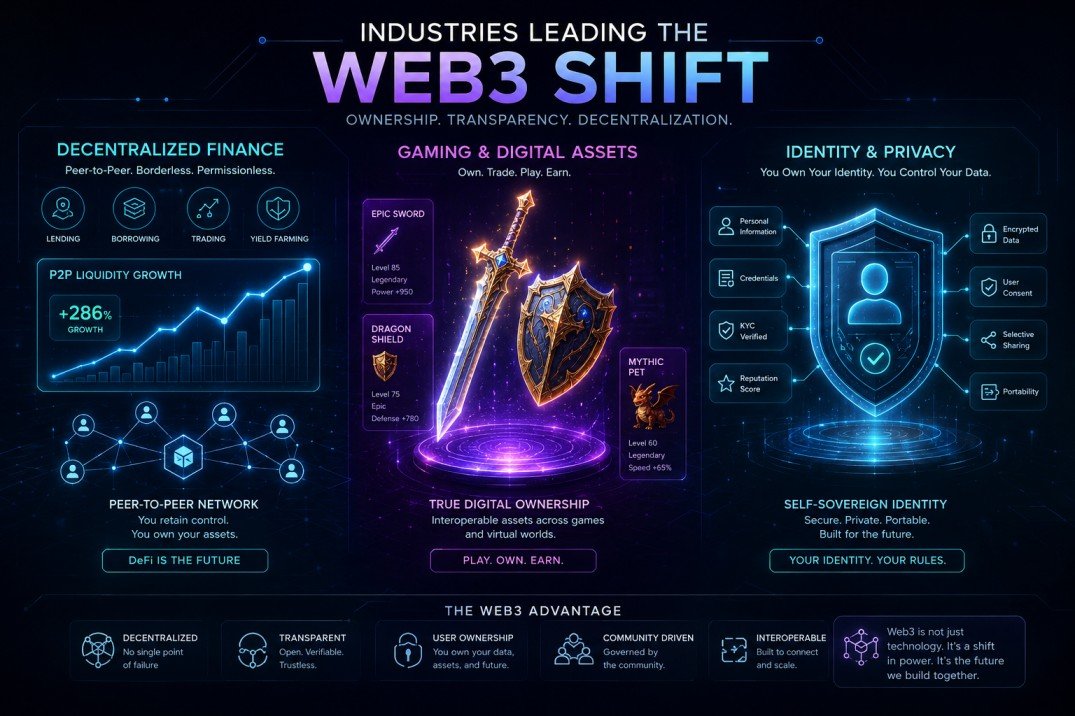
The transition is not uniform.
Some sectors are moving faster than others.
Finance
Finance is arguably the most advanced Web3 migration sector.
Traditional financial systems often involve:
- Banks
- Clearinghouses
- Payment processors
- Regulatory intermediaries
Web3 reduces friction through direct programmable settlement.
Potential outcomes include:
- Faster cross-border transfers
- Reduced transaction costs
- 24/7 financial infrastructure
- Global liquidity access
Gaming
Gaming naturally aligns with digital ownership.
Players already spend billions on digital goods.
Web2 games restrict asset portability.
Web3 introduces:
- Player-owned assets
- Cross-platform economies
- Tradable virtual items
- Community-owned gaming ecosystems
This fundamentally changes gaming economics.
Creator Platforms
Writers, musicians, artists, and influencers increasingly explore Web3 monetization.
New models include:
- NFT memberships
- Tokenized fan communities
- Decentralized publishing
- Direct patronage
The creator-platform relationship becomes less dependent on intermediaries.
Identity Systems
Digital identity remains fragmented in Web2.
Users maintain multiple logins across centralized platforms.
Web3 identity systems could provide portable, user-controlled digital identities.
This may improve privacy and interoperability.
The Challenges Slowing Adoption
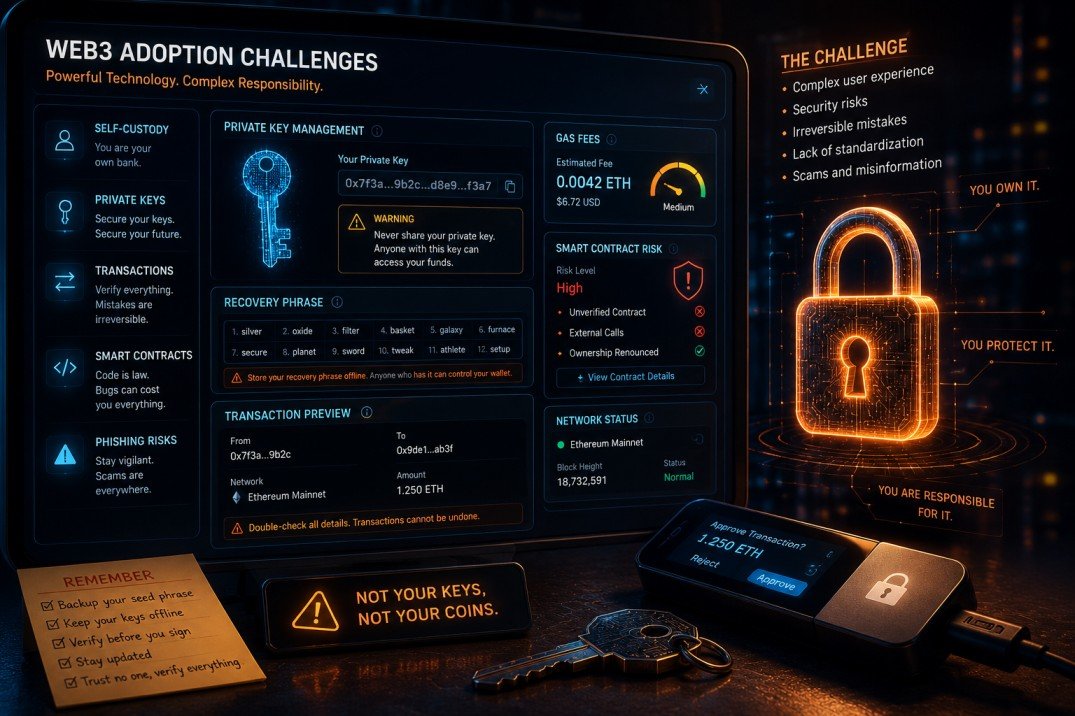
The migration is promising—but far from frictionless.
User Experience Complexity
Web3 still feels difficult for mainstream users.
Common pain points:
- Wallet setup confusion
- Private key management
- Transaction fees
- Unclear onboarding
- Security risks
Until usability improves, mass migration remains difficult.
Scalability Issues
Blockchain infrastructure still faces technical limitations.
Challenges include:
- Transaction speed constraints
- Network congestion
- High fees during peak demand
Infrastructure must mature further.
Security Risks
Self-custody introduces responsibility.
Mistakes can be irreversible.
Risks include:
- Wallet compromise
- Smart contract exploits
- Phishing scams
- Fraudulent protocols
Security remains a major barrier.
Regulatory Uncertainty
Governments worldwide continue defining legal frameworks around:
- Digital assets
- Stablecoins
- Token issuance
- Decentralized governance
- Cross-border compliance
Uncertainty slows institutional adoption.
Speculation Over Utility
Much early Web3 attention centered on speculation.
This damaged public perception.
Long-term migration requires practical utility—not hype cycles.
Hybrid Future: Not an Overnight Replacement
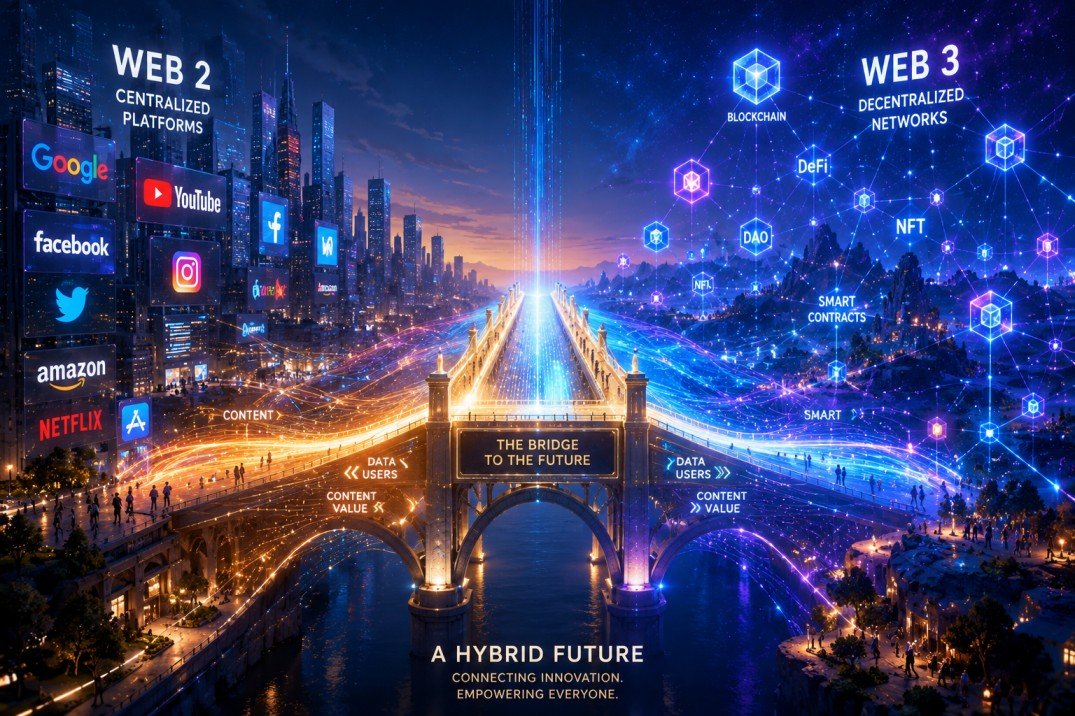
The migration from Web2 to Web3 will not happen instantly.
History suggests technology transitions are gradual.
Cloud computing did not replace on-premise infrastructure overnight.
Mobile apps did not eliminate desktop software immediately.
Likewise, Web3 will likely coexist with Web2 for years.
Hybrid systems will dominate the near future.
Examples:
- Web2 apps integrating crypto wallets
- Traditional brands launching digital ownership models
- Centralized platforms adopting blockchain rails
- AI-powered decentralized applications
The future is likely additive before it becomes disruptive.
Winners in the New Internet Economy
The winners may not be those who reject Web2 entirely.
Instead, they may be builders who bridge both worlds.
Successful companies will likely focus on:
- Seamless onboarding
- Practical utility
- Clear value creation
- Security-first design
- Regulatory adaptability
- Strong community alignment
Technology alone is not enough.
Execution matters.
What the Great Migration Means for Users
For ordinary users, the shift could mean:
- Greater ownership of digital assets
- Better monetization opportunities
- Improved privacy controls
- Direct participation in online economies
- Reduced intermediary dependence
But it also means increased responsibility.
Ownership requires security awareness.
Freedom introduces complexity.
The Long-Term Vision
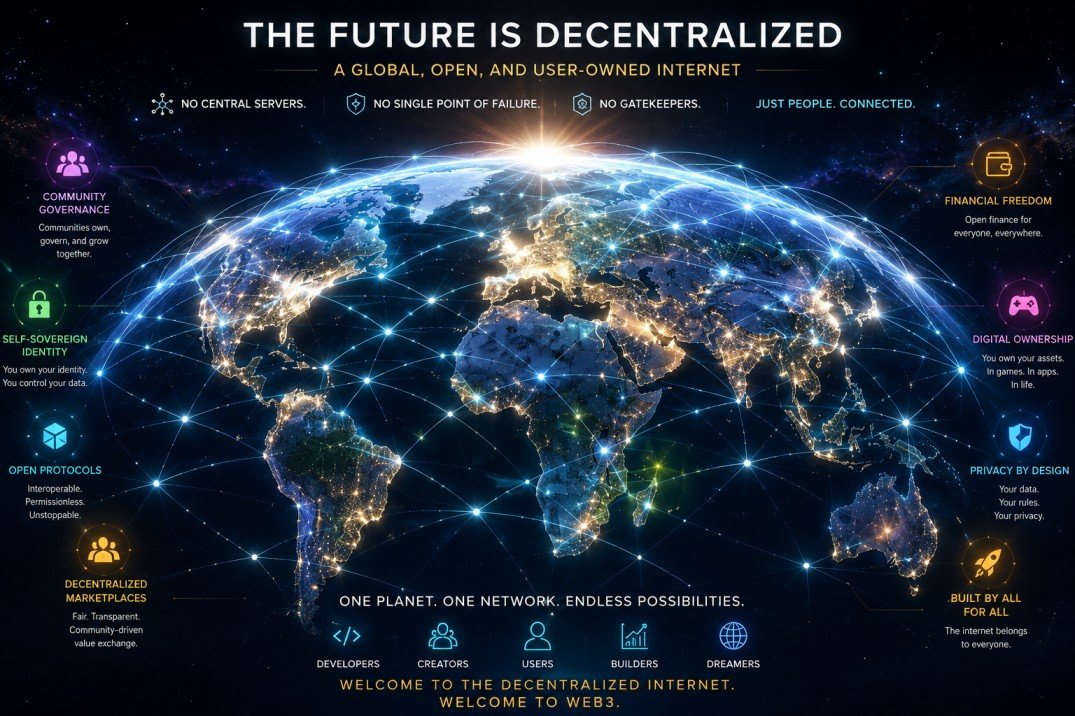
If Web3 succeeds at scale, the internet could evolve into a more participatory economy.
Imagine:
- Social networks owned by communities
- Financial systems operating continuously worldwide
- Portable digital identities
- Creator-owned audiences
- Machine-to-machine commerce
- Borderless digital labor markets
The internet becomes less about renting access—and more about owning participation.
Conclusion
The migration from Web2 to Web3 represents more than a technical upgrade.
It is a transformation in digital power structures.
Web2 created convenience, scale, and global connectivity—but concentrated ownership.
Web3 seeks to redistribute control through decentralization, transparency, and digital ownership.
The road ahead is not simple.
Technical barriers, regulation, security, and usability remain major challenges.
But history shows that internet evolution is driven by changing incentives.
When users, creators, developers, and businesses see clear benefits, adoption accelerates.
The great migration has already begun.
The question is not whether the internet will evolve.
It always does.
The real question is who will shape the next version of it.
Follow this link to join my WhatsApp group: https://chat.whatsapp.com/JvmrMTxkdgt9u6kGMT73XY
“This was a brilliant read! You explained [Concept] in a way that was both highly technical and incredibly clear. Do you have any recommendations for further reading on this?”