Introduction
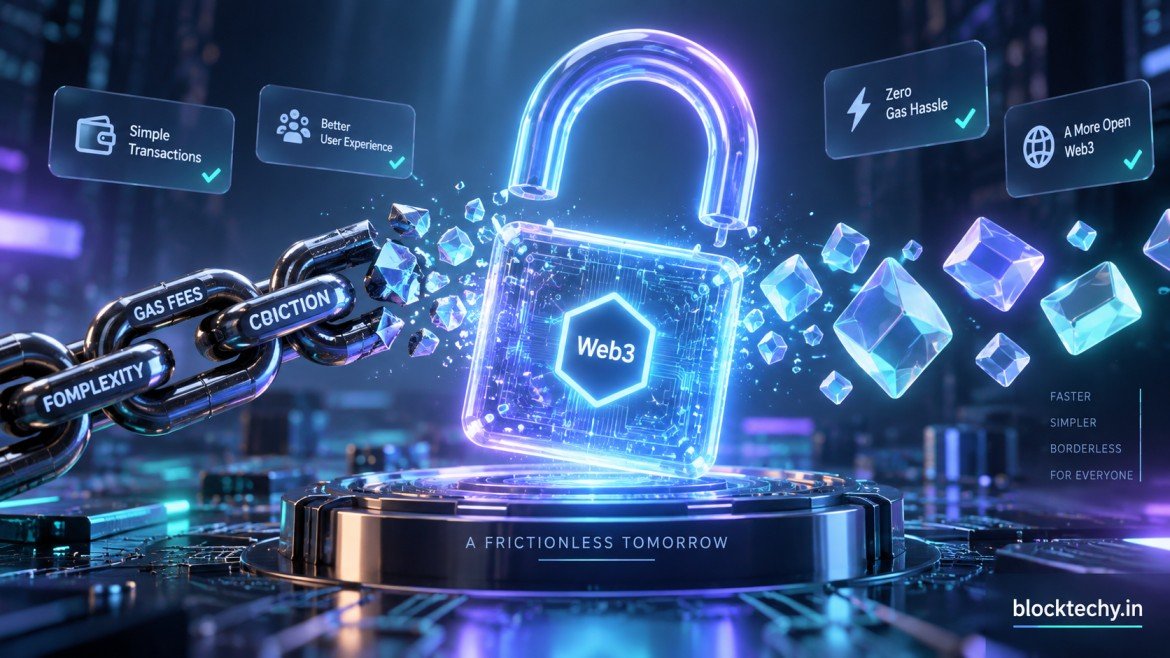
Blockchain technology has transformed the way people think about money, digital ownership, decentralized applications, and online interactions. However, one major challenge continues to affect mainstream Web3 adoption: gas fees.
Every time users interact with many blockchain applications, they may need to pay a network fee. Whether they are swapping tokens, minting NFTs, interacting with smart contracts, claiming rewards, or transferring assets, these fees can make blockchain applications confusing and expensive for newcomers.
This is where gasless Web3 transactions are becoming increasingly important.
Gasless transactions are designed to allow users to interact with blockchain applications without directly paying the blockchain’s transaction fee from their own wallet. Instead, applications, relayers, account-abstraction infrastructure, or other mechanisms can handle the gas payment on the user’s behalf.
The result is a Web3 experience that can feel much more like traditional Web2 applications.
In this article, we will explore what gas fees are, how gasless transactions work, the technologies behind them, their benefits and limitations, and how blockchain applications can use gas abstraction to create a simpler user experience.
What Are Gas Fees in Blockchain?
Before understanding gasless transactions, it is important to understand what a gas fee actually means.
A blockchain network requires computational resources to process transactions. Validators or miners need to verify transactions, execute smart-contract operations, and maintain the network.
Users compensate the network for these resources through transaction fees, commonly referred to as gas fees.
For example, when a user interacts with a decentralized application, the transaction might require:
- Smart-contract execution
- Token transfers
- NFT minting
- Token swaps
- Approval transactions
- Staking operations
- On-chain data updates
Each operation consumes computational resources. The blockchain calculates the required amount of gas, and the user generally pays the corresponding fee.
Gas fees can vary depending on:
- Network congestion
- Blockchain architecture
- Transaction complexity
- Gas demand
- Network fee market
- Current token prices
For experienced crypto users, paying gas may be routine. For beginners, however, it creates friction.
Imagine downloading a Web3 application and being asked to purchase a cryptocurrency before you can perform your first action. This additional step can discourage users from continuing.
Gasless Web3 transactions attempt to solve this problem.
What Are Gasless Web3 Transactions?
A gasless Web3 transaction is a blockchain interaction where the end user does not have to directly pay the network fee in the usual way.
This does not mean that the blockchain processes the transaction without any cost.
Someone still needs to pay the network fee.
The difference is who pays it and how the transaction is submitted.
Instead of requiring the user to maintain a native blockchain token for gas, an application can use infrastructure that pays the fee on the user’s behalf.
For example:
Traditional Web3 experience:
User → Connect wallet → Buy ETH → Pay gas → Execute transaction
Gasless experience:
User → Connect or create wallet → Approve action → Application/infrastructure handles gas → Transaction executed
This abstraction can make blockchain applications significantly easier to use.
Why Are Gas Fees a Problem for Web3 Adoption?
Gas fees are not necessarily bad. They are an important part of blockchain infrastructure.
However, they create several user-experience challenges.
1. Users Need Native Tokens
On many networks, users need the blockchain’s native asset to pay transaction fees.
For example, a user interacting with an Ethereum-based application may need ETH for gas.
A user who owns USDC but has no ETH could potentially be unable to perform an on-chain action.
This creates a confusing situation:
“I have enough money in my wallet, so why can’t I complete the transaction?”
Gas abstraction can eliminate this problem.
2. Transaction Costs Can Be Unpredictable
Gas prices can change based on network demand.
A transaction that costs a small amount at one moment could become significantly more expensive during periods of congestion.
This unpredictability can be problematic for applications that want users to perform frequent transactions.
3. Multiple Transactions Increase Friction
Some blockchain applications require several transactions to complete one user workflow.
For example:
- Approve token
- Deposit token
- Confirm smart contract
- Claim reward
If every step requires a separate gas payment, the experience becomes complicated.
Gasless infrastructure can help applications abstract these costs.
How Do Gasless Transactions Work?
There are several technologies that can enable gasless or gas-abstracted transactions.
The exact implementation depends on the blockchain and application architecture.
Some common approaches include:
- Meta-transactions
- Relayers
- Paymasters
- Account abstraction
- Smart contract wallets
- Sponsored transactions
- Fee payment in ERC-20 tokens
- Backend transaction relaying
Let’s examine these approaches.
1. Meta-Transactions
A meta-transaction separates the user’s authorization from the actual submission of the blockchain transaction.
Instead of the user directly sending a transaction to the blockchain, the user signs a message describing the desired action.
A relayer then submits the transaction and pays the network fee.
The basic flow looks like this:
User → Sign message → Relayer → Blockchain → Smart Contract
The user does not necessarily need to hold the native gas token.
The relayer covers the transaction fee and may receive compensation through the application or another mechanism.
Meta-transactions were one of the early approaches to improving blockchain usability.
2. Relayers
A relayer is infrastructure that submits transactions to the blockchain on behalf of users.
The user signs an authorization message, and the relayer broadcasts the corresponding transaction.
For example:
A user wants to claim an NFT.
Instead of:
User → Pay gas → Claim NFT
The application can implement:
User → Sign claim request → Relayer → Pay gas → Claim NFT
The user experiences the transaction as gasless, while the relayer handles the underlying blockchain cost.
Relayers can be operated by the application itself or by specialized infrastructure providers.
3. Account Abstraction
One of the most important developments for gasless Web3 experiences is account abstraction.
Traditional blockchain wallets generally separate externally owned accounts and smart contracts.
Account abstraction allows programmable smart-contract-based accounts to behave more like flexible wallets.
This enables features such as:
- Gas sponsorship
- Social login
- Custom transaction rules
- Recovery mechanisms
- Batch transactions
- Spending limits
- Alternative fee payment
- Automated transaction policies
Instead of forcing users to understand blockchain mechanics, applications can build wallet behavior around the user’s needs.
This is particularly important for consumer-focused Web3 applications.
4. Paymasters
Paymasters are another important component of gas abstraction.
A paymaster can sponsor transaction fees for users under specific conditions.
For example, a gaming application could decide:
“We will pay gas for the first 10 transactions made by each new user.”
The user interacts with the application without needing to acquire the blockchain’s native token.
A paymaster can also potentially support alternative fee mechanisms, depending on the account-abstraction implementation.
For example, users might pay transaction costs using an accepted token rather than the network’s native gas asset.
This can make blockchain applications feel much more familiar.
Example: A Gasless Web3 Gaming Application
Imagine a blockchain-based game where players earn NFT items.
In a traditional Web3 game, a player may need to:
- Create a wallet
- Purchase cryptocurrency
- Transfer the cryptocurrency to the wallet
- Pay gas
- Approve transactions
- Claim an NFT
- Pay additional gas for future actions
This creates significant friction.
Now consider a gasless architecture.
The player:
- Creates an account
- Logs into the game
- Earns an NFT
- Clicks “Claim”
- Signs the required authorization
- The application sponsors the transaction
- NFT ownership is recorded on-chain
The blockchain is still being used.
The difference is that the complexity is hidden behind the application’s infrastructure.
This is one of the strongest arguments for gasless Web3 experiences.
Benefits of Gasless Web3 Transactions
Gas abstraction can provide several advantages for blockchain applications.
Better User Experience
The biggest benefit is simplicity.
Users don’t need to understand:
- Gas prices
- Gas limits
- Nonce management
- Native tokens
- Network fee estimation
The application can handle these details behind the scenes.
Easier Onboarding
Traditional Web3 onboarding can require users to install a wallet and purchase cryptocurrency.
Gasless infrastructure can reduce the number of steps.
This is especially valuable for applications targeting mainstream audiences.
Lower Psychological Barriers
Users are more likely to try an application when they are not immediately asked to spend cryptocurrency.
A gasless transaction can feel more like clicking a button in a traditional application.
Better Microtransactions
Gas fees can make small blockchain transactions economically inefficient.
Suppose a user wants to perform a tiny on-chain action worth $0.50 while the transaction fee is $1.
The economics do not make sense.
Gas sponsorship can improve the feasibility of small-value blockchain interactions.
Better Gaming Experiences
Blockchain games often require frequent on-chain interactions.
Players may:
- Mint items
- Trade assets
- Upgrade characters
- Claim rewards
- Move NFTs
- Participate in tournaments
Requiring a gas payment for every action can destroy the gaming experience.
Gas abstraction can make blockchain gaming much smoother.
Gasless Does Not Mean Free
One important misconception needs to be addressed.
Gasless does not mean the blockchain transaction has zero cost.
The network still charges a fee.
Instead, another party pays the fee.
That party might be:
- The application developer
- A protocol
- A DAO
- A relayer
- A paymaster
- A sponsor
- A third-party infrastructure provider
Therefore, gasless transactions should be understood as gas abstraction or gas sponsorship, rather than literally eliminating blockchain computation costs.
The cost still exists; it is simply moved away from the end user.
How Applications Can Pay Gas for Users
There are several business models for covering gas costs.
Application Sponsorship
A company can pay gas as part of its customer-acquisition strategy.
For example, an NFT platform might sponsor the first transaction for every new user.
Subscription Model
A Web3 application could include transaction sponsorship in a premium subscription.
For example:
Free plan: Limited sponsored transactions
Premium plan: Higher transaction allowance
This turns blockchain transaction costs into a predictable business expense.
Protocol Treasury
A decentralized protocol may use treasury funds to subsidize transactions that support ecosystem growth.
Revenue-Based Sponsorship
Applications can generate revenue through trading fees, subscriptions, advertising, or other services and use part of that revenue to cover gas expenses.
Security Considerations
Gasless systems introduce additional infrastructure and security considerations.
Developers need to carefully design:
- Signature validation
- Replay protection
- Nonce management
- User authorization
- Relayer security
- Paymaster policies
- Rate limiting
- Sponsorship limits
- Smart-contract permissions
A poorly designed gasless system could expose applications to abuse.
For example, if an application sponsors unlimited transactions without proper controls, attackers may attempt to consume the sponsorship budget.
Therefore, gasless transaction systems should include appropriate limits and validation.
Preventing Gas Sponsorship Abuse
Applications can use several strategies to control costs.
Rate Limits
Restrict the number of sponsored transactions a user can perform within a certain period.
User Allowances
Give each wallet a defined gas sponsorship budget.
Transaction Whitelisting
Only sponsor specific smart-contract functions.
Identity or Reputation Checks
Require additional verification before granting higher sponsorship limits.
Minimum Activity Requirements
Applications can sponsor transactions only after users perform certain qualifying actions.
These mechanisms help balance usability with cost control.
Gasless Transactions and Web3 Mass Adoption
For Web3 to reach billions of users, applications need to become easier to use.
Most mainstream internet users don’t understand:
- Private keys
- RPC endpoints
- Nonces
- Gas limits
- Smart-contract addresses
- Network switching
Yet Web2 applications successfully hide most of this complexity.
When someone uses a mobile application, they usually don’t need to understand how HTTP requests, databases, servers, or DNS work.
Web3 can follow a similar model.
Users don’t necessarily need to understand blockchain infrastructure.
They simply need to understand what the application does.
Gasless transactions are an important part of this abstraction layer.
Gasless Transactions in DeFi
Decentralized finance could also benefit from gas abstraction.
DeFi users frequently interact with multiple protocols.
For example, a strategy might involve:
- Approving a token
- Depositing assets
- Swapping tokens
- Adding liquidity
- Claiming rewards
Gas abstraction could bundle or sponsor some of these actions.
This could make DeFi easier for users who aren’t experienced cryptocurrency users.
However, developers need to carefully consider transaction economics because DeFi operations can involve complex smart-contract execution.
Gasless Transactions and NFTs
NFT applications are another major use case.
Imagine an NFT marketplace that requires every new user to purchase cryptocurrency before they can mint or claim an NFT.
Many potential users may simply leave.
A gas-sponsored NFT experience could allow:
Create account → Mint NFT → NFT appears in wallet
The application pays the blockchain fee.
This approach can be especially useful for:
- Digital collectibles
- Loyalty programs
- Event tickets
- Brand campaigns
- Membership NFTs
- Gaming assets
- Digital certificates
Businesses can introduce blockchain ownership without forcing customers to become cryptocurrency experts.
Challenges of Gasless Web3
Despite their benefits, gasless transactions have limitations.
Cost for Developers
Someone has to pay the transaction fees.
If an application becomes popular, sponsorship costs can become significant.
Infrastructure Complexity
Gasless transactions require additional infrastructure.
Developers may need:
- Relayer systems
- Paymaster services
- Smart accounts
- Monitoring
- Fraud prevention
- Transaction management
This increases system complexity.
Abuse Risk
Attackers can exploit poorly configured sponsorship systems.
Without appropriate limits, applications may pay for large numbers of unwanted transactions.
Blockchain Compatibility
Not every blockchain has the same account-abstraction capabilities or infrastructure.
Developers must choose technologies that are compatible with their target network.
The Future of Gasless Web3 Transactions
The future of blockchain applications is likely to involve increasing levels of transaction abstraction.
Instead of asking users:
“Which network are you using?”
Applications may simply determine the appropriate network automatically.
Instead of:
“Do you have enough ETH for gas?”
The application may sponsor the transaction.
Instead of:
“Approve this transaction and then submit another one.”
Users may see:
“Confirm.”
This shift could dramatically improve Web3 usability.
The blockchain becomes the underlying infrastructure rather than the interface users have to understand.
Gasless Web3 vs Traditional Web3
| Feature | Traditional Web3 | Gasless Web3 |
|---|---|---|
| User pays gas directly | Usually | Often no |
| Native gas token required | Often | Not necessarily |
| User experience | More technical | More simplified |
| Transaction sponsorship | Limited | Common |
| Account abstraction | Optional | Often important |
| Onboarding | More complex | Easier |
| Microtransactions | Can be difficult | More practical |
| Mainstream usability | Lower | Higher |
The goal isn’t necessarily to eliminate blockchain fees.
The goal is to make those fees invisible or manageable for the user.
How Developers Can Build Gasless Applications
A developer interested in gasless Web3 transactions should generally consider the following architecture:
Frontend
↓
Smart Account / Wallet
↓
User Signature
↓
Bundler or Relayer
↓
Paymaster / Sponsor
↓
Blockchain
↓
Smart Contract
The exact architecture depends on the blockchain and account-abstraction framework being used.
Developers should also implement:
- Secure signature verification
- Replay protection
- Sponsorship policies
- Transaction limits
- Monitoring
- Error handling
- Gas estimation
- Fraud protection
Testing should be performed on test networks before deploying sponsorship infrastructure to production.
Conclusion
Gasless Web3 transactions represent an important step toward making blockchain applications easier to use.
The technology does not magically remove the cost of blockchain transactions. Instead, it changes the way those costs are handled.
Through meta-transactions, relayers, account abstraction, smart accounts, and paymasters, applications can sponsor transaction fees or abstract them away from users.
This can improve onboarding, simplify wallet interactions, enable better gaming experiences, support NFT adoption, and make decentralized applications more accessible to mainstream users.
The long-term vision is simple:
Users should be able to use blockchain applications without needing to understand blockchain infrastructure.
Just as users don’t need to understand how servers process every Web2 request, future Web3 users may not need to know which wallet holds the gas token or how a transaction fee is calculated.
For developers and businesses building the next generation of decentralized applications, gas abstraction could become a critical part of delivering a seamless Web3 experience.
As blockchain infrastructure continues to mature, the applications that successfully hide unnecessary complexity may be the ones that bring Web3 from a specialized technology into a mainstream digital experience.