Introduction
Artificial Intelligence (AI) and Blockchain are two of the most transformative technologies of the digital era. While discussions often focus on the dangers of AI—such as AI-powered hacking, phishing attacks, fake identities, and automated cybercrime—there is another side of the story that deserves equal attention.
Instead of becoming a threat, AI can become blockchain’s strongest security partner.
As blockchain adoption expands across finance, healthcare, supply chains, gaming, and decentralized applications (dApps), cyberattacks are becoming increasingly sophisticated. Hackers are leveraging automation and machine learning to identify vulnerabilities faster than ever before.
Fortunately, blockchain developers and cybersecurity experts are now using AI to fight back.
By combining blockchain’s transparency and immutability with AI’s ability to analyze massive datasets in real time, organizations can build systems capable of detecting attacks before they cause damage.
In this article, we’ll explore how AI can protect blockchain networks, improve decentralized security, and shape the future of Web3.
Why Blockchain Still Needs Better Security
Many people believe blockchain is “unhackable.”
This is a misconception.
The blockchain ledger itself is extremely secure due to cryptographic algorithms and decentralized consensus mechanisms. However, attacks usually target other parts of the ecosystem:
- Smart contracts
- Wallets
- Private keys
- Bridges
- Decentralized exchanges (DEXs)
- Validators
- Consensus manipulation
- Social engineering
- Network traffic
According to multiple blockchain security reports, billions of dollars have been lost due to:
- Smart contract vulnerabilities
- Flash loan attacks
- Rug pulls
- Bridge exploits
- Wallet compromises
- Phishing attacks
- Private key theft
Traditional security tools often rely on predefined rules, making them slow to adapt to new attack methods. AI, however, can learn from evolving attack patterns and respond much faster.
The Perfect Combination: AI + Blockchain
Blockchain provides:
- Trust
- Transparency
- Immutable records
- Decentralization
AI provides:
- Prediction
- Pattern recognition
- Automation
- Decision-making
- Continuous learning
Together, they create intelligent decentralized security systems capable of defending themselves against modern cyber threats.
1. AI Can Detect Fraud in Real Time
One of AI’s biggest strengths is identifying unusual behavior.
Blockchain networks process millions of transactions daily. Monitoring every transaction manually is impossible.
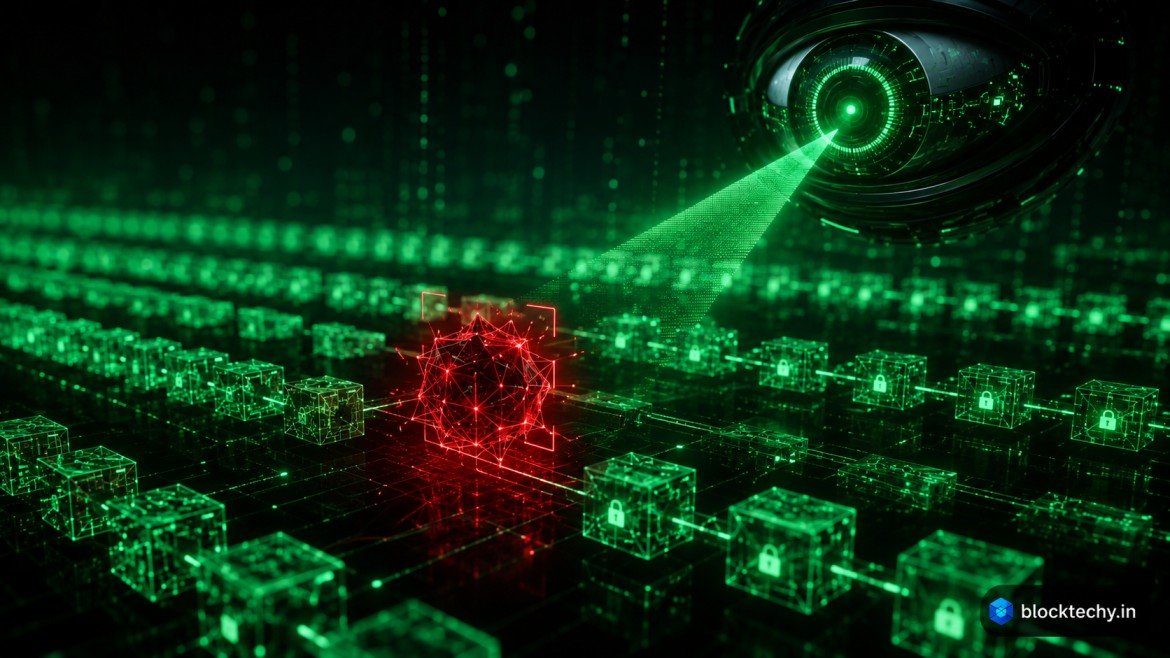
AI models can continuously analyze:
- Transaction frequency
- Wallet activity
- Gas usage
- Token transfers
- Trading patterns
- Network interactions
If AI detects abnormal behavior, it can immediately flag suspicious activity.
Example
Suppose a wallet has always made transactions under $500.
Suddenly it sends:
- $50,000
- To 100 different wallets
- Within two minutes
AI immediately identifies this behavior as suspicious and alerts security systems before additional damage occurs.
2. AI Can Prevent Smart Contract Exploits
Smart contracts automate blockchain operations.
Unfortunately, coding mistakes can create vulnerabilities.
Common smart contract vulnerabilities include:
- Reentrancy attacks
- Integer overflow
- Access control bugs
- Logic errors
- Oracle manipulation
- Flash loan vulnerabilities
Modern AI code analysis tools can examine thousands of lines of Solidity code within seconds.
Instead of waiting until deployment, AI can identify weaknesses during development.
Benefits include:
- Faster audits
- Lower auditing costs
- Fewer vulnerabilities
- Better code quality
- Continuous monitoring after deployment
As AI models improve, smart contract auditing will become significantly faster and more accurate.
3. AI Can Monitor Blockchain Networks 24/7
Human security teams cannot monitor networks every second.
AI never sleeps.
AI-powered monitoring systems continuously observe:
- Validator behavior
- Node activity
- Consensus performance
- Wallet creation
- API requests
- Bridge traffic
- Transaction anomalies
Whenever unusual behavior appears, AI can:
- Generate alerts
- Block malicious requests
- Freeze suspicious transactions (where supported)
- Notify administrators
- Trigger additional verification
This reduces response time from hours to seconds.
4. AI Can Stop Phishing Attacks
Phishing remains one of the largest threats in Web3.
Hackers create fake:
- Wallet websites
- NFT marketplaces
- Exchanges
- Airdrop campaigns
- Telegram bots
- Discord servers
AI systems can analyze:
- Website similarity
- Domain reputation
- SSL certificates
- URL patterns
- User behavior
- Historical phishing databases
Browsers and wallets powered by AI can warn users before they interact with fraudulent websites.
Instead of losing funds, users receive immediate security warnings.
5. AI Can Protect Crypto Wallets
Crypto wallets are among the most targeted components of blockchain ecosystems.
AI can detect:
- Unknown devices
- Impossible travel logins
- Suspicious IP addresses
- Malware behavior
- Abnormal withdrawal requests
- Automated wallet-draining attacks
If unusual activity occurs, AI can request:
- Additional authentication
- Biometric verification
- Multi-signature approval
- Temporary account lock
This dramatically reduces unauthorized access.
6. AI Can Strengthen Validator Security
Proof-of-Stake networks depend heavily on validators.
Malicious validators may attempt to:
- Manipulate consensus
- Double-sign blocks
- Coordinate attacks
- Participate in cartel behavior
AI can analyze validator performance using metrics such as:
- Uptime
- Latency
- Voting consistency
- Historical behavior
- Geographic distribution
- Network communication
Abnormal validator behavior can be detected before it impacts network stability.
7. AI Can Detect Money Laundering
Blockchain transactions are transparent, but identifying criminal financial activity remains difficult.
AI excels at recognizing hidden transaction patterns.
It can detect:
- Layering transactions
- Mixer usage
- Wallet clustering
- Suspicious transfer chains
- Cross-chain laundering
- High-risk wallet interactions
Exchanges can use AI-powered AML (Anti-Money Laundering) systems to improve compliance while minimizing false positives.
8. AI Can Improve Decentralized Identity (DID)
Identity is becoming one of blockchain’s most important use cases.
AI can enhance decentralized identity systems by detecting:
- Fake identities
- Deepfake verification attempts
- Synthetic accounts
- Identity farming
- Credential forgery
Instead of relying solely on static identity checks, AI continuously evaluates trust signals without compromising user privacy.
9. AI Can Secure Cross-Chain Bridges
Cross-chain bridges have become one of the biggest targets for hackers.
These bridges often hold hundreds of millions of dollars in locked assets.
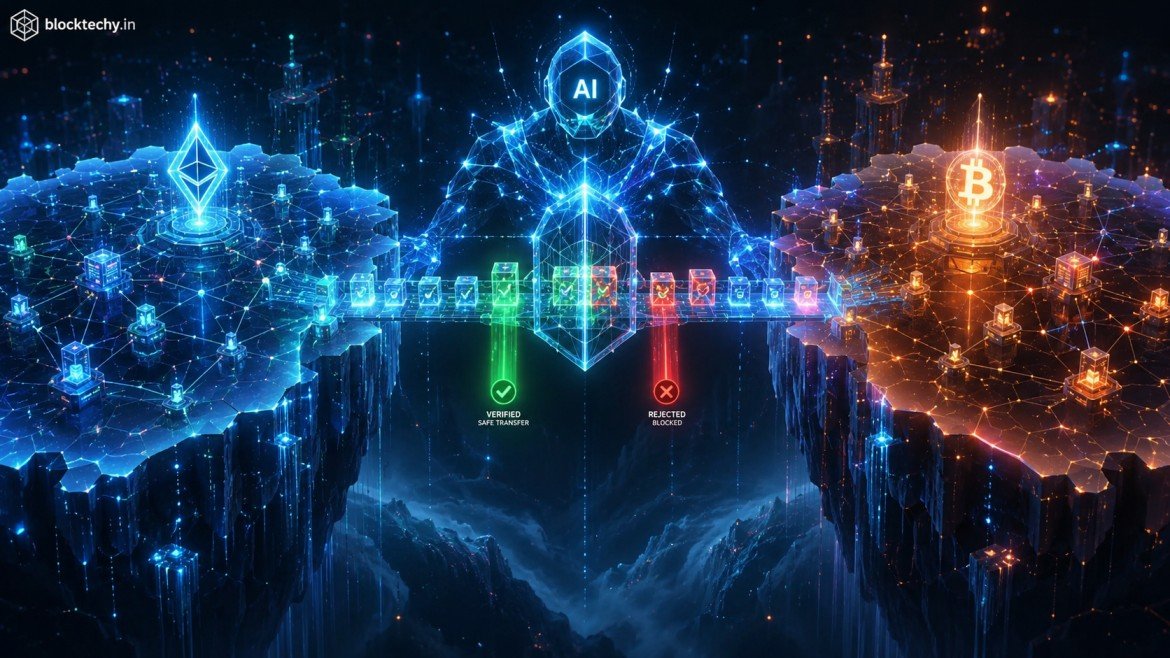
AI can monitor:
- Bridge liquidity
- Message validation
- Token minting
- Cross-chain timing
- Validator coordination
- Signature anomalies
If bridge behavior deviates from expected patterns, AI can temporarily pause suspicious operations until they are verified.
This proactive approach can significantly reduce the risk of massive exploits.
10. AI Can Predict Attacks Before They Happen
Traditional cybersecurity often reacts after an attack begins.
AI changes the game by predicting future threats.
Using historical blockchain data, AI can estimate:
- Which wallets are likely to be targeted
- Which contracts contain risky code
- Which protocols face increased attack probability
- Emerging exploit techniques
- Network stress indicators
Predictive cybersecurity represents one of AI’s greatest advantages.
Instead of reacting, organizations become proactive.
AI-Powered Threat Intelligence
Threat intelligence has traditionally relied on manual analysis.
AI automates this process.
It continuously collects data from:
- Blockchain explorers
- Security databases
- GitHub repositories
- Dark web intelligence
- Malware reports
- Security advisories
- Open-source intelligence
AI correlates this information to identify emerging attack campaigns before they become widespread.
AI for DAO Security
Decentralized Autonomous Organizations (DAOs) manage billions of dollars through governance.
AI can improve DAO security by:
- Detecting suspicious voting behavior
- Identifying governance manipulation
- Monitoring treasury transactions
- Flagging proposal spam
- Recognizing coordinated attacks
This helps communities make more secure governance decisions.
AI Can Reduce Human Error
Many blockchain losses happen because of human mistakes.
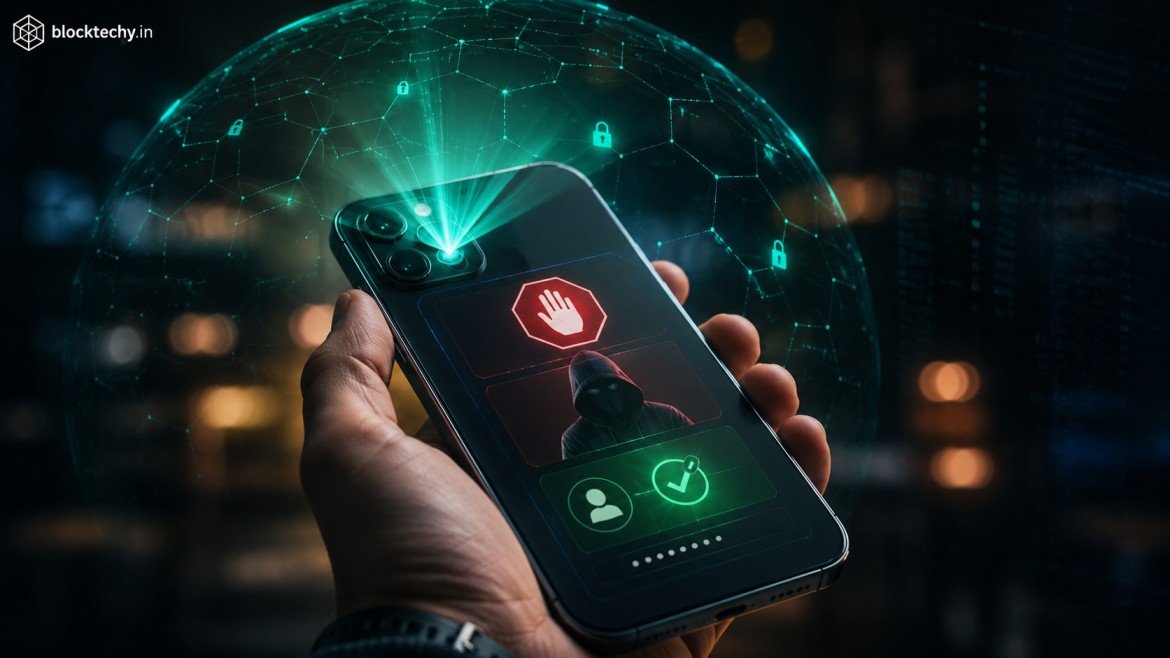
Examples include:
- Sending assets to the wrong address
- Approving malicious contracts
- Signing dangerous transactions
- Falling for scams
AI assistants integrated into crypto wallets can explain:
- What a transaction actually does
- Whether a contract is risky
- If permissions are excessive
- Potential security concerns
Instead of blindly clicking “Approve,” users receive intelligent guidance.
Challenges of Using AI in Blockchain Security
Although AI offers enormous benefits, it also introduces challenges.
Privacy
AI often requires large datasets for training.
Organizations must ensure:
- User privacy
- Secure data handling
- Compliance with regulations
False Positives
Overly sensitive AI systems may incorrectly flag legitimate users.
Balancing security with usability is essential.
Bias in AI Models
Poor-quality training data can lead to biased decisions.
Continuous model improvement is necessary.
Adversarial AI
Hackers may attempt to deceive AI models using adversarial techniques.
Security systems should combine AI with human oversight.
Real-World Applications
Several organizations are already integrating AI into blockchain security.
Examples include:
- AI-powered smart contract auditing platforms
- Crypto fraud detection systems
- Exchange risk monitoring
- Wallet threat detection
- Blockchain analytics companies
- AML compliance solutions
- DeFi security monitoring
- Identity verification platforms
As AI technology matures, these solutions will become more accurate and accessible.
The Future of AI-Powered Blockchain Security
By 2030, blockchain networks are expected to become increasingly autonomous.
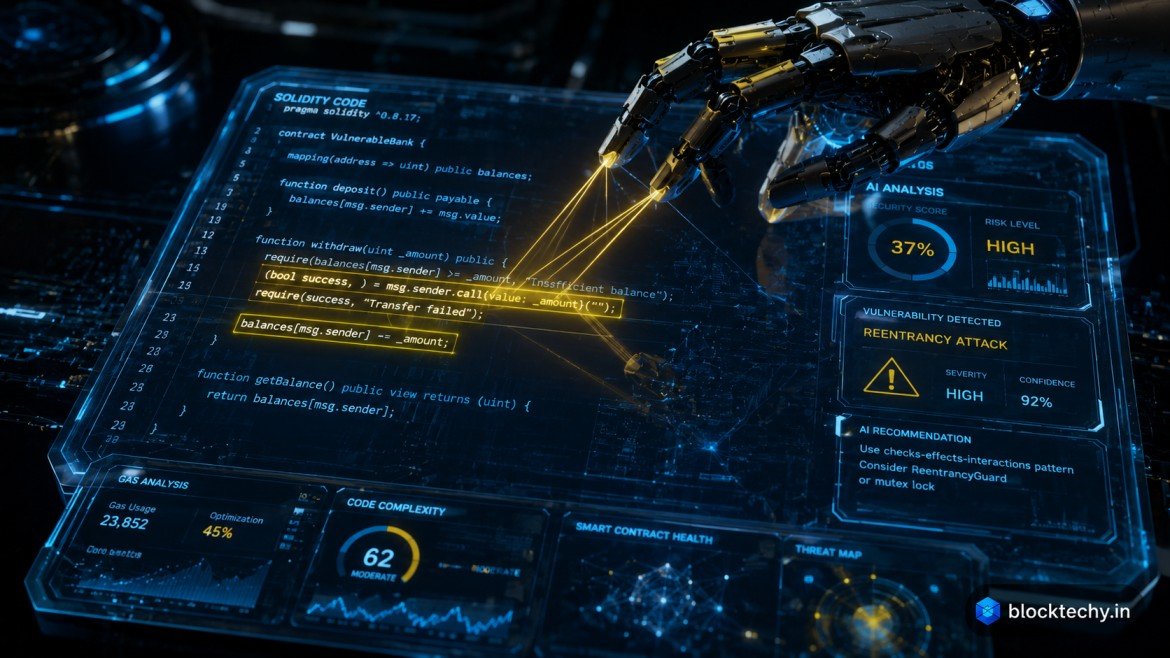
Future AI security systems may:
- Automatically patch vulnerable smart contracts
- Detect zero-day exploits in real time
- Coordinate decentralized threat intelligence
- Secure AI agents using blockchain identities
- Manage validator reputation dynamically
- Prevent large-scale exploits before execution
- Analyze billions of transactions instantly
- Assist developers during coding with real-time security recommendations
The combination of decentralized infrastructure and intelligent automation could redefine cybersecurity for the Web3 era.
Final Thoughts
The conversation around AI often focuses on its potential misuse, but its defensive capabilities are just as significant. When applied responsibly, AI can dramatically enhance the security of blockchain ecosystems by detecting fraud, auditing smart contracts, monitoring networks around the clock, protecting wallets, strengthening decentralized identities, and predicting threats before they escalate.
Blockchain provides a transparent and tamper-resistant foundation, while AI contributes speed, adaptability, and continuous learning. Together, they create a powerful security framework that is better equipped to handle the increasingly complex cyber threats facing decentralized technologies.
As Web3 continues to evolve, the future will not be defined by AI versus Blockchain. Instead, it will be shaped by AI working alongside Blockchain to build safer, smarter, and more resilient decentralized systems.
Frequently Asked Questions (FAQs)
1. Can AI improve blockchain security?
Yes. AI can detect fraud, monitor network activity, identify suspicious behavior, audit smart contracts, and predict potential cyberattacks in real time.
2. Is blockchain completely secure without AI?
No. While blockchain itself is highly secure, components such as smart contracts, wallets, bridges, and user interactions remain vulnerable. AI adds an intelligent layer of protection.
3. How does AI help prevent smart contract vulnerabilities?
AI-powered tools analyze smart contract code to identify common issues like reentrancy attacks, access control flaws, logic errors, and other security weaknesses before deployment.
4. Can AI stop crypto scams and phishing attacks?
AI can significantly reduce these risks by detecting fraudulent websites, suspicious domains, malicious wallet behavior, and abnormal transaction patterns, then warning users before they interact with them.
5. What is the future of AI and blockchain together?
The future points toward autonomous, self-defending blockchain networks where AI continuously monitors, predicts, and mitigates threats while blockchain ensures transparency, trust, and data integrity.