Part 1: Introduction, Fundamentals, Architecture & Components
How Distributed Systems Work: Architecture, Components, Challenges, and Real-World Applications
Today’s digital world depends on systems that can process millions of requests every second. Whether you’re streaming a movie on Netflix, shopping on Amazon, sending a WhatsApp message, or using Google Search, you’re interacting with distributed systems behind the scenes.
As businesses continue to generate massive amounts of data, relying on a single computer is no longer practical. Modern applications require higher performance, better reliability, and the ability to serve users across the globe. This is where distributed systems play a crucial role.
Distributed systems allow multiple independent computers to work together as one unified system. Instead of depending on a single machine, tasks are shared across several interconnected computers, making applications faster, more scalable, and fault-tolerant.
In this comprehensive guide, you’ll learn how distributed systems work, understand their architecture and components, explore common challenges, and discover how they’re used in real-world applications.
What Is a Distributed System?
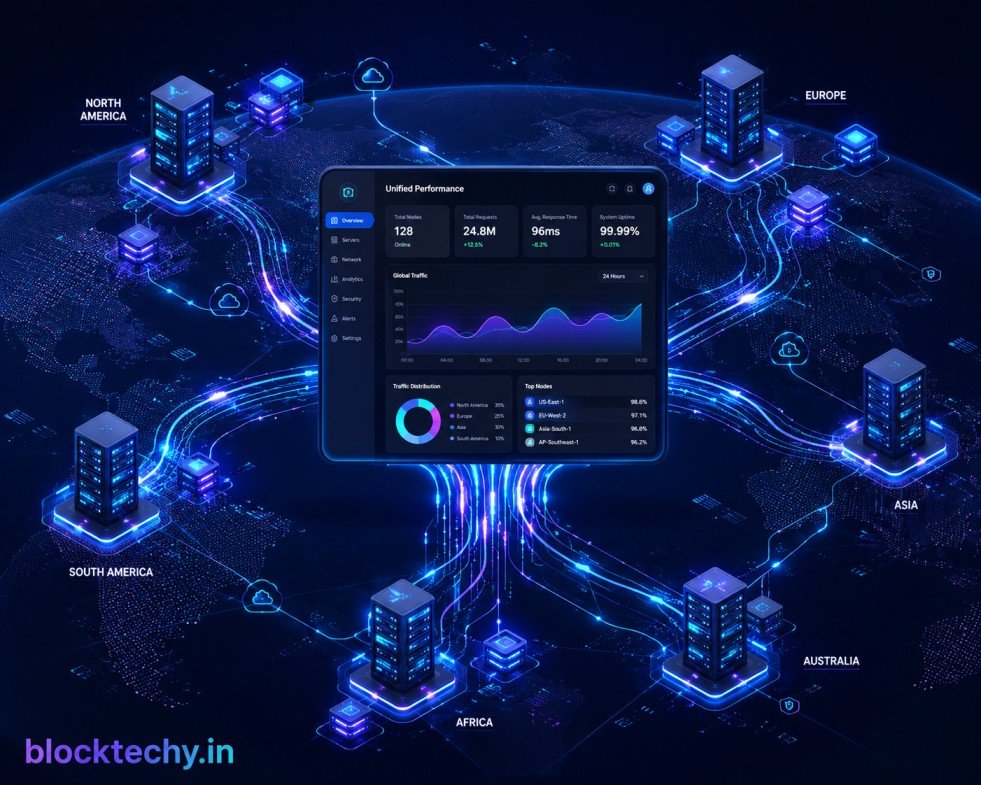
A distributed system is a collection of independent computers (also called nodes) that communicate over a network to perform tasks as though they were a single computer.
Although users interact with one application, the workload is distributed among multiple machines located in different geographical locations or data centers.
For example, when you search for something on Google, your request is not processed by one computer. Instead, it travels through thousands of servers that work together to deliver the fastest and most relevant results.
Simple Definition
A distributed system is a network of multiple computers working together to provide a single, seamless service.
Why Do We Need Distributed Systems?
Traditional single-server systems work well for small applications. However, they struggle as user demand increases.
Imagine an online shopping website during a major sale. Millions of customers visit simultaneously. A single server could become overwhelmed and crash.
Distributed systems solve this problem by:
- Sharing workloads among multiple servers
- Increasing system availability
- Reducing downtime
- Improving application performance
- Supporting millions of concurrent users
- Ensuring business continuity if one server fails
This is why companies like Google, Amazon, Microsoft, Netflix, Meta, and Uber rely heavily on distributed architectures.
Characteristics of Distributed Systems
A well-designed distributed system offers several important characteristics.
1. Scalability
The system can easily add more servers as demand grows.
For example, during Black Friday sales, Amazon automatically adds more servers to handle increased traffic.
2. Fault Tolerance
If one server fails, others continue serving users.
This minimizes downtime and ensures uninterrupted service.
3. High Availability
Applications remain operational nearly all the time.
Many cloud providers guarantee uptime of 99.99% or higher using distributed infrastructure.
4. Transparency
Users don’t know which server processed their request.
The entire network appears as one single application.
5. Resource Sharing
Different computers share processing power, storage, and databases efficiently.
6. Concurrency
Thousands—or even millions—of users can access the system simultaneously without affecting performance.
7. Geographic Distribution
Servers can be located worldwide while functioning as one unified system.
This reduces latency and improves user experience.
How Distributed Systems Work
At a high level, distributed systems divide large tasks into smaller pieces and assign them to multiple computers.
Instead of one powerful server handling everything, many smaller servers collaborate.
The general workflow is:
- A user sends a request.
- A load balancer receives the request.
- The load balancer selects the best available server.
- Application servers process the request.
- Data is retrieved from distributed databases if needed.
- The result is returned to the user.
This approach enables systems to handle millions of requests efficiently.
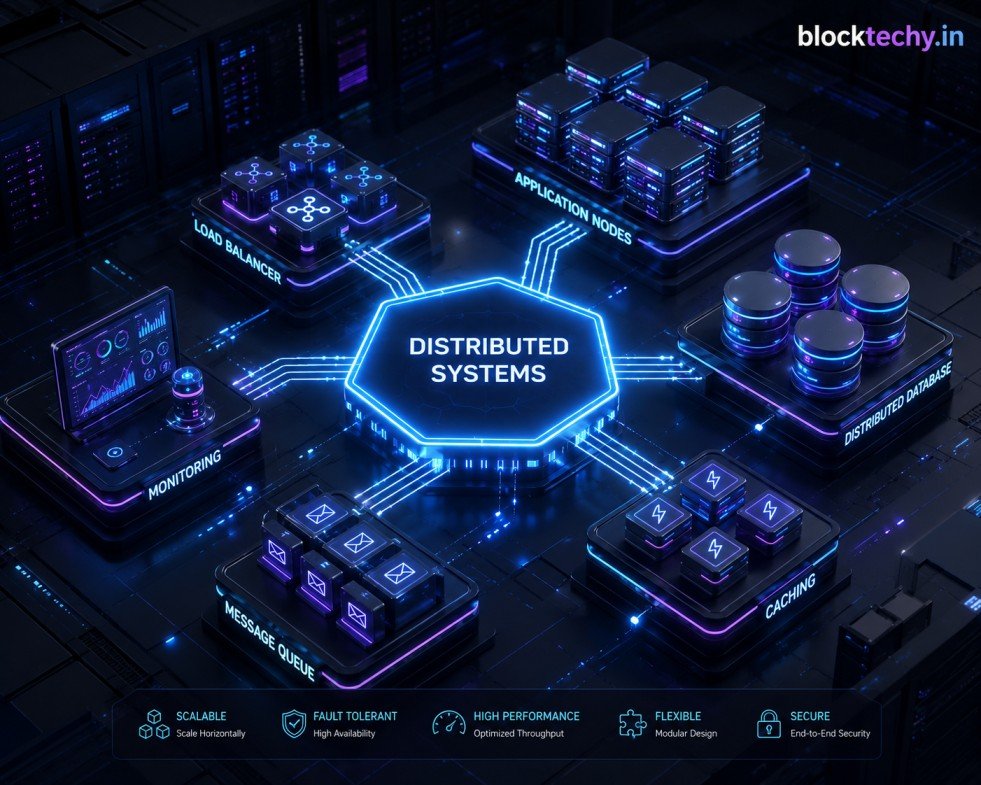
Distributed System Architecture
The architecture defines how different machines communicate and coordinate with each other.
Most distributed systems include several interconnected layers.
                User
                  │
                  ▼
          Load Balancer
                  │
     ┌────────────┴────────────┐
     │            │            │
 Server A     Server B     Server C
     │            │            │
     └────────────┬────────────┘
                  │
         Distributed Database
                  │
         Cloud Storage / Cache
Each component has a specific responsibility.
Core Components of a Distributed System
1. Nodes (Servers)
Nodes are the individual computers that perform processing.
Each node may handle:
- User authentication
- Data processing
- File storage
- Business logic
- API requests
Large companies often operate thousands of nodes simultaneously.
2. Network
The network enables communication between nodes.
Nodes exchange information using protocols such as:
- HTTP
- HTTPS
- TCP/IP
- UDP
- gRPC
Reliable networking is essential because all system coordination depends on communication.
3. Load Balancer
A load balancer distributes incoming traffic evenly across servers.
Instead of directing all users to one machine, it ensures requests are shared efficiently.
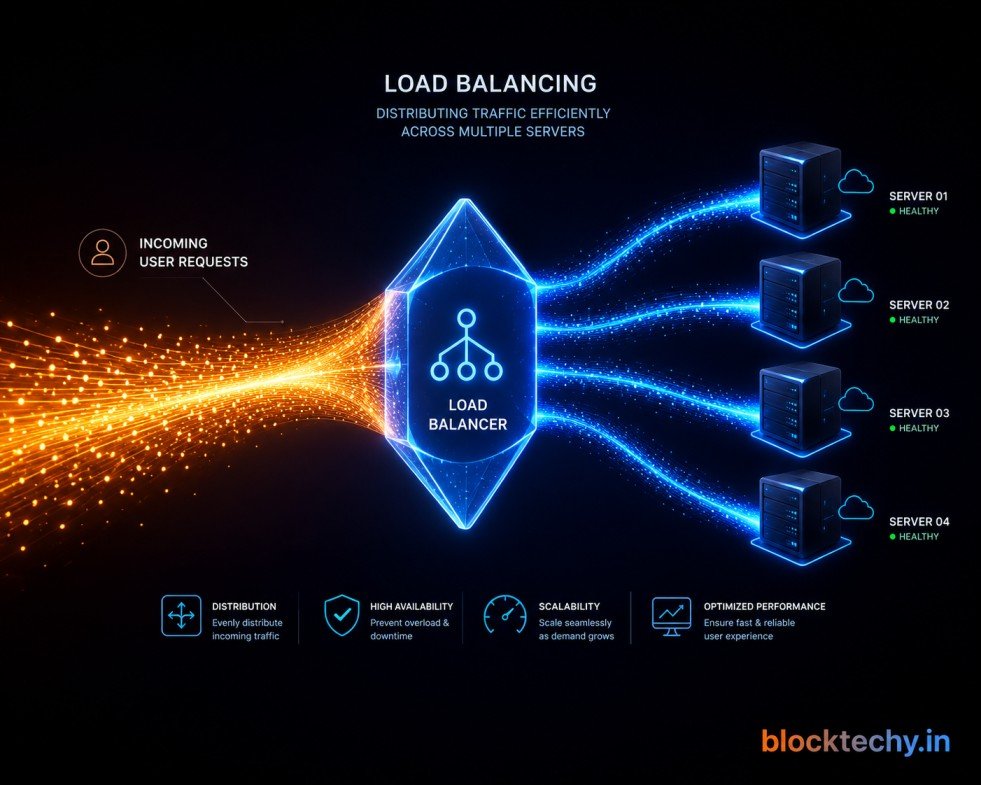
Benefits include:
- Better performance
- Reduced server overload
- Improved availability
- Automatic failover
Popular load balancers include:
- NGINX
- HAProxy
- AWS Elastic Load Balancer
4. Distributed Database
Unlike traditional databases stored on one server, distributed databases spread data across multiple machines.
Advantages include:
- Faster queries
- Higher availability
- Better fault tolerance
- Horizontal scalability
Examples:
- Cassandra
- CockroachDB
- Google Spanner
- MongoDB (Sharded)
5. Distributed Cache
Frequently accessed data is stored in memory to improve speed.
Instead of querying the database repeatedly, applications retrieve cached information.
Popular technologies include:
- Redis
- Memcached
Caching significantly reduces response time.
6. Message Queue
Modern distributed applications often communicate asynchronously.
Instead of waiting for immediate responses, services exchange messages through queues.
Benefits include:
- Improved reliability
- Better scalability
- Loose coupling
- Easier system maintenance
Popular message brokers:
- Apache Kafka
- RabbitMQ
- Amazon SQS
7. Service Discovery
In dynamic cloud environments, servers are frequently added or removed.
Service discovery helps applications locate available services automatically.
Common tools include:
- Consul
- Eureka
- Kubernetes DNS
8. Monitoring System
Monitoring tools continuously track system health.
They monitor:
- CPU usage
- Memory consumption
- Network latency
- Disk performance
- Errors
- Server availability
Popular monitoring tools include:
- Prometheus
- Grafana
- Datadog
Types of Distributed System Architectures
Different applications require different architectural styles.
1. Client-Server Architecture
This is the simplest distributed architecture.
Clients send requests, and servers process them.
Examples:
- Websites
- Email services
- Banking applications
2. Peer-to-Peer (P2P)
In a peer-to-peer system, every computer can act as both a client and a server.
Examples:
- BitTorrent
- Blockchain networks
- Cryptocurrency systems
3. Three-Tier Architecture
Widely used for enterprise applications.
It consists of:
- Presentation layer
- Business logic layer
- Database layer
This separation improves maintainability and scalability.
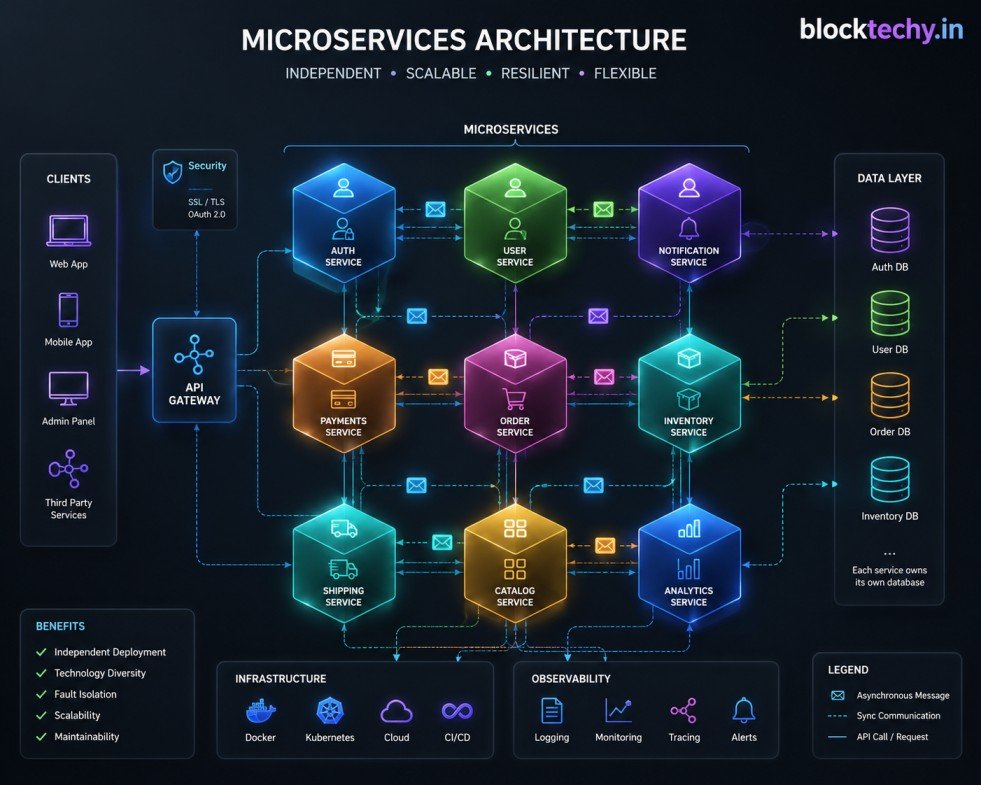
4. Microservices Architecture
Large applications are divided into small, independent services.
Each service performs a specific function.
For example, an e-commerce platform may have separate services for:
- Login
- Payments
- Orders
- Inventory
- Notifications
- Shipping
Each service can be updated independently without affecting the others.
5. Cloud-Native Distributed Architecture
Modern cloud applications run across multiple virtual servers and regions.
Features include:
- Auto scaling
- Container orchestration
- Fault tolerance
- Elastic resource allocation
Platforms like AWS, Microsoft Azure, and Google Cloud support this architecture extensively.
Why Understanding Distributed Systems Matters
As cloud computing, artificial intelligence, blockchain, IoT, and edge computing continue to evolve, distributed systems have become the foundation of nearly every modern digital platform. Understanding their architecture and components is essential for software developers, system architects, DevOps engineers, and anyone interested in scalable application design.
Part 2: Working Process, Types, Advantages & Challenges
In Part 1, we explored the fundamentals of distributed systems, including their architecture, key components, and characteristics. Now, let’s take a deeper look at how distributed systems actually work, the different types of distributed systems, their benefits, and the challenges developers face when designing them.
How Distributed Systems Work: Step-by-Step
A distributed system may consist of dozens, hundreds, or even thousands of interconnected computers working together. Although users interact with what appears to be a single application, many processes occur behind the scenes.
Let’s walk through a typical request.
Step 1: User Sends a Request
Everything begins when a user performs an action, such as:
- Opening a website
- Logging into an application
- Searching for information
- Making an online payment
- Uploading a file
For example, when you visit an e-commerce website and search for “wireless headphones,” your browser sends a request to the application’s servers.
Step 2: DNS Resolves the Request
Before reaching the application, the domain name (such as example.com) is translated into an IP address by the Domain Name System (DNS).
This allows your device to locate the correct server.
Step 3: Load Balancer Receives the Request
Instead of sending every request to one server, the request first reaches a load balancer.
The load balancer decides which server should process the request based on factors such as:
- Current server load
- CPU usage
- Memory utilization
- Geographic location
- Response time
- Health status
This ensures that no single server becomes overloaded.
Step 4: Application Server Processes the Request
The selected application server performs business logic.
Examples include:
- Authenticating users
- Calculating prices
- Processing orders
- Validating forms
- Managing user sessions
- Executing APIs
Sometimes, multiple microservices collaborate to complete a single user request.
Step 5: Accessing the Database
If the requested information is stored in a database, the application communicates with a distributed database.
Examples:
- Product details
- User profiles
- Transaction history
- Inventory
- Payment records
Unlike traditional databases, distributed databases store information across multiple servers.
Step 6: Cache Lookup
Before querying the database, many systems first check the cache.
If the requested information is already stored in memory:
- The response is much faster.
- Database workload decreases.
- Overall performance improves.
If the data is not available in the cache, it is retrieved from the database and often stored in the cache for future requests.
Step 7: Communication Between Services
Modern applications are built using microservices.
For example, an online shopping platform may have independent services for:
- Authentication
- Product catalog
- Shopping cart
- Inventory
- Payment
- Delivery
- Notifications
These services communicate using APIs or message brokers like Apache Kafka or RabbitMQ.
This modular design improves flexibility and scalability.
Step 8: Returning the Response
After processing is complete, the application sends the result back to the user.
The user simply sees:
- A webpage
- A search result
- A confirmation message
- A payment receipt
Behind the scenes, multiple servers may have collaborated to generate that response.
Types of Distributed Systems
Distributed systems come in different forms depending on their purpose.
1. Distributed Computing Systems
These systems divide computational tasks across multiple computers to solve complex problems faster.
Examples
- Scientific simulations
- Weather forecasting
- AI model training
- Video rendering
- Big data analytics
2. Distributed Storage Systems
These systems distribute files across multiple storage servers.
Benefits include:
- Data redundancy
- High availability
- Better reliability
- Scalability
Examples
- Google Drive
- Dropbox
- Amazon S3
- Hadoop Distributed File System (HDFS)
3. Distributed Database Systems
Instead of storing all data on one machine, data is distributed across multiple database servers.
Advantages include:
- Faster access
- High availability
- Improved disaster recovery
- Geographic replication
Examples include Cassandra, CockroachDB, and Google Spanner.
4. Distributed Information Systems
These systems allow multiple applications to share information across different locations.
Examples include:
- Banking networks
- Airline reservation systems
- Hospital management systems
- Enterprise Resource Planning (ERP) platforms
5. Distributed Cloud Systems
Cloud providers operate massive distributed infrastructures consisting of data centers around the world.
Examples include:
- Amazon Web Services (AWS)
- Microsoft Azure
- Google Cloud Platform (GCP)
Advantages of Distributed Systems
Distributed systems have become the preferred choice for modern applications because they offer numerous benefits.
1. Scalability
As user demand increases, additional servers can be added without redesigning the entire application.
This approach, known as horizontal scaling, is one of the biggest strengths of distributed systems.
2. High Availability
If one server goes offline, another can immediately take over.
This minimizes downtime and keeps services available.
3. Fault Tolerance
Failures are inevitable in large systems.
Distributed architectures ensure that failures in one component do not bring down the entire application.
4. Improved Performance
Multiple servers process requests simultaneously.
This reduces response times and allows applications to handle millions of users.
5. Better Resource Utilization
Workloads are shared across many machines, making efficient use of computing resources.
6. Geographic Distribution
Organizations can deploy servers closer to users worldwide, reducing latency and improving user experience.
7. Cost Efficiency
Instead of purchasing one extremely powerful server, organizations can use many commodity servers, reducing infrastructure costs.
Challenges in Distributed Systems
Although distributed systems offer significant advantages, they also introduce complex engineering challenges.
1. Network Latency
Servers communicate over networks, which introduces delays.
Higher latency can slow down applications and affect the user experience.
Developers optimize network communication and place servers closer to users to reduce latency.
2. Data Consistency
When data is replicated across multiple servers, keeping every copy synchronized becomes challenging.
Imagine updating your bank account balance.
Every server must eventually display the same balance to avoid inconsistencies.
Consistency strategies include:
- Strong consistency
- Eventual consistency
- Causal consistency
Choosing the right model depends on the application’s requirements.
3. Fault Detection
Servers may fail due to:
- Hardware failures
- Network outages
- Power interruptions
- Software bugs
Distributed systems must detect failures quickly and recover automatically.
Techniques include:
- Health checks
- Heartbeats
- Automatic failover
4. Data Replication
To improve reliability, data is often copied across multiple servers.
However, replication introduces challenges such as:
- Synchronization delays
- Storage overhead
- Conflict resolution
Balancing redundancy and consistency is a key design decision.
5. Security
With many interconnected services, the attack surface increases.
Common security concerns include:
- Unauthorized access
- Data breaches
- Distributed Denial-of-Service (DDoS) attacks
- Man-in-the-middle attacks
- API vulnerabilities
Best practices involve encryption, authentication, authorization, secure APIs, and continuous monitoring.
6. Time Synchronization
Servers maintain their own internal clocks, which may drift over time.
Accurate synchronization is essential for:
- Logging
- Event ordering
- Financial transactions
- Distributed databases
Protocols such as the Network Time Protocol (NTP) help maintain clock accuracy.
7. Debugging Complexity
A request may travel through many services before completion.
Finding the source of an issue becomes more difficult than in a single-server application.
Developers use centralized logging, distributed tracing, and monitoring tools to simplify troubleshooting.
8. Distributed Transactions
Some operations require updates across multiple databases or services.
For example:
- Deduct money from a bank account.
- Add it to another account.
- Record the transaction.
- Send a confirmation.
If one step fails, the system must maintain data integrity.
Techniques like the Two-Phase Commit (2PC) protocol and the Saga Pattern are commonly used to manage distributed transactions.
CAP Theorem: The Fundamental Trade-off
One of the most important concepts in distributed systems is the CAP Theorem. It states that a distributed system cannot simultaneously guarantee all three of the following during a network partition:
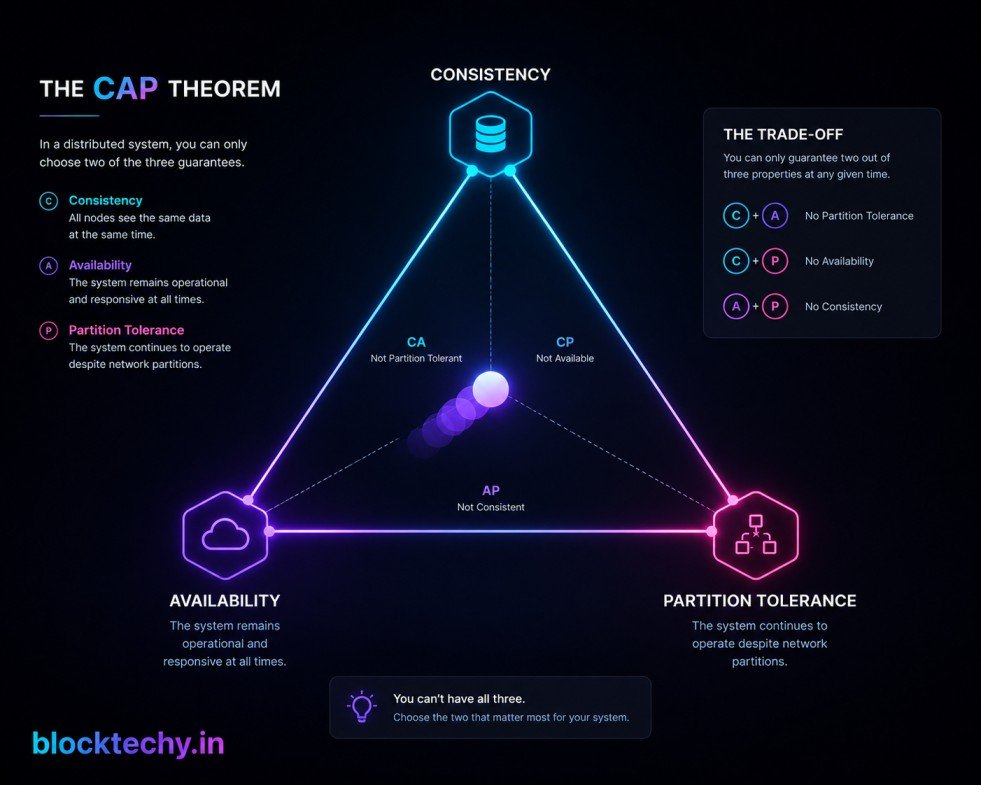
- Consistency (C): Every user sees the same data at the same time.
- Availability (A): Every request receives a response, even if some data is outdated.
- Partition Tolerance (P): The system continues operating despite network failures between nodes.
Since network partitions are unavoidable in distributed environments, system designers typically prioritize either:
- Consistency + Partition Tolerance (CP) — Used in systems where data accuracy is critical, such as banking.
- Availability + Partition Tolerance (AP) — Used in systems where continuous service is more important, such as social media feeds.
The choice depends on the application’s requirements and acceptable trade-offs.
Best Practices for Building Distributed Systems
To build reliable and scalable distributed systems, engineers commonly follow these practices:
- Design services to be loosely coupled.
- Use stateless application servers whenever possible.
- Replicate critical data across multiple nodes.
- Implement robust monitoring and alerting.
- Cache frequently accessed data.
- Secure communication with encryption and authentication.
- Plan for failures and automate recovery.
- Test systems under realistic load conditions.
- Use container orchestration platforms like Kubernetes for deployment and scaling.
- Document service dependencies and APIs clearly.
Part 3: Real-World Applications, Future Trends, FAQs & Conclusion
In the previous sections, we explored what distributed systems are, how they work, their architecture, components, advantages, and the engineering challenges involved. In this final part, we’ll look at where distributed systems are used in the real world, the technologies shaping their future, and answer some frequently asked questions.
Real-World Applications of Distributed Systems
Distributed systems are the backbone of modern digital services. Almost every large-scale application you use today relies on distributed architecture to deliver speed, reliability, and scalability.
1. Search Engines
Search engines process billions of queries every day. Instead of searching through one massive database on a single server, they distribute search indexes across thousands of machines.
When a user enters a query:
- The request is distributed across multiple servers.
- Each server searches a portion of the index.
- Results are combined and ranked.
- The final page is returned within milliseconds.
Without distributed systems, delivering fast search results to millions of users would be impossible.
2. Video Streaming Platforms
Streaming platforms store enormous libraries of movies, TV shows, and videos across multiple data centers.
When a user watches a video:
- The content is delivered from the nearest server.
- Traffic is balanced across regions.
- Multiple servers stream different video segments.
- Content Delivery Networks (CDNs) reduce buffering.
This distributed approach enables smooth streaming even during peak viewing hours.
3. E-Commerce Platforms
Large online marketplaces must handle:
- Product searches
- Shopping carts
- User accounts
- Payments
- Order management
- Inventory tracking
- Shipping updates
Each of these functions often runs as an independent microservice within a distributed system. During major sales events, additional servers can be added automatically to handle increased traffic.
4. Online Banking and Financial Services
Banks process millions of secure transactions every day.
Distributed systems help by providing:
- High availability
- Data replication
- Disaster recovery
- Secure transaction processing
- Real-time fraud detection
Because financial data is highly sensitive, these systems prioritize consistency and reliability.
5. Social Media Platforms
Social media applications manage billions of posts, photos, videos, messages, and notifications.
Distributed systems allow them to:
- Deliver content quickly
- Store user data across regions
- Recommend personalized feeds
- Handle viral traffic spikes
- Process notifications in real time
This ensures users receive a responsive experience regardless of their location.
6. Cloud Computing Services
Cloud providers operate massive distributed infrastructures with data centers located around the world.
These platforms offer:
- Virtual machines
- Object storage
- Databases
- Artificial intelligence services
- Serverless computing
- Networking services
Resources can be provisioned, scaled, and managed dynamically to meet changing demand.
7. Internet of Things (IoT)
IoT environments may include millions of connected devices such as:
- Smart home appliances
- Wearable devices
- Industrial sensors
- Connected vehicles
- Healthcare monitoring systems
Distributed systems collect, process, and analyze data from these devices in real time, enabling intelligent automation and monitoring.
8. Artificial Intelligence and Machine Learning
Training modern AI models requires significant computing power. Distributed systems divide the workload across multiple servers or GPUs, reducing training time and allowing models to process large datasets efficiently.
They also support real-time AI applications such as:
- Recommendation engines
- Fraud detection
- Image recognition
- Natural language processing
- Autonomous systems
9. Blockchain Networks
Blockchain is one of the best examples of a distributed system.
Instead of relying on a central authority, blockchain networks distribute transaction records across many participating nodes.
Key characteristics include:
- Decentralized data storage
- Consensus mechanisms
- Immutable transaction history
- Fault tolerance
- High transparency
Bitcoin, Ethereum, and many enterprise blockchain platforms are built on distributed principles.
10. Content Delivery Networks (CDNs)
A CDN stores copies of websites, images, videos, and other assets on servers around the globe.
When users access a website, content is delivered from the nearest server, resulting in:
- Faster page loading
- Reduced latency
- Lower bandwidth usage
- Improved availability
This is especially important for websites serving global audiences.
Future Trends in Distributed Systems
Distributed systems continue to evolve alongside emerging technologies. Here are some trends shaping their future:
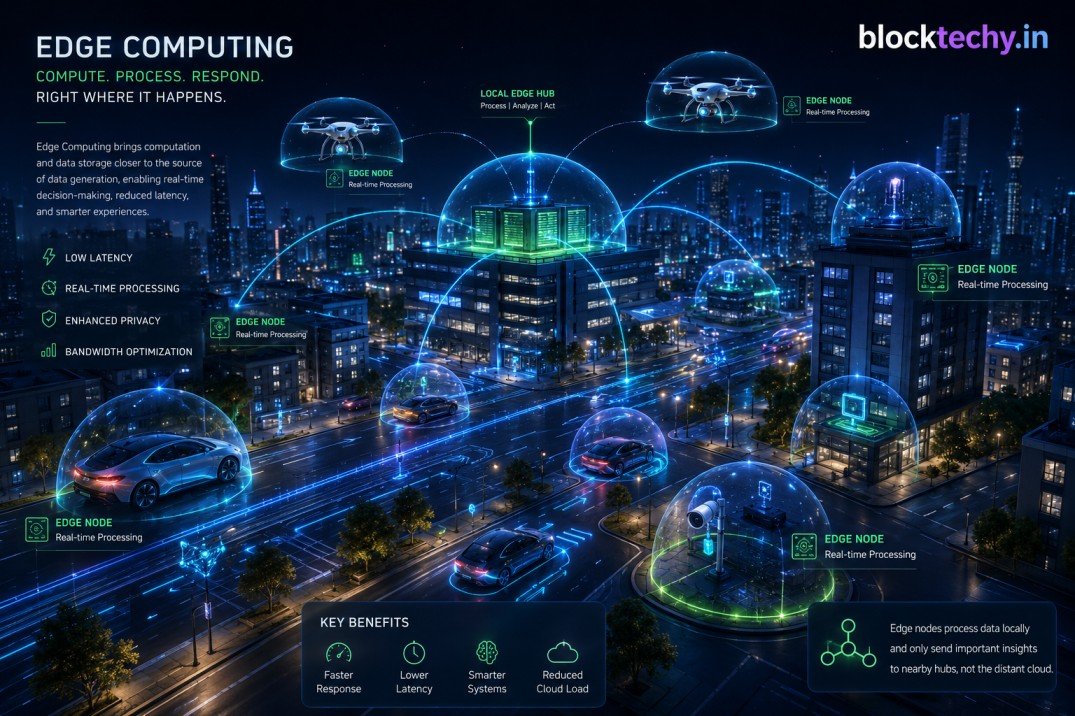
Edge Computing
Instead of processing all data in centralized cloud data centers, edge computing performs computation closer to where data is generated. This reduces latency and is ideal for applications like autonomous vehicles, industrial automation, and augmented reality.
AI-Driven Infrastructure
Artificial intelligence is increasingly being used to optimize distributed systems by predicting failures, balancing workloads, improving resource allocation, and automating scaling decisions.
Serverless Computing
Serverless platforms allow developers to focus on writing code without managing servers. The cloud provider automatically allocates and scales resources based on demand, simplifying application deployment.
5G Connectivity
High-speed, low-latency 5G networks enable faster communication between distributed nodes, making real-time applications such as smart cities and connected healthcare more practical.
Kubernetes and Container Orchestration
Container technologies have become the standard for deploying distributed applications. Kubernetes automates deployment, scaling, service discovery, and recovery, making it easier to manage complex microservice environments.
Hybrid and Multi-Cloud Architectures
Many organizations are combining private infrastructure with multiple public cloud providers to improve flexibility, resilience, and cost efficiency.
Best Practices for Designing Distributed Systems
Building a reliable distributed system requires thoughtful design and continuous monitoring. Consider the following best practices:
- Design services to be modular and loosely coupled.
- Prefer stateless application servers where possible.
- Replicate critical data across multiple locations.
- Implement automated health checks and failover mechanisms.
- Use caching to reduce database load.
- Encrypt data both in transit and at rest.
- Monitor system health with centralized logging and metrics.
- Test failure scenarios regularly to ensure resilience.
- Plan for scalability from the beginning rather than adding it later.
- Document APIs, dependencies, and operational procedures thoroughly.
Frequently Asked Questions (FAQs)
1. What is a distributed system?
A distributed system is a collection of independent computers that communicate over a network and work together as a single system to deliver a service.
2. Why are distributed systems important?
They improve scalability, reliability, fault tolerance, and performance, allowing applications to support millions of users while remaining available during hardware or network failures.
3. What is the difference between a distributed system and a centralized system?
In a centralized system, one server performs all processing and stores all data. In a distributed system, multiple interconnected servers share computation and storage responsibilities.
4. What are the main components of a distributed system?
Core components include nodes (servers), networking, load balancers, distributed databases, caching systems, message queues, monitoring tools, and service discovery mechanisms.
5. What is fault tolerance?
Fault tolerance is the ability of a system to continue operating even when one or more components fail.
6. What is the CAP Theorem?
The CAP Theorem states that during a network partition, a distributed system can guarantee at most two of the following: Consistency, Availability, and Partition Tolerance.
7. Are cloud computing and distributed systems the same?
No. Cloud computing is a service delivery model that often relies on distributed systems to provide scalable and reliable infrastructure.
8. Is blockchain a distributed system?
Yes. Blockchain is a specialized distributed system in which multiple nodes maintain a shared, synchronized ledger using consensus mechanisms instead of a central authority.
Conclusion
Distributed systems have become the foundation of modern computing. From search engines and streaming platforms to cloud computing, AI, blockchain, and IoT, they enable applications to scale, remain available, and deliver reliable performance to users worldwide.
While designing distributed systems introduces challenges such as network latency, data consistency, synchronization, and fault management, modern architectural patterns, cloud platforms, and orchestration tools make it possible to build resilient and efficient systems.
As technologies like edge computing, artificial intelligence, 5G, and serverless computing continue to mature, distributed systems will play an even greater role in powering the next generation of digital services. Understanding how they work is an essential skill for developers, architects, DevOps engineers, and technology enthusiasts who want to build scalable and future-ready applications.