Introduction
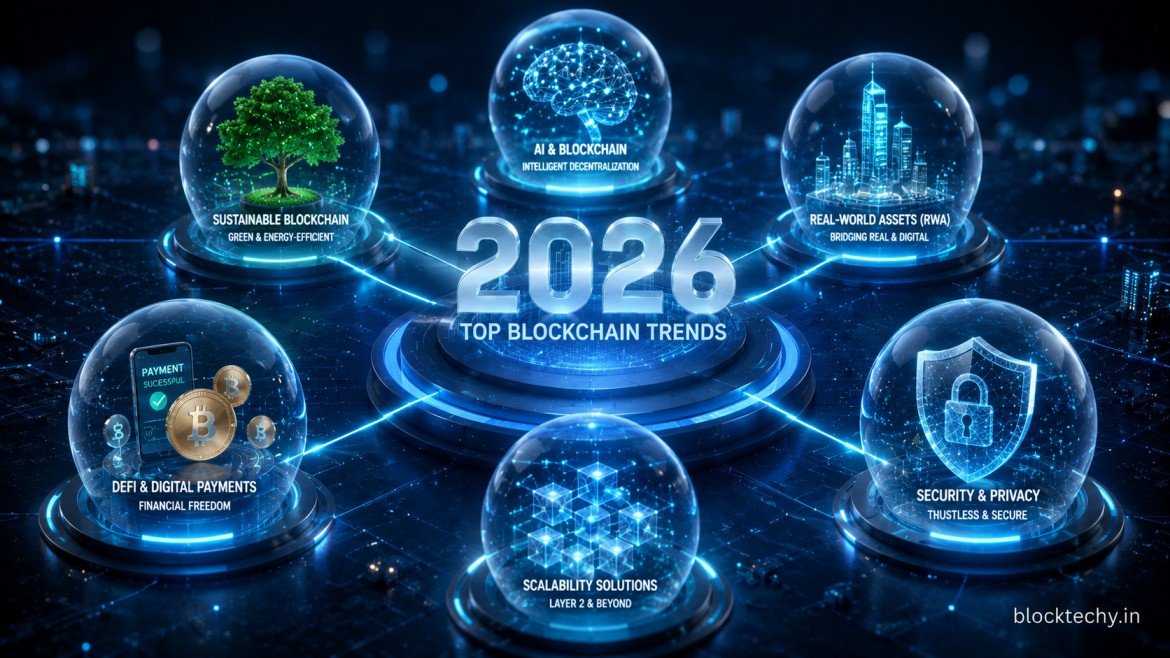
Blockchain Trends 2026 are reshaping industries far beyond blockchain’s origins as the foundation of cryptocurrencies. This year, it is becoming one of the most transformative technologies across finance, healthcare, supply chain management, gaming, real estate, and artificial intelligence. Businesses, governments, and developers are embracing blockchain to create secure, transparent, and decentralized systems that solve real-world problems.
The rapid growth of Web3, decentralized finance (DeFi), tokenized assets, and AI-powered applications has accelerated blockchain adoption worldwide. Today, blockchain is no longer just about Bitcoin or Ethereum. It is becoming the infrastructure for the next generation of the internet, enabling trust without relying on centralized authorities.
In this article, we’ll explore the biggest blockchain trends shaping 2026, explain why they matter, and examine how they will influence businesses, developers, and everyday users.
What Is Blockchain?
Blockchain is a distributed digital ledger that records transactions across multiple computers in a secure and transparent way. Once information is added to the blockchain, it becomes extremely difficult to alter, making it highly resistant to fraud and tampering.
Unlike traditional databases managed by a single organization, blockchain operates through decentralized networks where participants collectively verify and validate transactions using consensus mechanisms.
Key Features of Blockchain
- Decentralization
- Transparency
- Security
- Immutability
- Smart Contracts
- Faster Digital Transactions
These characteristics make blockchain suitable for countless applications beyond cryptocurrency.
Why Blockchain Matters More Than Ever in 2026
Several factors are driving blockchain adoption this year:
- Growing demand for secure digital systems
- Expansion of artificial intelligence
- Increasing cyber threats
- Rise of tokenized real-world assets
- Government interest in digital identity
- Enterprise adoption of Web3 technologies
Organizations are realizing that blockchain can improve trust, reduce operational costs, automate business processes, and eliminate unnecessary intermediaries.
1. AI and Blockchain Are Becoming Powerful Partners
Artificial Intelligence and blockchain are two of the most disruptive technologies of the decade. In 2026, their integration is creating intelligent decentralized systems capable of making automated decisions while maintaining transparency and security.

AI excels at analyzing large amounts of data, identifying patterns, and automating tasks. Blockchain provides a secure and immutable record of AI decisions, making them more trustworthy and auditable.
Real-World Applications
- AI-powered fraud detection
- Intelligent supply chain management
- Automated financial services
- Decentralized AI marketplaces
- Smart healthcare diagnostics
For example, AI can detect suspicious financial activity, while blockchain securely stores the evidence and transaction history, creating a transparent audit trail.
This combination is expected to revolutionize industries that require both automation and trust.
2. Real-World Asset (RWA) Tokenization Is Exploding
One of the fastest-growing blockchain trends in 2026 is Real-World Asset (RWA) tokenization.
Tokenization converts ownership of physical assets into digital tokens on a blockchain.

Assets that can be tokenized include:
- Real estate
- Gold
- Stocks
- Bonds
- Fine art
- Luxury watches
- Intellectual property
Instead of buying an entire property, investors can purchase fractional ownership represented by blockchain tokens.
Benefits
- Increased liquidity
- Lower investment barriers
- Faster transactions
- Global accessibility
- Transparent ownership
Many financial institutions are investing heavily in tokenized assets because they reduce paperwork and improve efficiency.
Experts believe tokenized assets could become one of the largest blockchain markets over the next decade.
3. Layer 2 Scaling Solutions Continue to Grow
Blockchain networks have historically struggled with slow transaction speeds and high fees during periods of heavy usage.
Layer 2 solutions address these challenges by processing transactions outside the main blockchain while preserving security.

Popular Layer 2 technologies include:
- Rollups
- State Channels
- Sidechains
Why Layer 2 Matters
Benefits include:
- Lower transaction costs
- Faster confirmations
- Better scalability
- Improved user experience
Ethereum’s Layer 2 ecosystem continues to expand, making decentralized applications (dApps) more practical for everyday users.
As blockchain adoption increases, scalable infrastructure will be essential for supporting millions of users.
4. Enterprise Blockchain Adoption Is Accelerating
Large organizations are no longer experimenting with blockchain—they are deploying it in production.

Companies use blockchain to improve:
- Supply chain transparency
- Inventory tracking
- Cross-border payments
- Document verification
- Digital identity management
Industries adopting blockchain include:
Healthcare
Hospitals use blockchain to securely share patient records while maintaining privacy.
Banking
Financial institutions use blockchain to speed up international money transfers and reduce settlement times.
Logistics
Supply chain companies track products from manufacturers to customers, improving traceability and reducing fraud.
Agriculture
Farmers and food companies use blockchain to verify the origin and quality of agricultural products.
Enterprise blockchain is becoming a strategic investment rather than an experimental technology.
5. Blockchain Cybersecurity Is Becoming a Global Priority
Cyberattacks continue to increase every year, making cybersecurity one of the most important technology concerns.
Blockchain offers several security advantages:
- Immutable transaction records
- Decentralized storage
- Strong cryptographic protection
- Reduced risk of data tampering
Organizations are using blockchain to protect:
- Financial transactions
- Medical records
- Government databases
- Digital identities
- Cloud storage
Smart contract auditing has also become an essential practice, helping developers identify vulnerabilities before deployment.
As cyber threats evolve, blockchain security solutions will become increasingly important.
6. Decentralized Identity (DID) Is Transforming Online Privacy
People often share personal information with dozens of online platforms, increasing the risk of identity theft and data breaches.
Decentralized Identity (DID) gives individuals greater control over their personal information.
Instead of storing identity data on centralized servers, blockchain allows users to manage their own credentials securely.
Benefits of DID
- Better privacy
- Reduced identity theft
- Faster verification
- Secure online authentication
- User ownership of personal data
Governments, universities, and enterprises are actively exploring blockchain-based identity systems for secure digital services.
7. Stablecoins Are Transforming Global Payments
Stablecoins have become one of the most practical uses of blockchain technology. Unlike traditional cryptocurrencies, whose prices can fluctuate significantly, stablecoins are designed to maintain a relatively stable value by being pegged to assets such as the US dollar or other fiat currencies.

In 2026, businesses, freelancers, and financial institutions are increasingly using stablecoins for international payments. Traditional cross-border transfers often take several days and involve high fees. Stablecoins enable transactions to settle within minutes, often at a much lower cost.
Why Stablecoins Are Gaining Popularity
- Faster international payments
- Lower transaction fees
- Reduced currency exchange costs
- 24/7 availability
- Increased transparency
Many payment platforms and financial service providers are integrating stablecoins into their systems, making blockchain-based payments more accessible to everyday users.
8. Cross-Chain Interoperability Is Breaking Blockchain Silos
As the blockchain ecosystem expands, hundreds of blockchain networks now exist, each with its own strengths and limitations. However, these networks often operate independently, making it difficult to transfer assets and data between them.

Cross-chain interoperability aims to solve this challenge by allowing different blockchains to communicate and exchange information securely.
Benefits of Cross-Chain Technology
- Easier asset transfers between networks
- Improved user experience
- Greater liquidity across decentralized finance (DeFi)
- Better collaboration between blockchain ecosystems
- Increased flexibility for developers
Projects focused on interoperability are helping build a more connected blockchain ecosystem where users can move assets seamlessly across multiple networks.
9. Green Blockchain and Sustainable Innovation
Environmental concerns have been a major topic of discussion in the blockchain industry. Earlier blockchain networks that relied on energy-intensive consensus mechanisms faced criticism for their electricity consumption.

In response, many modern blockchain platforms have adopted more energy-efficient approaches, such as Proof of Stake (PoS) and other innovative consensus mechanisms.
Sustainable Blockchain Trends
- Energy-efficient validation systems
- Carbon-neutral blockchain initiatives
- Renewable energy integration
- Eco-friendly mining practices
- Green Web3 infrastructure
Sustainability is becoming an important factor for enterprises and governments when selecting blockchain platforms, encouraging the development of environmentally responsible solutions.
10. Blockchain Careers Continue to Expand
As blockchain adoption grows, the demand for skilled professionals is increasing rapidly. Organizations across industries are hiring developers, security experts, analysts, consultants, and product managers with blockchain knowledge.

Some of the most in-demand blockchain careers in 2026 include:
- Blockchain Developer
- Smart Contract Engineer
- Web3 Developer
- Blockchain Security Auditor
- DeFi Developer
- Blockchain Solution Architect
- Blockchain Business Analyst
- Crypto Compliance Specialist
- NFT and Digital Asset Consultant
- Blockchain Researcher
For students and professionals, learning blockchain fundamentals, programming languages like Solidity or Rust, and understanding decentralized applications can open exciting career opportunities.
Challenges Facing Blockchain in 2026
Despite its rapid growth, blockchain technology still faces several challenges that need to be addressed for widespread adoption.
Scalability
Although Layer 2 solutions have improved transaction speeds, some blockchain networks still struggle with high traffic during peak usage.
Regulation
Governments worldwide are developing regulations for cryptocurrencies, digital assets, and blockchain applications. Clear regulatory frameworks will be essential for encouraging innovation while protecting consumers.
User Experience
Blockchain applications can still be difficult for beginners to use. Simplifying wallets, transactions, and onboarding processes will be key to attracting mainstream users.
Security Risks
While blockchain itself is highly secure, poorly written smart contracts, phishing attacks, and compromised wallets remain common risks. Continuous security improvements and user education are essential.
The Future Outlook
Looking beyond 2026, blockchain is expected to become deeply integrated into everyday digital life. We are likely to see:
- More government-backed digital identity systems
- Greater adoption of tokenized assets
- Wider use of decentralized finance in traditional banking
- AI-powered decentralized applications
- Increased blockchain integration in healthcare, education, and supply chains
- Improved interoperability between blockchain networks
- Continued innovation in privacy and scalability
Rather than replacing existing systems overnight, blockchain will increasingly work alongside traditional technologies, improving transparency, efficiency, and trust.
Conclusion
Blockchain technology has evolved far beyond its origins in cryptocurrency and is now shaping the future of the digital world. In 2026, innovations such as Artificial Intelligence (AI) integration, Real-World Asset (RWA) tokenization, Layer 2 scaling solutions, decentralized identity, stablecoins, enterprise adoption, cross-chain interoperability, and sustainable blockchain networks are transforming industries and creating new opportunities for businesses and individuals alike.
As organizations continue to embrace blockchain, the technology is becoming a trusted foundation for secure, transparent, and efficient digital systems. From improving financial services and supply chain management to strengthening cybersecurity and enabling digital ownership, blockchain is solving real-world challenges while driving the next generation of innovation.
Although challenges such as scalability, regulatory uncertainty, and user adoption still exist, ongoing technological advancements and increasing global investment indicate a promising future. Governments, enterprises, startups, and developers are working together to build a more connected, decentralized, and secure digital economy.
For developers, entrepreneurs, investors, and technology enthusiasts, staying informed about these emerging trends is essential. Understanding how blockchain is evolving will not only help you adapt to the changing technology landscape but also prepare you to take advantage of new career opportunities and business innovations.
The future of blockchain is no longer just a vision—it is becoming a reality. As we move beyond 2026, blockchain will continue to redefine how we exchange value, verify information, protect digital identities, and build trust in an increasingly connected world. Those who embrace this transformation today will be better positioned to lead the digital economy of tomorrow. Understanding Blockchain Trends 2026 will help you adapt to the changing technology landscape and prepare for new career and business opportunities.
Frequently Asked Questions (FAQs)
1. What is the biggest blockchain trend in 2026?
One of the biggest Blockchain Trends 2026 is the integration of Artificial Intelligence with blockchain, enabling secure, transparent, and intelligent decentralized applications.
2. Is blockchain only used for cryptocurrencies?
No. Blockchain is used in finance, healthcare, supply chain management, digital identity, gaming, real estate, education, and many other industries.
3. Why is tokenization important?
Tokenization allows physical assets such as real estate, artwork, or commodities to be represented digitally on a blockchain, enabling fractional ownership and easier trading.
4. Will blockchain create more jobs?
Yes. The growing adoption of blockchain technology is creating demand for developers, cybersecurity experts, analysts, consultants, and other professionals.
5. Is blockchain environmentally friendly?
Many modern blockchain platforms use energy-efficient consensus mechanisms, making them significantly more sustainable than earlier blockchain networks.
Final Thoughts
Blockchain technology has evolved from a niche innovation into a powerful foundation for the future digital economy. In 2026, trends such as AI integration, real-world asset tokenization, decentralized identity, enterprise adoption, stablecoins, and sustainable blockchain solutions are reshaping industries across the globe.
While challenges like regulation, scalability, and usability remain, ongoing innovation continues to strengthen blockchain’s role in creating secure, transparent, and efficient digital systems.
For businesses, developers, and technology enthusiasts, understanding these trends is essential. Whether you’re building decentralized applications, exploring Web3, or simply staying informed about emerging technologies, blockchain will remain one of the most influential technologies of the coming decade.
The future of blockchain is no longer a distant vision—it is unfolding today.
Follow this link to join my WhatsApp group:
https://chat.whatsapp.com/JvmrMTxkdgt9u6kGMT73XY