Introduction
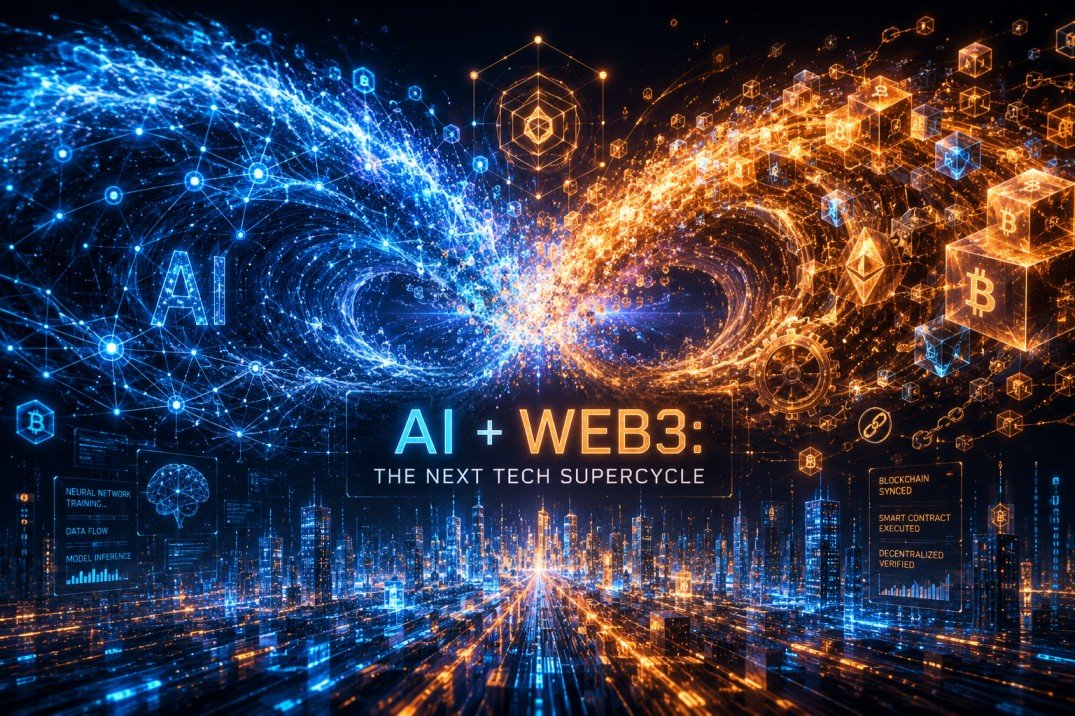
Every decade or so, a technological wave reshapes the global economy. The internet transformed communication, smartphones redefined connectivity, and cloud computing changed how businesses scale. Today, two groundbreaking innovations—Artificial Intelligence (AI) and Web3—are converging to potentially create the next major technology supercycle.
AI is making machines smarter, enabling automation, predictive intelligence, and human-like interaction. Web3, on the other hand, is rebuilding the internet around decentralization, digital ownership, and trustless systems. Individually, each is transformative. Together, they could redefine finance, governance, digital identity, creativity, and even the structure of online economies.
The convergence of AI and Web3 is more than a trend—it represents a structural shift in how technology is built, owned, and monetized.
Understanding the Foundations
What is AI?
Artificial Intelligence refers to systems capable of performing tasks that typically require human intelligence, such as:
- Learning from data
- Making predictions
- Understanding language
- Recognizing images
- Automating decision-making
- Generating content
Recent breakthroughs in generative AI, large language models, and autonomous agents have accelerated adoption across industries. AI is no longer experimental—it is becoming infrastructure.
Examples include:
- AI chat assistants
- Autonomous trading systems
- Predictive analytics
- AI-powered coding tools
- Recommendation engines
AI thrives on data, computation, and optimization.
What is Web3?
Web3 represents the next evolution of the internet built on blockchain technology, emphasizing:
- Decentralization
- User ownership
- Permissionless innovation
- Trustless transactions
- Tokenized economies
Unlike Web2 platforms where corporations control user data and monetization, Web3 aims to give users control over digital assets, identities, and governance.
Core Web3 components include:
- Blockchain networks
- Smart contracts
- Decentralized finance (DeFi)
- NFTs
- DAOs
- Crypto wallets
- Decentralized identity systems
Web3 thrives on transparency, ownership, and incentives.
Why AI + Web3 Is a Powerful Combination
At first glance, AI and Web3 seem fundamentally different.
AI often depends on centralized infrastructure because training large models requires immense computing power.
Web3 promotes decentralization and distributed ownership.
Yet these differences make them complementary rather than contradictory.
AI needs trust, transparent data provenance, economic coordination, and scalable monetization.
Web3 provides exactly that.
The convergence solves major limitations for both technologies.
1. Autonomous AI Agents + Blockchain Economies
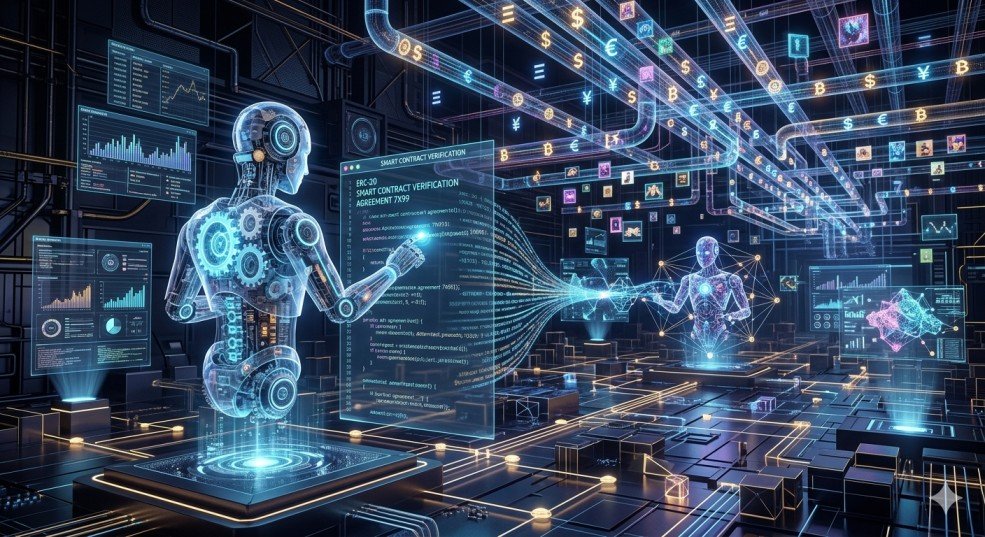
One of the most exciting developments is the rise of autonomous AI agents.
Imagine AI systems that can:
- Execute transactions
- Negotiate deals
- Purchase services
- Manage digital assets
- Interact with protocols
- Operate continuously without human intervention
Blockchain infrastructure gives these agents native financial capabilities.
Without Web3, AI cannot independently own or transfer value efficiently.
With crypto wallets and smart contracts, AI agents become economic participants.
Examples:
- AI trading agents managing DeFi portfolios
- Autonomous NFT marketplace bots
- AI research agents purchasing data access
- Smart agents paying for APIs
- AI governance participants in DAOs
This creates a machine economy where software agents transact with other software agents.
A world where AI is not just intelligent—but economically active.
2. Decentralized AI Infrastructure
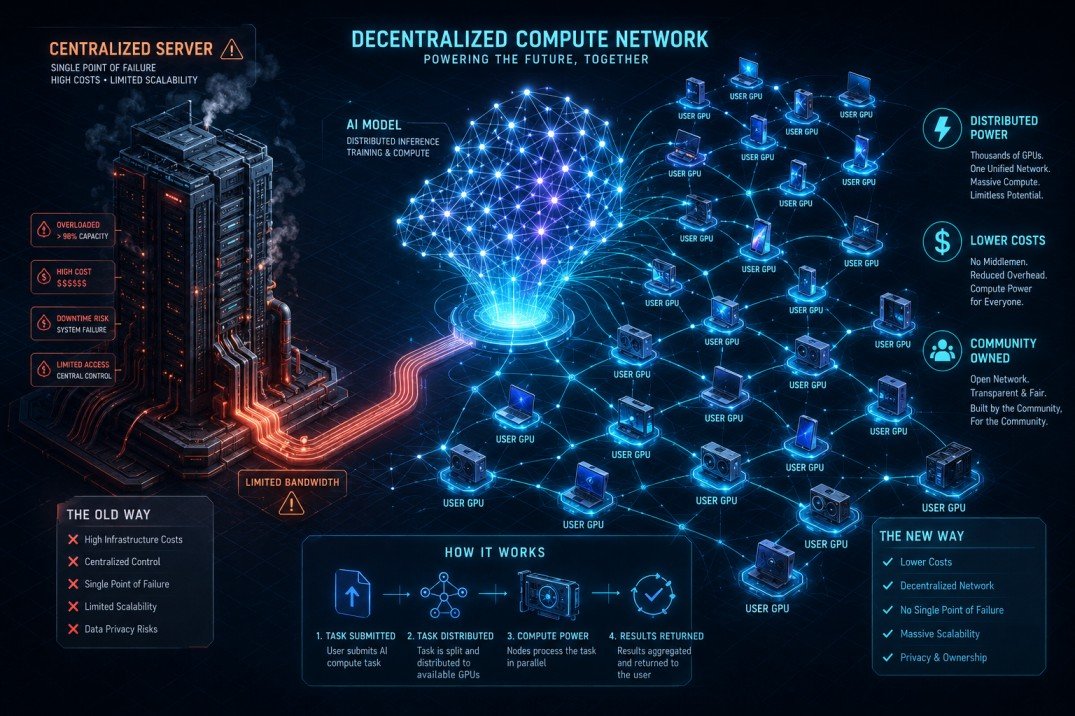
Today’s AI ecosystem is heavily centralized.
Major players control:
- Compute infrastructure
- Model access
- Proprietary datasets
- API distribution
- Pricing power
This creates dependency, censorship risk, and concentration of power.
Web3 introduces decentralized alternatives.
Emerging models include:
Decentralized Compute Networks
Users contribute idle GPU resources to AI workloads.
Benefits:
- Lower costs
- Better accessibility
- Reduced monopolistic control
- Global resource distribution
Decentralized Model Ownership
Instead of corporations owning models, communities can co-own AI infrastructure via tokenized governance.
Open Data Marketplaces
Blockchain can verify data ownership, licensing, and provenance.
This creates transparent AI training ecosystems.
The future may shift from centralized AI monopolies to permissionless intelligence networks.
3. AI-Powered Smart Contracts
Smart contracts are powerful but limited.
Traditional contracts execute deterministic logic.
They cannot reason, adapt, or interpret nuance.
AI changes this.
AI-enhanced smart contracts could:
- Analyze market conditions
- Optimize execution timing
- Detect fraud
- Interpret user intent
- Trigger adaptive workflows
- Manage treasury strategies
Examples:
A DeFi protocol that dynamically adjusts yield strategies based on AI forecasts.
Insurance contracts that assess risk using AI models.
DAO treasury systems that optimize allocations autonomously.
This transforms static automation into intelligent automation.
4. Better Security for Web3
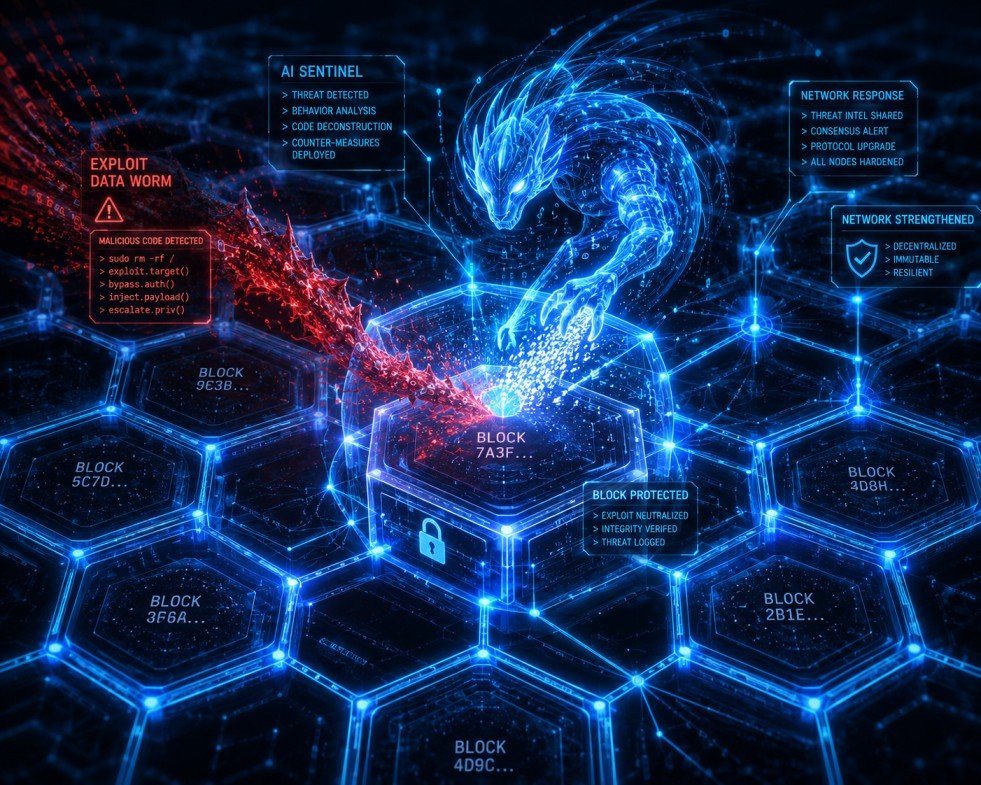
Security remains one of Web3’s biggest weaknesses.
Challenges include:
- Smart contract exploits
- Phishing attacks
- Wallet theft
- Governance manipulation
- Rug pulls
- Fraudulent token launches
AI can significantly improve defense systems.
Applications include:
Threat Detection
AI can identify suspicious wallet behavior in real time.
Smart Contract Auditing
Machine learning tools can detect vulnerabilities before deployment.
Fraud Detection
AI can identify scam patterns faster than human analysts.
Behavioral Monitoring
AI can flag unusual protocol activity instantly.
As Web3 scales, AI-driven security will become essential.
5. Tokenized AI Economies
AI models are becoming valuable digital assets.
Web3 creates monetization mechanisms through tokenization.
Possible models include:
- Tokenized AI APIs
- Community-owned model marketplaces
- Revenue-sharing AI protocols
- NFT-based AI intellectual property ownership
- Pay-per-use decentralized AI services
Creators may launch AI products where communities share upside.
Instead of centralized subscriptions, AI value can be distributed.
This fundamentally changes platform economics.
6. Trust and Data Provenance
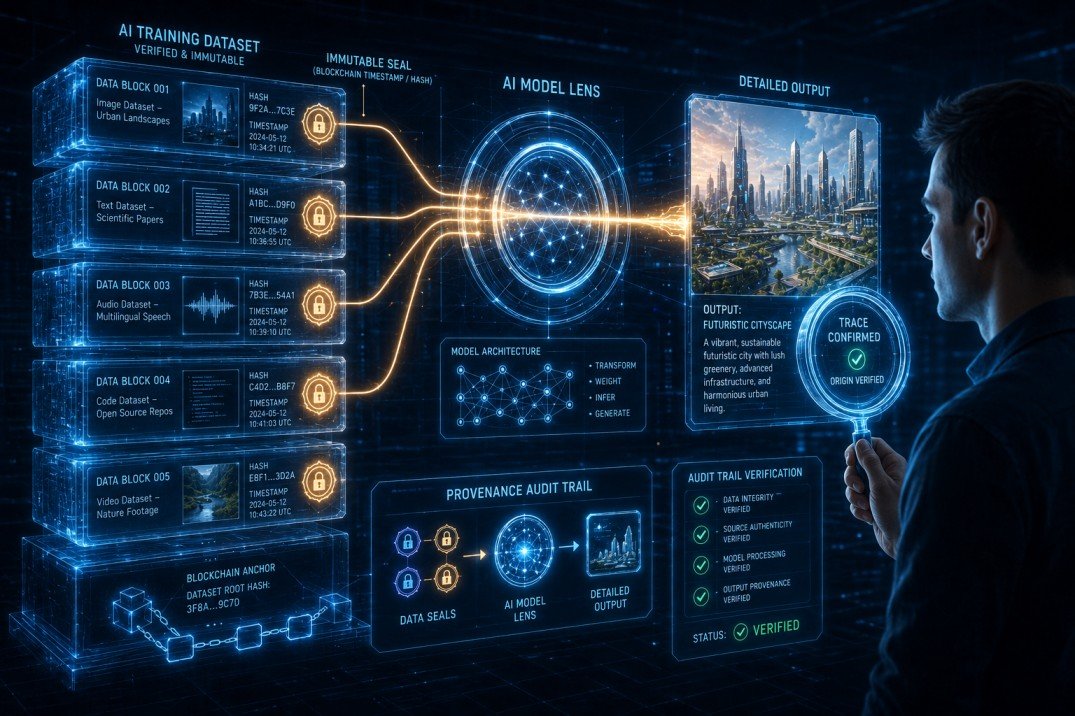
AI faces a trust crisis.
Major concerns include:
- Hallucinations
- Data misuse
- Model opacity
- Copyright uncertainty
- Fake content
- Deepfakes
Blockchain introduces auditability.
Possible benefits:
- Verified training datasets
- Immutable model version tracking
- Transparent inference records
- Attribution systems
- Content authenticity verification
This could make AI more accountable.
Trust may become one of Web3’s biggest contributions to AI.
7. AI for DAO Governance
DAOs promise decentralized governance—but participation is difficult.
Problems include:
- Voter apathy
- Information overload
- Governance complexity
- Low participation quality
AI can assist governance through:
- Proposal summarization
- Voting analysis
- Risk forecasting
- Treasury optimization
- Sentiment interpretation
- Policy simulation
AI governance assistants may help communities make smarter collective decisions.
This increases efficiency without fully replacing human control.
Real-World Emerging Use Cases
The convergence is already beginning.
Examples include:
AI Crypto Trading
Autonomous systems analyzing on-chain signals and market behavior.
Decentralized GPU Networks
Infrastructure supporting distributed AI compute.
AI NFT Companions
Digital agents with persistent ownership.
Web3 Identity + AI Personalization
User-owned identity data powering personalized AI.
Decentralized Knowledge Markets
Verified data marketplaces for AI consumption.
Key Challenges
Despite enormous promise, major obstacles remain.
Scalability
Blockchain throughput still limits high-frequency AI interactions.
Regulation
AI and crypto both face uncertain legal frameworks.
Combined, compliance becomes even more complex.
Security Risks
Autonomous agents managing assets introduce new attack surfaces.
Economic Sustainability
Token incentive models can fail if poorly designed.
Centralization Contradictions
Advanced AI still relies heavily on centralized compute.
This tension remains unresolved.
Ethics
Questions include:
- Should AI agents own assets?
- Who is liable for autonomous decisions?
- How do we prevent manipulation?
- Can decentralized governance control rogue AI?
These issues are foundational.
Why This Could Be the Next Supercycle
A supercycle happens when technologies reinforce each other economically.
AI increases automation and intelligence.
Web3 increases ownership and monetization.
Together they create feedback loops:
More AI automation → more digital services
More digital services → more machine transactions
More transactions → more blockchain utility
More blockchain utility → more decentralized AI infrastructure
More infrastructure → faster innovation
This is a compounding ecosystem effect.
Investors, developers, and institutions are beginning to recognize this pattern.
The biggest opportunities may emerge where AI intelligence intersects with programmable ownership.
Strategic Industries Likely to Be Disrupted
The AI + Web3 stack could transform:
- Finance
- Supply chains
- Digital identity
- Healthcare data systems
- Creator economies
- Gaming
- Advertising
- Cloud infrastructure
- Legal automation
- Enterprise SaaS
Entire business models may be rebuilt around decentralized intelligence.
The Future Outlook
In the near term, expect hybrid systems.
Centralized AI models interacting with decentralized payment rails.
AI copilots integrated with wallets.
Smarter DeFi automation.
Tokenized compute marketplaces.
Longer term, we may see:
- Fully autonomous economic agents
- Machine-to-machine financial ecosystems
- Community-owned AI protocols
- Decentralized AGI governance frameworks
- Self-improving intelligent networks
The internet may evolve from human-centric interaction toward agent-driven economies.
Conclusion
AI and Web3 are often discussed separately, but their true disruptive potential lies in convergence.
AI brings intelligence.
Web3 brings ownership.
AI enables machines to think.
Web3 enables machines to transact.
Together, they could reshape digital infrastructure as profoundly as the internet itself.
While challenges remain—from scalability to governance to ethics—the momentum is undeniable.
The next technology supercycle may not be AI alone.
It may not be Web3 alone.
It may be the fusion of both.
AI meets Web3—and the future becomes programmable, intelligent, and decentralized.
Follow this link to join my WhatsApp group: https://chat.whatsapp.com/JvmrMTxkdgt9u6kGMT73XY
“Brilliant perspective! I hadn’t thought about [mention a specific point] from that angle. It really makes you rethink the future of [Blockchain Technology].”