Introduction
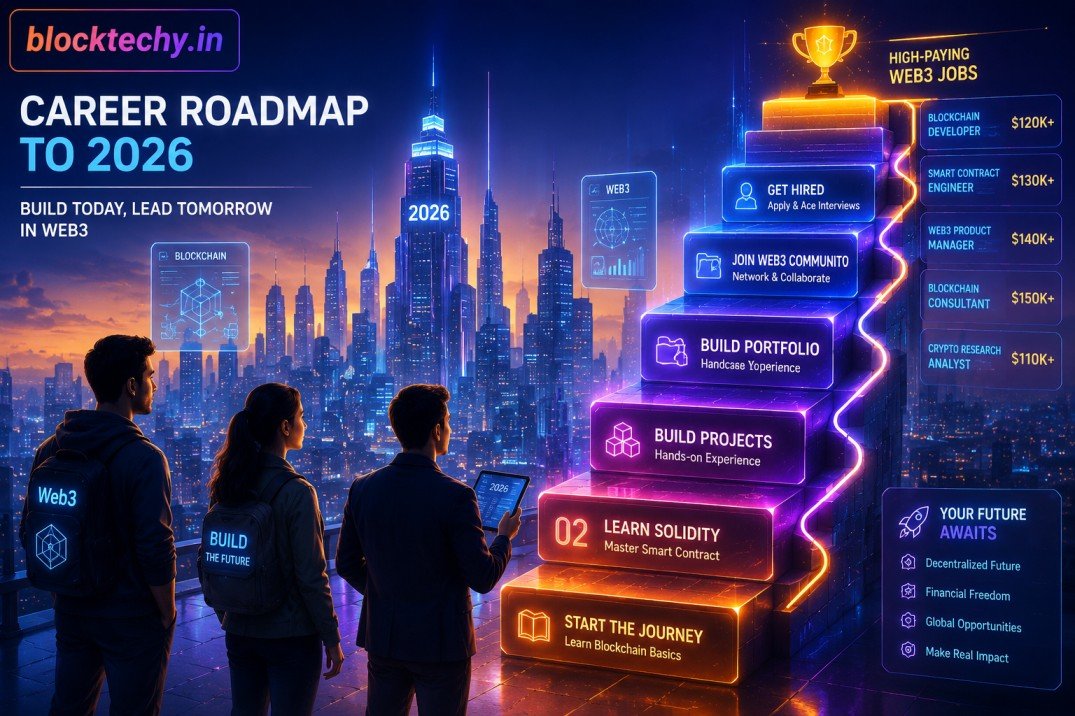
Blockchain technology has evolved far beyond cryptocurrencies. In 2026, it is transforming industries such as finance, healthcare, supply chain, gaming, cybersecurity, real estate, and digital identity. Governments, startups, and global enterprises are actively investing in blockchain-based solutions, creating a significant demand for skilled professionals.
Whether you are a college student, software developer, IT professional, or someone planning a career change, blockchain offers exciting opportunities with competitive salaries and long-term growth potential.

In this guide, we’ll explore the top blockchain career opportunities in 2026, the skills employers are looking for, expected salaries, and practical steps to build a successful career in this rapidly growing field.
Why Blockchain Careers Are Growing in 2026
The blockchain ecosystem has matured considerably over the past few years. Organizations are no longer experimenting—they are building production-ready applications for payments, asset tokenization, decentralized identity, logistics, healthcare records, and enterprise automation.
Several factors are driving this growth:
- Increased adoption of Web3 technologies
- Growth of Real-World Asset (RWA) tokenization
- Expansion of Central Bank Digital Currency (CBDC) initiatives
- Enterprise blockchain adoption
- Rising demand for blockchain security
- Integration of AI with blockchain
- Growth in decentralized finance (DeFi)
As a result, companies need developers, architects, auditors, analysts, and security professionals who understand blockchain technologies.
Essential Skills for Blockchain Professionals
Before exploring specific career paths, it’s important to understand the skills that employers value.
Technical Skills
- Blockchain fundamentals
- Distributed ledger technology
- Cryptography basics
- Smart contract development
- Data structures
- Computer networks
- REST APIs
- Git and GitHub
- Linux fundamentals
Programming languages that are especially valuable include:
- Solidity
- Rust
- Go
- JavaScript
- TypeScript
- Python
- Java
Knowledge of popular blockchain platforms is also highly beneficial:
- Ethereum
- Hyperledger Fabric
- Polygon
- Solana
- Avalanche
- BNB Chain
- Cosmos
- Polkadot
- Stellar
1. Blockchain Developer
Blockchain Developer remains one of the highest-paying technology careers in 2026.
These professionals design decentralized applications (DApps), write smart contracts, integrate blockchain APIs, and optimize blockchain systems.

Responsibilities
- Develop decentralized applications
- Create smart contracts
- Test blockchain applications
- Integrate wallets
- Build backend APIs
- Optimize transaction efficiency
Required Skills
- Solidity
- Ethereum
- Web3.js
- Ethers.js
- React
- Node.js
- Hardhat
- Foundry
Average Salary
- Entry Level: $60,000–$90,000/year
- Mid-Level: $100,000–$150,000/year
- Senior: $180,000+ per year
2. Smart Contract Developer
Smart contracts automate agreements without intermediaries.
This role focuses on designing secure, efficient, and optimized contracts that power decentralized applications.
Skills Required
- Solidity
- Rust
- Security best practices
- Gas optimization
- Smart contract testing
- Hardhat
- Foundry
Employers particularly value candidates who understand common vulnerabilities such as reentrancy attacks, integer overflow, and access control issues.
3. Blockchain Security Engineer
As blockchain adoption increases, so do cyber threats.
Security engineers identify vulnerabilities before attackers can exploit them.
Responsibilities
- Smart contract auditing
- Penetration testing
- Vulnerability assessment
- Blockchain monitoring
- Security automation
Important Skills
- Cryptography
- Smart contract auditing
- Solidity
- Rust
- Ethical hacking
- Security tools
This role continues to command premium salaries due to the high cost of blockchain exploits.
4. Blockchain Architect
Blockchain architects design the overall infrastructure of blockchain applications.
Instead of writing every line of code, they focus on choosing platforms, defining architecture, ensuring scalability, and integrating blockchain into existing enterprise systems.

Responsibilities
- System architecture
- Network design
- Security planning
- Infrastructure decisions
- Performance optimization
This role generally requires several years of development experience.
5. Blockchain Consultant
Many organizations want blockchain solutions but lack in-house expertise.
Blockchain consultants help businesses evaluate whether blockchain is the right solution and guide implementation strategies.
Typical responsibilities include:
- Business analysis
- Technology consulting
- Blockchain strategy
- Digital transformation
- Enterprise adoption planning
Consultants often work independently or with technology consulting firms.
6. Blockchain Project Manager
Project managers coordinate blockchain development teams and ensure projects are delivered on time.
Responsibilities include:
- Planning milestones
- Managing developers
- Client communication
- Budget management
- Risk management
- Agile development
Technical knowledge is valuable, but leadership and communication skills are equally important.
7. Blockchain UI/UX Designer
User experience plays a major role in Web3 adoption.
Blockchain UI/UX designers simplify complex decentralized applications into intuitive interfaces.
Skills include:
- Figma
- User research
- Wireframing
- Web3 wallet integration
- User journey optimization
Good design can significantly improve user trust and product adoption.
8. Blockchain Quality Assurance (QA) Engineer
QA engineers test blockchain applications before deployment.
Responsibilities include:
- Functional testing
- Smart contract testing
- Performance testing
- API testing
- Regression testing
Knowledge of automated testing frameworks is a major advantage.
9. Blockchain Business Analyst
Business analysts bridge the gap between technical teams and business stakeholders.
Responsibilities include:
- Requirement gathering
- Process analysis
- Documentation
- Market research
- Client communication
This role suits professionals with both technical understanding and strong business skills.
10. Blockchain Researcher
Research professionals explore emerging blockchain technologies and contribute to innovation.
Areas of research include:
- Consensus algorithms
- Layer-2 scaling
- Zero-Knowledge Proofs
- Privacy technologies
- Cross-chain interoperability
- Token economics
Research positions are common in universities, research labs, and technology companies.
11. DeFi Developer
Decentralized Finance continues to expand in 2026.
DeFi developers create:
- Lending platforms
- Decentralized exchanges
- Yield farming protocols
- Stablecoin systems
- Liquidity pools
Strong mathematical and financial knowledge is an added advantage.
12. NFT and Digital Asset Developer
Although the NFT market has matured, digital ownership has expanded into gaming, ticketing, intellectual property, and digital identity.
Developers build:
- NFT marketplaces
- Gaming assets
- Digital collectibles
- Tokenized memberships
13. Web3 Full-Stack Developer
Companies increasingly seek developers who can build complete decentralized applications.
A Web3 Full-Stack Developer typically works with:
Frontend:
- React
- Next.js
- Tailwind CSS
Backend:
- Node.js
- Express
- APIs
Blockchain:
- Solidity
- Ethereum
- Ethers.js
- Wallet integration
This is one of the most versatile and in-demand blockchain roles.
14. Blockchain Compliance and Legal Specialist
As governments introduce regulations, companies need professionals who understand legal and compliance requirements.
Responsibilities include:
- Regulatory compliance
- AML/KYC policies
- Token regulations
- Digital asset governance
- Risk assessment
Professionals with legal backgrounds can transition into this growing field.
Industries Hiring Blockchain Professionals
Blockchain careers are no longer limited to crypto companies.
Industries actively recruiting blockchain talent include:
- Banking
- Financial Services
- Insurance
- Healthcare
- Supply Chain
- Government
- Real Estate
- Gaming
- Agriculture
- Education
- Logistics
- Manufacturing
- Digital Identity
- Cybersecurity
Remote Blockchain Jobs
Blockchain is among the most remote-friendly industries.
Professionals frequently work with global teams from anywhere in the world.
Popular remote opportunities include:
- Smart contract developer
- Solidity developer
- Rust developer
- Blockchain writer
- Technical documentation specialist
- Security auditor
- Web3 frontend developer
Remote work also enables freelancers to collaborate with international clients and blockchain startups.
How to Start a Blockchain Career in 2026
If you’re new to blockchain, follow this structured roadmap:
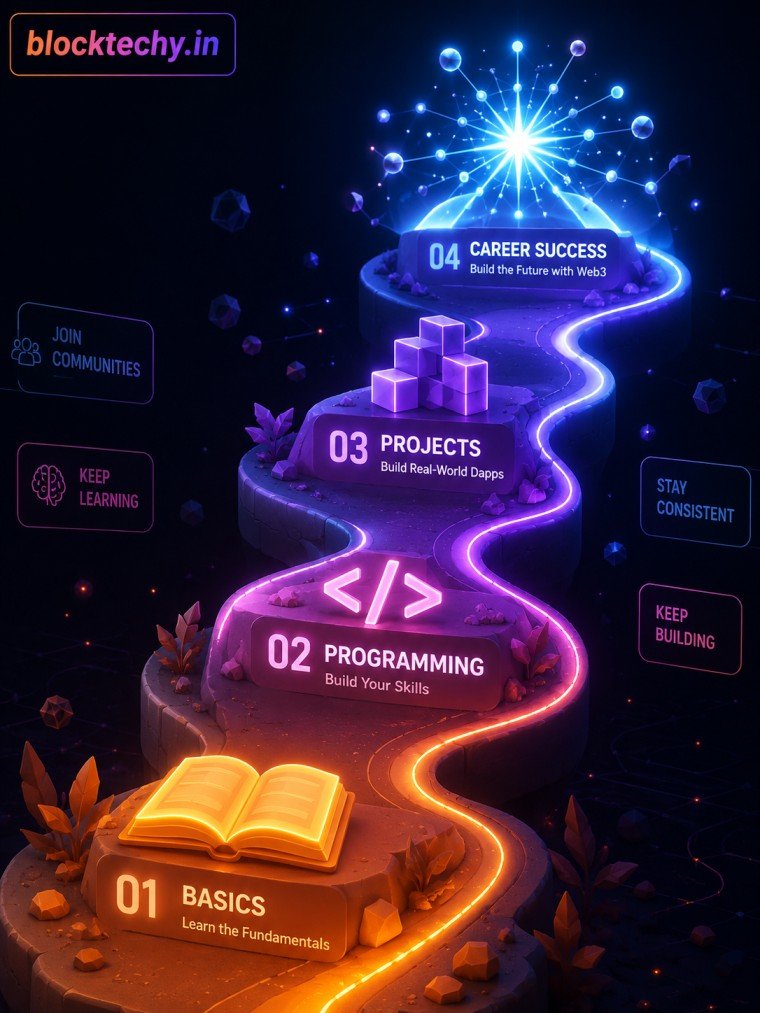
Step 1: Learn the Basics
Understand:
- Blockchain fundamentals
- Cryptography
- Consensus mechanisms
- Wallets
- Transactions
- Nodes
- Mining
- Staking
Step 2: Learn Programming
Focus on:
- JavaScript
- Python
- Solidity
Advanced learners can explore:
- Rust
- Go
Step 3: Build Projects
Employers value practical experience.
Create projects like:
- Voting DApp
- NFT Marketplace
- Token Creator
- Crowdfunding Platform
- Blockchain Explorer
- Supply Chain Tracker
- Document Verification System
These projects demonstrate your ability to solve real-world problems.
Step 4: Learn Smart Contract Development
Practice using:
- Hardhat
- Foundry
- Remix IDE
- OpenZeppelin libraries
Learn testing, deployment, and contract optimization.
Step 5: Create a Strong Portfolio
Include:
- GitHub repositories
- Live demos
- Technical blogs
- Project documentation
- Architecture diagrams
A well-organized portfolio often has a greater impact than certifications alone.
Step 6: Contribute to Open Source
Many blockchain projects welcome community contributions.
Benefits include:
- Practical experience
- Networking
- Improved coding skills
- Increased visibility among employers
Step 7: Keep Learning
Blockchain evolves rapidly.
Stay updated on:
- Layer-2 solutions
- Zero-Knowledge Proofs
- Account Abstraction
- Real-World Asset tokenization
- Decentralized AI
- Cross-chain technologies
Continuous learning is essential for long-term career success.
Certifications That Can Add Value
While hands-on experience is often more important than certificates, reputable certifications can strengthen your profile.
Consider certifications related to:
- Blockchain fundamentals
- Ethereum development
- Hyperledger Fabric
- Smart contract security
- Cloud computing
- Cybersecurity
Remember that employers typically prioritize demonstrable skills, real projects, and problem-solving ability over certificates alone.
Challenges of Working in Blockchain
Like any technology field, blockchain careers come with challenges:
- Rapidly changing technologies
- Complex security requirements
- Evolving regulations
- High learning curve
- Continuous skill upgrades
- Competitive hiring for top roles
However, these challenges also create opportunities for professionals who are committed to learning and staying current.
The Future of Blockchain Careers
The demand for blockchain professionals is expected to remain strong as organizations continue to explore decentralized technologies. Areas such as tokenized assets, enterprise blockchain, decentralized identity, AI integration, and cross-chain interoperability are likely to generate new roles and specializations over the coming years.
Professionals who combine blockchain expertise with skills in software engineering, cybersecurity, cloud computing, data analysis, or artificial intelligence will be particularly well-positioned for future opportunities.
Conclusion
Blockchain has become one of the most exciting and rewarding career paths in technology. From blockchain developers and security engineers to consultants, architects, and Web3 full-stack developers, the industry offers diverse opportunities for professionals with different interests and skill sets.
The key to building a successful blockchain career in 2026 is to focus on strong technical fundamentals, develop real-world projects, contribute to open-source communities, and keep pace with emerging technologies. With dedication and continuous learning, you can position yourself for a career in one of the fastest-evolving sectors of the digital economy.
Whether you’re just starting your journey or looking to transition into blockchain from another IT field, now is an excellent time to invest in your skills and prepare for the opportunities that lie ahead.
Frequently Asked Questions (FAQs)
1. Is blockchain a good career in 2026?
Yes. Blockchain continues to expand across finance, healthcare, supply chain, gaming, digital identity, and enterprise technology, creating strong demand for skilled professionals.
2. Which blockchain job pays the most?
Senior Blockchain Developers, Smart Contract Security Auditors, Blockchain Architects, and Blockchain Security Engineers are generally among the highest-paying roles.
3. Can freshers get blockchain jobs?
Absolutely. Freshers can improve their chances by learning blockchain fundamentals, building practical projects, maintaining a GitHub portfolio, and contributing to open-source initiatives.
4. Which programming language is best for blockchain development?
Solidity is the most widely used language for Ethereum-based development, while Rust, Go, JavaScript, and Python are also valuable depending on the blockchain ecosystem.
5. Do I need a degree to become a blockchain developer?
A computer science or related degree can help, but many employers prioritize practical skills, project experience, and problem-solving ability over formal qualifications alone.