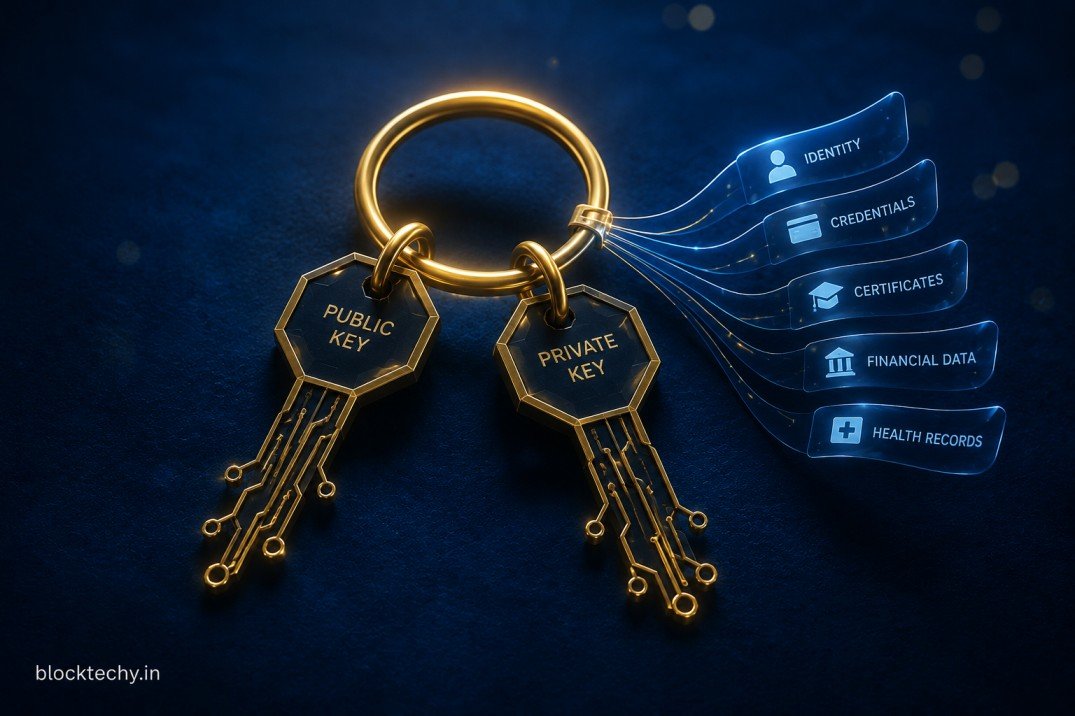
In today’s digital world, our identities are spread across dozens of websites, mobile applications, financial services, healthcare platforms, educational institutions, and social media accounts. Every time we create a new account, we share personal information such as our name, email address, phone number, date of birth, or even government-issued identification. While this has made online services more accessible, it has also created serious privacy and security challenges. Massive data breaches, identity theft, phishing attacks, and unauthorized data sharing have become increasingly common.
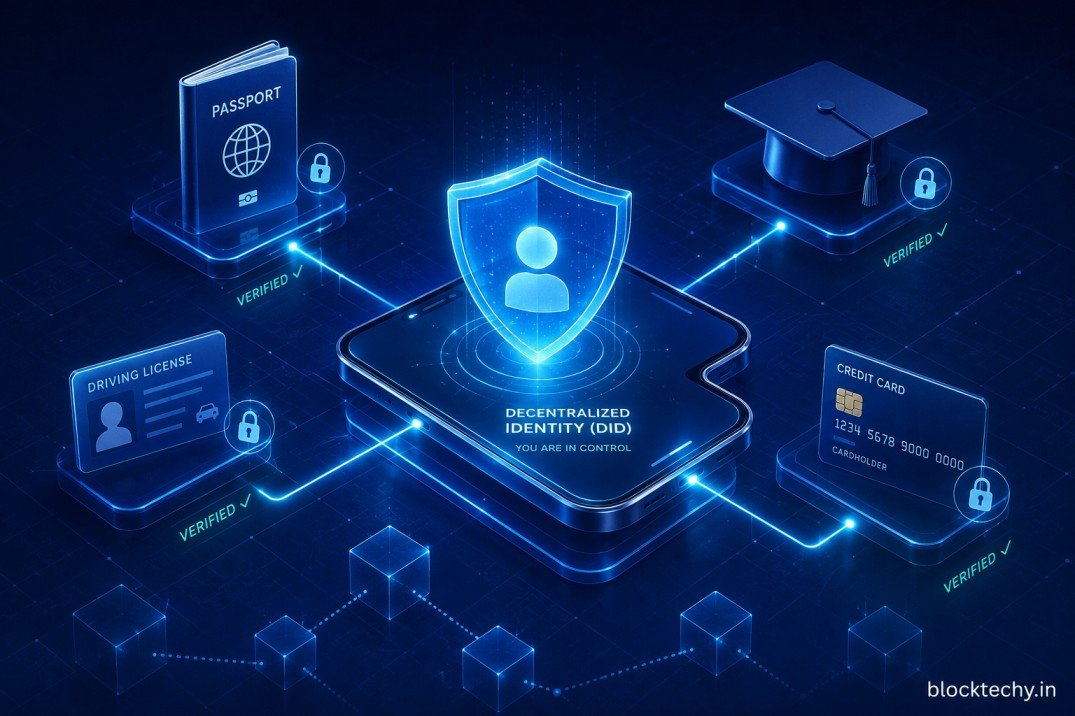
As the internet evolves toward Web3 and decentralized technologies, a new concept is emerging that aims to solve these problems: Decentralized Identity (DID). Instead of relying on centralized organizations to manage digital identities, DID allows individuals to own, control, and share their identity information securely using blockchain technology and cryptographic verification.
Decentralized Identity represents a fundamental shift from organization-controlled identity systems to user-controlled identity systems. It empowers people to decide when, how, and with whom they share their personal information. In the coming years, DID is expected to become a key component of digital transformation across industries, making online interactions more secure, private, and efficient.
This article explores what Decentralized Identity is, how it works, its benefits, real-world applications, challenges, and why it is considered the future of secure digital identity.
What is Decentralized Identity (DID)?
A Decentralized Identity (DID) is a digital identity that is owned and controlled entirely by the individual rather than by a government, corporation, or centralized service provider.
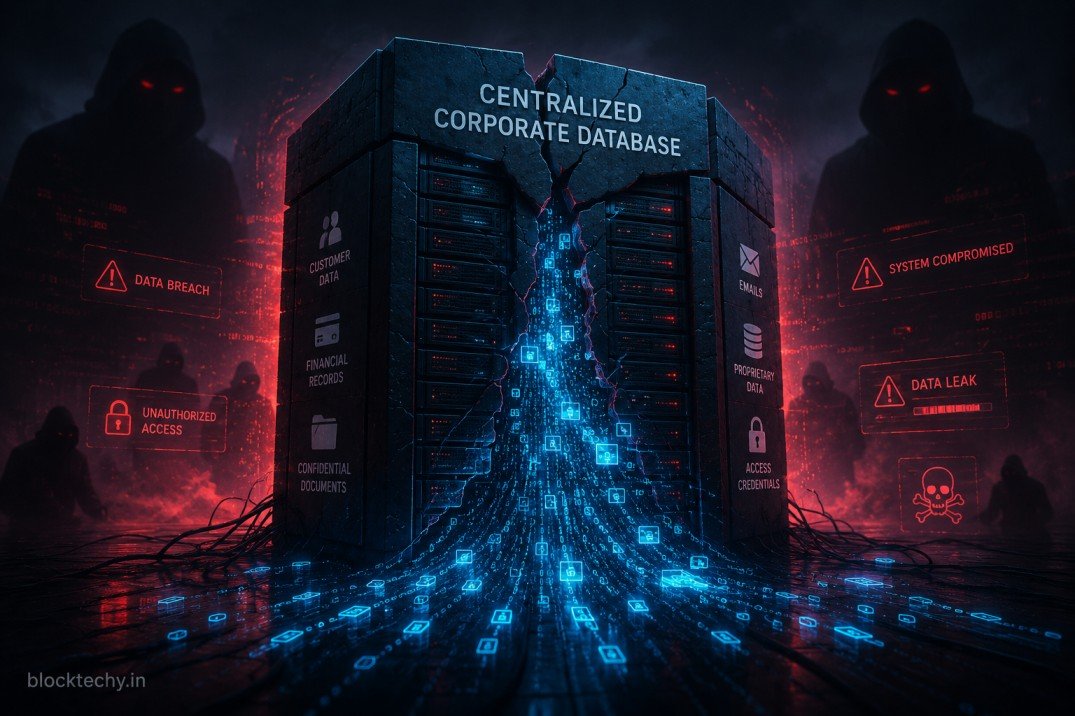
Traditional digital identity systems require users to trust centralized organizations like banks, social media companies, universities, or government agencies to store and manage their personal information. These organizations maintain large databases containing millions of user records, making them attractive targets for cybercriminals.
In contrast, DID eliminates the need for centralized identity storage. Instead, users store their credentials in secure digital wallets and prove their identity using cryptographic methods without exposing unnecessary personal information.
The World Wide Web Consortium (W3C) introduced the DID standard to create interoperable digital identities that can work across different platforms and services.
In simple terms,
Traditional Identity
→ Organization owns your data.
Decentralized Identity
→ You own your data.
Why Traditional Digital Identity Systems Have Problems
Current identity management systems face several major issues.
1. Data Breaches
Large companies store enormous amounts of customer data.
When hackers compromise these databases, millions of identities can be stolen in a single attack.
Examples include:
- Banking database breaches
- Social media leaks
- Government database attacks
- Healthcare system hacks
Users have little control once their information is leaked.
2. Multiple Accounts
Most people maintain dozens or even hundreds of online accounts.
Each account requires:
- Username
- Password
- Email verification
- Security questions
- Personal details
Managing all these identities becomes difficult.
3. Identity Theft
Cybercriminals often steal personal information to:
- Open fake bank accounts
- Commit financial fraud
- Apply for loans
- Access confidential services
Identity theft causes billions of dollars in losses every year.
4. Lack of User Control
Most companies decide:
- What information they collect
- How long they store it
- Who they share it with
- How it is used
Users rarely have complete control over their own data.
How Decentralized Identity Works
Decentralized Identity combines blockchain technology with cryptography to create secure digital identities.
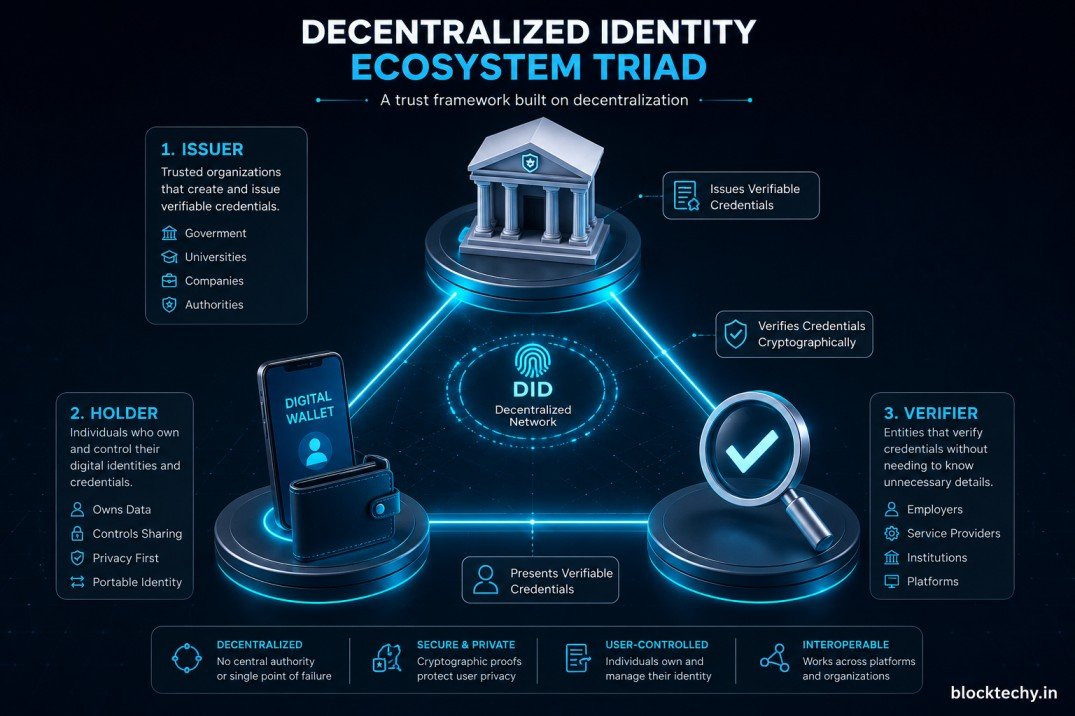
The DID ecosystem mainly consists of three components.
1. DID (Decentralized Identifier)
A DID is a unique identifier that belongs to an individual.
Unlike email addresses or usernames, it is not controlled by any central authority.
Example:
did:example:abc123xyz789
The DID itself contains no personal information.
Instead, it points to cryptographic keys and verification methods stored on a blockchain or decentralized network.
2. Digital Wallet
Users store their credentials inside a secure digital identity wallet.
The wallet may contain:
- Passport
- Driver’s license
- College degree
- Employee ID
- Health records
- Membership cards
- Professional certifications
The wallet remains under the user’s control.
3. Verifiable Credentials
Organizations issue digitally signed credentials.
Examples:
A university issues a degree certificate.
A government issues a digital driving license.
A hospital issues vaccination records.
Because these credentials are cryptographically signed, anyone can verify their authenticity without contacting the issuing organization every time.
Role of Blockchain in DID
Blockchain does not store all personal information.
Instead, it stores:
- Public keys
- DID documents
- Verification methods
- Credential references
Personal information stays with the user.
This greatly improves privacy while ensuring authenticity.
Blockchain provides:
- Immutability
- Transparency
- Tamper resistance
- Decentralization
- Trust without intermediaries
Key Features of Decentralized Identity
Self-Sovereign Identity (SSI)
Users own and control their identity completely.
No company can revoke or modify it without permission.
Privacy
Only necessary information is shared.
For example:
Instead of revealing your date of birth,
you can simply prove:
“I am over 18.”
Security
Advanced cryptography protects identity data.
Private keys remain with the user.
Hackers cannot steal millions of identities from one centralized database.
Portability
Users can use one digital identity across multiple platforms.
No need to repeatedly upload documents.
Interoperability
A DID created on one supported platform can be recognized by other compatible systems.
This reduces fragmentation between digital identity systems.
User Consent
Individuals decide:
- What data to share
- With whom
- For how long
- For what purpose
Benefits of Decentralized Identity
Better Privacy
Personal information remains private.
Only selected attributes are shared.
Reduced Identity Fraud
Cryptographic verification makes forged identities extremely difficult.
Lower Costs
Organizations spend billions verifying identities.
DID automates verification, reducing operational costs.
Faster Verification
Identity verification that once took days can happen within seconds.
Improved User Experience
Users no longer need to create dozens of separate accounts.
One digital identity can access multiple services.
Regulatory Compliance
Privacy-focused identity systems help organizations comply with regulations like:
- GDPR
- Data protection laws
- Digital privacy standards
Real-World Applications of DID
1. Banking and Financial Services
Banks can verify customers quickly.
Benefits include:
- Faster KYC
- Reduced fraud
- Simplified onboarding
- Secure transactions
2. Healthcare
Patients control medical records.
Doctors receive verified information without accessing unnecessary data.
Benefits include:
- Better privacy
- Secure record sharing
- Faster emergency care
3. Education
Universities issue tamper-proof digital diplomas.
Employers can instantly verify qualifications.
No fake certificates.
4. Government Services
Governments can issue digital:
- National IDs
- Passports
- Driver’s licenses
- Tax identities
Citizens access services online securely.
5. Employment
Companies verify:
- Degrees
- Experience
- Certifications
Hiring becomes faster and more reliable.
6. Travel
Digital passports simplify:
- Airport verification
- Immigration
- Hotel check-ins
Travel becomes more convenient.
7. E-Commerce
Customers prove their identity securely.
Benefits include:
- Reduced fraud
- Faster checkout
- Trusted transactions
8. Social Media
Users verify real identities without exposing personal information.
This helps reduce:
- Fake accounts
- Bots
- Identity impersonation
DID vs Traditional Identity
| Traditional Identity | Decentralized Identity |
|---|---|
| Organization owns data | User owns data |
| Centralized databases | Distributed systems |
| High breach risk | Strong cryptographic security |
| Multiple accounts | Single reusable identity |
| Limited privacy | High privacy |
| Password-based | Cryptographic authentication |
| Slow verification | Instant verification |
| Data duplication | Minimal data sharing |
Challenges of Decentralized Identity
Although DID offers tremendous potential, several challenges remain.
User Responsibility
Users must protect their private keys.
Losing wallet access may result in identity recovery challenges.
Adoption
Governments, businesses, and institutions must adopt common standards.
Widespread adoption will take time.
Regulation
Legal frameworks for decentralized identity are still evolving.
Countries are developing policies regarding digital credentials.
Technical Complexity
Many users are unfamiliar with blockchain wallets and cryptographic keys.
User-friendly interfaces are essential.
Interoperability
Different blockchain networks must work together seamlessly.
Standardization efforts continue to improve compatibility.
DID and Self-Sovereign Identity (SSI)
Decentralized Identity is closely connected with Self-Sovereign Identity (SSI).
SSI means:
- You own your identity.
- You control your data.
- You choose what to share.
- No central authority owns your identity.
DID provides the technical foundation that enables SSI.
Together, they create a privacy-first identity ecosystem.
Zero-Knowledge Proofs in DID
One of the most exciting innovations is the use of Zero-Knowledge Proofs (ZKPs).
ZKPs allow users to prove a statement without revealing the underlying data.
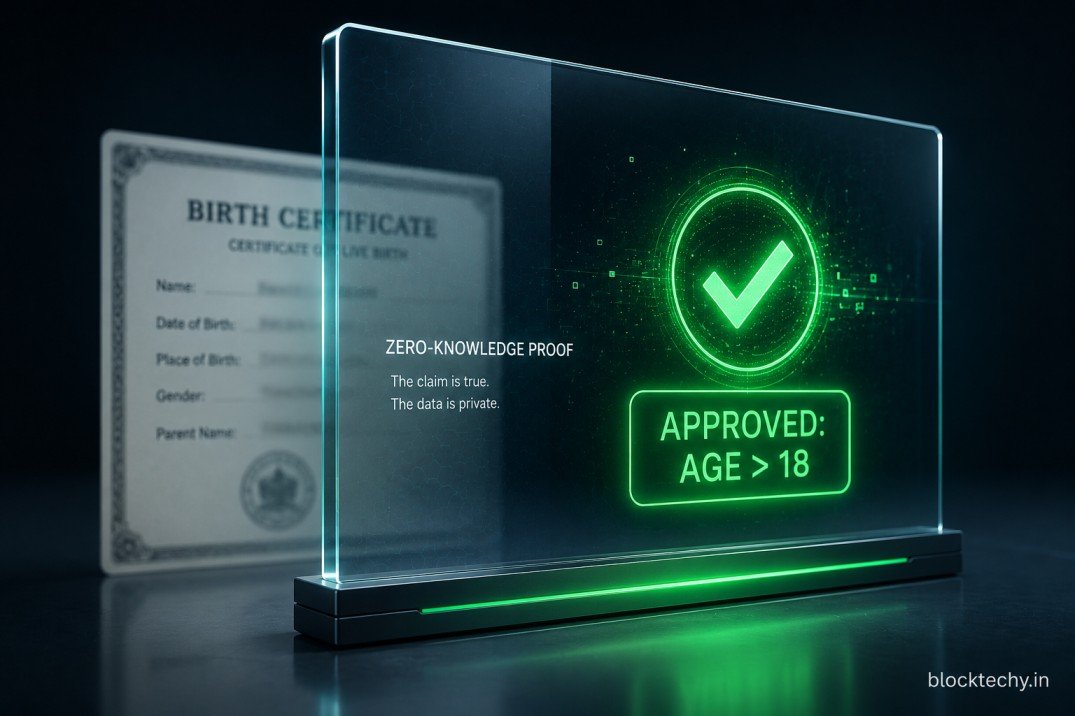
Examples:
Instead of sharing:
“I was born on January 10, 2001.”
You simply prove:
“I am older than 18.”
Similarly:
Instead of revealing your salary,
you prove:
“My income exceeds the required threshold.”
This dramatically enhances user privacy while maintaining trust.
DID in Web3
Web3 aims to create a decentralized internet where users control their own data, assets, and identities.
DID is a foundational technology for this vision.
Applications include:
- Decentralized Finance (DeFi)
- NFT ownership
- DAO governance
- Blockchain gaming
- Metaverse identity
- Decentralized social media
Instead of creating separate accounts, users authenticate using their decentralized identity wallets.
The Future of Decentralized Identity
The future of DID looks promising as governments, enterprises, and technology companies increasingly recognize the importance of privacy-preserving digital identity.

Over the next decade, we can expect:
- Digital identity wallets replacing traditional login systems.
- Passwordless authentication becoming more common through cryptographic keys and biometrics.
- Governments issuing verifiable digital IDs and licenses.
- Universities providing blockchain-based certificates that employers can instantly verify.
- Cross-border identity verification for travel, immigration, and financial services.
- Greater integration of DID with artificial intelligence, IoT, and smart cities.
- Wider adoption of Zero-Knowledge Proofs to minimize data exposure.
- Improved interoperability standards allowing digital identities to work seamlessly across platforms and countries.
As adoption grows, users will gain greater control over their personal information, while organizations will benefit from faster verification processes, reduced fraud, and stronger compliance with privacy regulations.
Conclusion
Decentralized Identity (DID) represents a major evolution in how digital identities are created, managed, and shared. Unlike traditional identity systems that rely on centralized databases, DID empowers individuals to own and control their personal information using blockchain technology, cryptography, and verifiable credentials.
By reducing reliance on passwords, minimizing data breaches, enabling privacy-preserving verification, and giving users full control over their digital identities, DID has the potential to transform industries such as finance, healthcare, education, government, travel, and e-commerce. Technologies like Self-Sovereign Identity (SSI) and Zero-Knowledge Proofs (ZKPs) further strengthen this vision by allowing secure verification without unnecessary disclosure of personal data.
While challenges such as adoption, regulation, interoperability, and user education still need to be addressed, the momentum behind decentralized identity continues to grow. As Web3 ecosystems expand and digital services become more interconnected, DID is expected to become a cornerstone of secure online interactions.
In the future, our digital identity may be as valuable as our physical identity—but instead of being stored in centralized databases, it will remain securely in our own hands. Decentralized Identity is not just a technological innovation; it is a shift toward a more private, secure, and user-centric digital world where individuals regain ownership of their most important asset: their identity.
Follow this link to join my WhatsApp group:
https://chat.whatsapp.com/JvmrMTxkdgt9u6kGMT73XY