Introduction
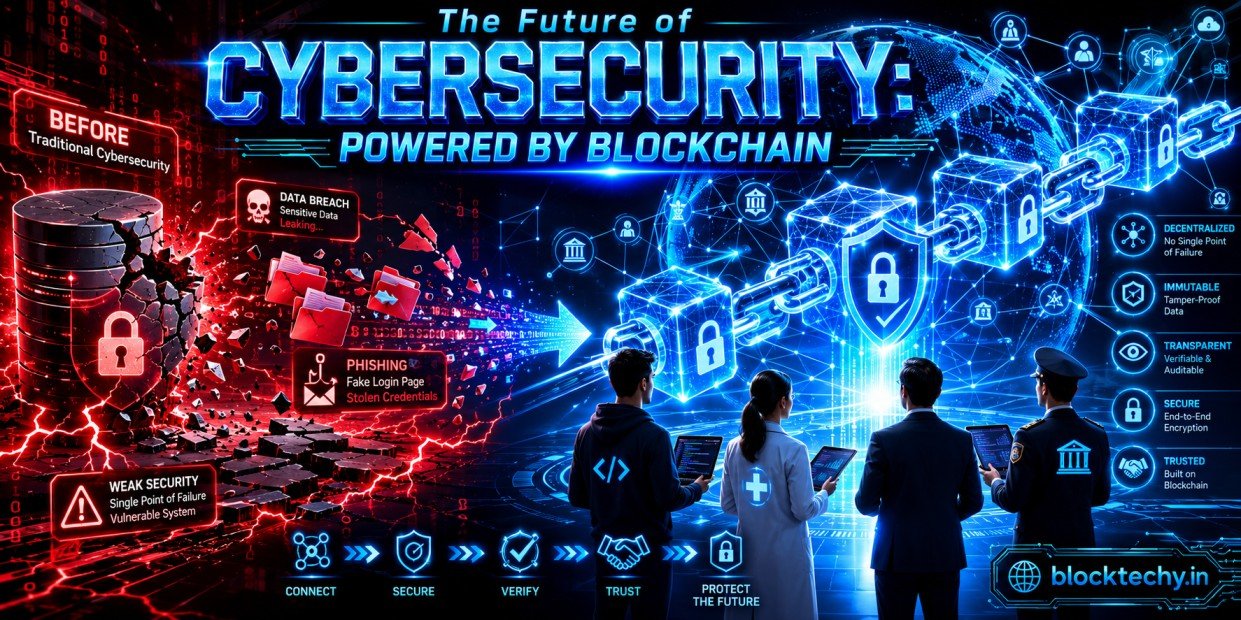
In today’s digital-first world, cybersecurity has become one of the most critical concerns for individuals, businesses, and governments. Every day, billions of pieces of data are exchanged across networks, cloud platforms, mobile applications, and connected devices. While digital transformation has improved efficiency, communication, and innovation, it has also created new opportunities for cybercriminals.
Cyberattacks are becoming more frequent, sophisticated, and costly. From ransomware attacks and data breaches to identity theft and phishing scams, organizations face an ever-growing range of security threats. Traditional cybersecurity methods such as firewalls, antivirus software, and centralized databases remain important, but they often struggle to address modern security challenges.

As a result, organizations are increasingly exploring emerging technologies to strengthen their defenses. One of the most promising innovations is blockchain technology. Initially known as the technology behind cryptocurrencies like Bitcoin, blockchain has evolved into a powerful tool with applications far beyond digital currencies. Its unique combination of decentralization, transparency, immutability, and cryptographic security makes it highly valuable for improving cybersecurity.
Today, blockchain is changing the cybersecurity game by offering new ways to protect data, secure digital identities, prevent fraud, and build trust in digital systems. This article explores how blockchain works, why it matters for cybersecurity, and how it is transforming the future of digital security.
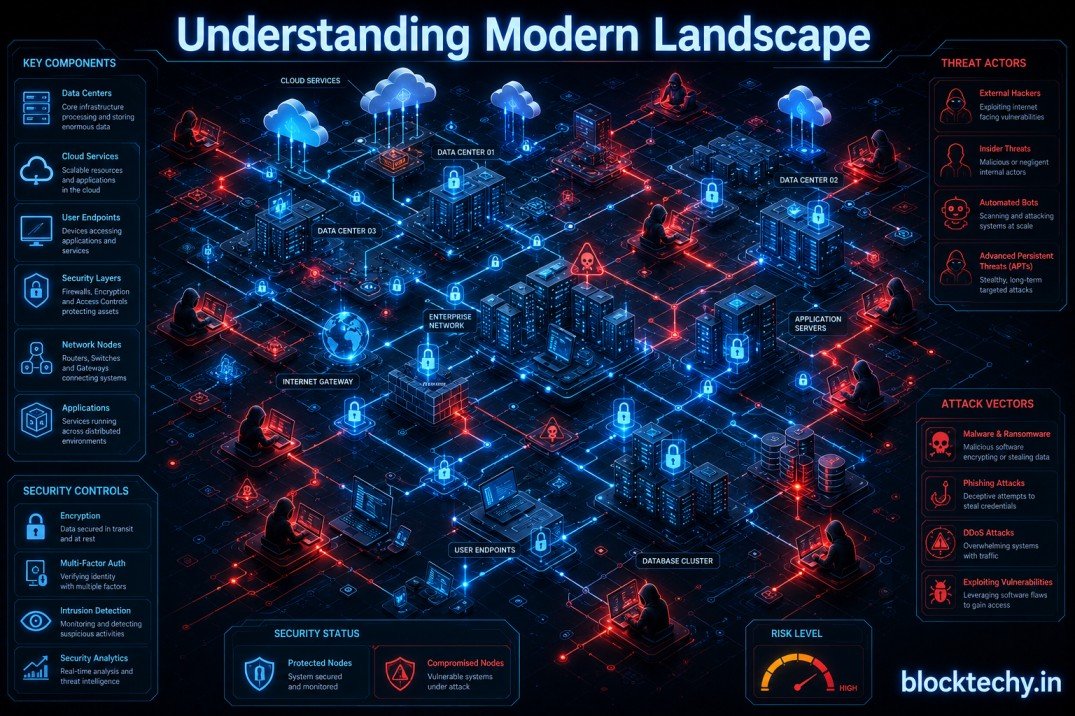
Understanding the Modern Cybersecurity Landscape
Cybersecurity refers to the practice of protecting computer systems, networks, software applications, and sensitive information from unauthorized access, attacks, and damage.
The increasing reliance on digital technologies has expanded the cyber threat landscape. Organizations now face threats from both individual hackers and highly organized cybercriminal groups.
Common Cybersecurity Threats
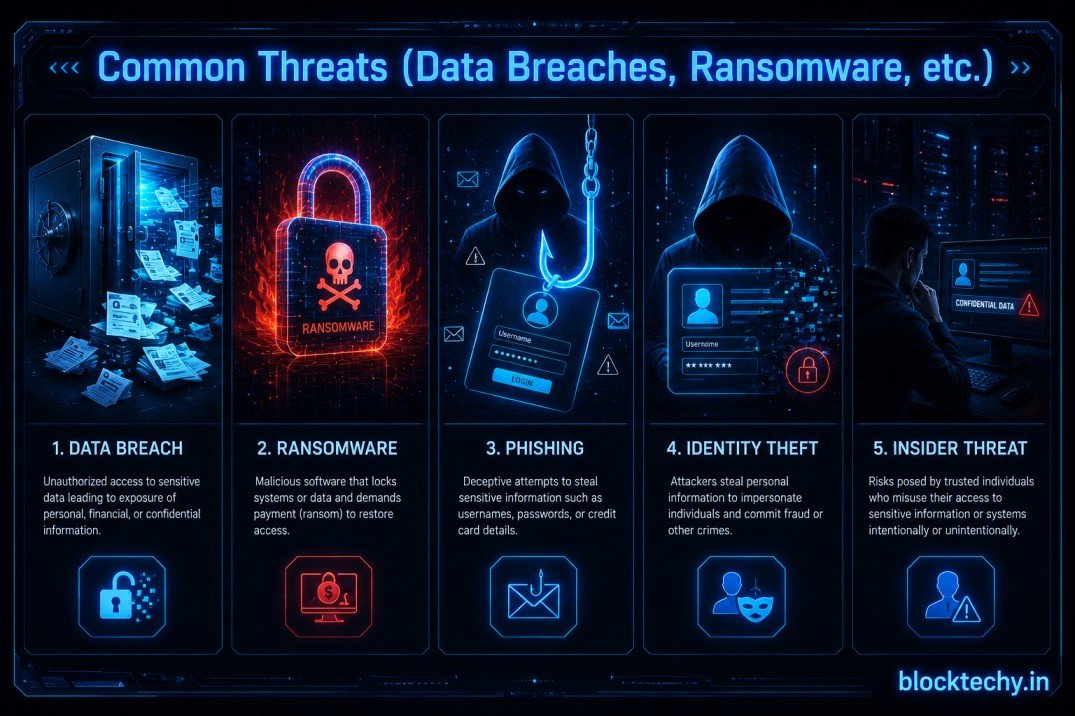
Data Breaches
Data breaches occur when unauthorized individuals gain access to confidential information such as customer records, financial data, passwords, or intellectual property.
These incidents can result in financial losses, legal consequences, and damage to an organization’s reputation.
Ransomware
Ransomware attacks involve malicious software that encrypts files and demands payment for their release.
These attacks have affected hospitals, government agencies, schools, and multinational corporations worldwide.
Phishing Attacks
Phishing involves deceiving users into revealing sensitive information through fraudulent emails, websites, or messages.
Cybercriminals often use social engineering techniques to trick victims into providing login credentials or financial information.
Identity Theft
Stolen personal information can be used to impersonate individuals, access accounts, and commit financial fraud.
Insider Threats
Employees, contractors, or trusted individuals may intentionally or unintentionally compromise organizational security.
The growing sophistication of these threats requires innovative approaches that go beyond traditional cybersecurity solutions.
What Is Blockchain Technology?
Blockchain is a decentralized digital ledger that records transactions across multiple computers within a network.
Unlike traditional databases, which are typically controlled by a central authority, blockchain distributes information among multiple participants. Every transaction is verified, recorded, and secured using cryptographic techniques.
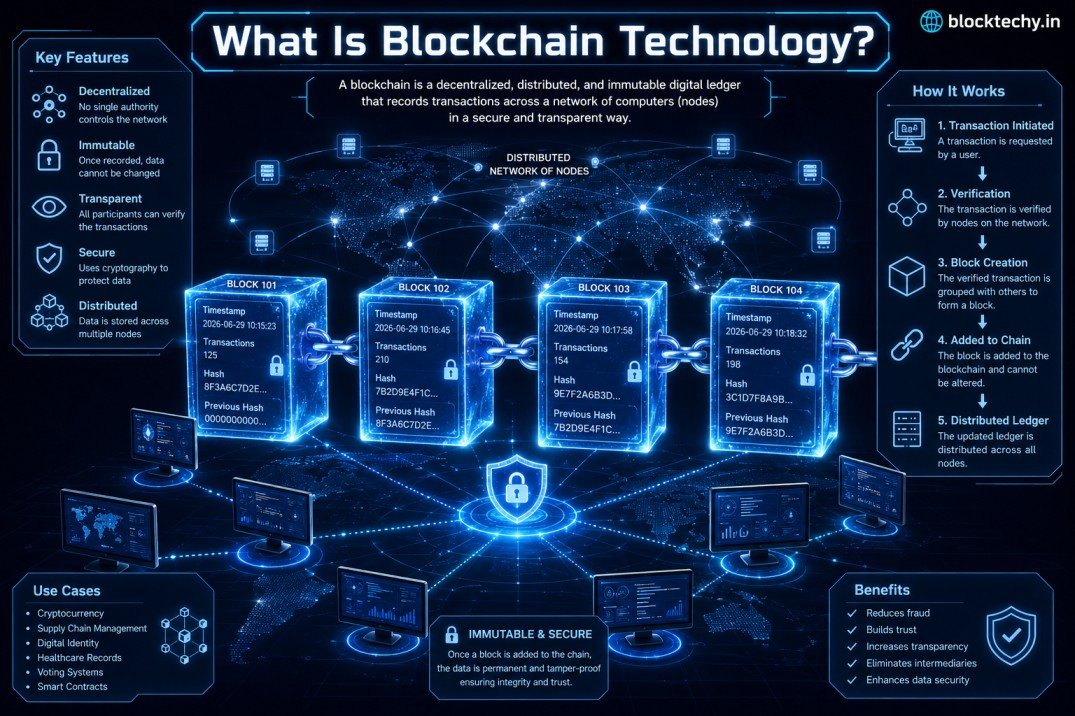
A blockchain consists of blocks that contain transaction data. Each block is linked to the previous block through a cryptographic hash, forming a secure chain of records.
The main characteristics of blockchain include:
Decentralization
Information is stored across multiple nodes instead of a single centralized database.
Immutability
Once data is recorded, it cannot be altered without consensus from the network.
Transparency
Transactions can be verified by authorized participants, increasing accountability.
Security
Advanced cryptographic techniques protect data and ensure transaction authenticity.
These features provide significant advantages when applied to cybersecurity.
Why Traditional Cybersecurity Needs Improvement
Most conventional cybersecurity systems rely heavily on centralized architectures.
For example:
- User credentials are stored in central databases.
- Critical applications depend on centralized servers.
- Sensitive information is often managed through a single authority.
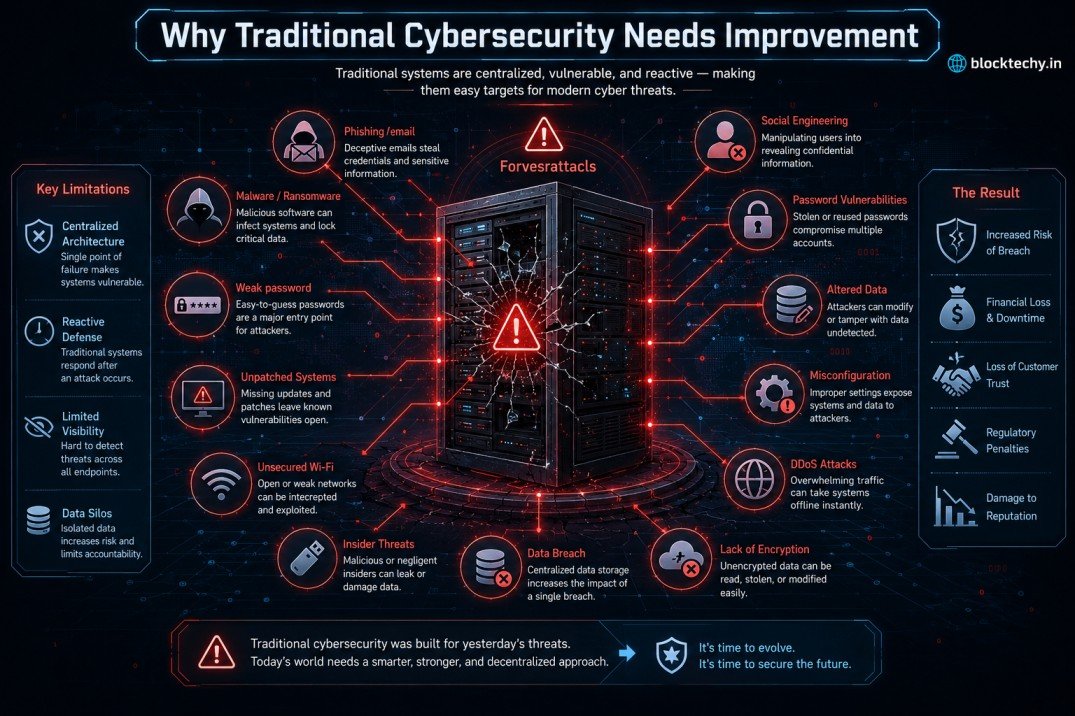
While centralized systems simplify management, they create attractive targets for cybercriminals.
Single Points of Failure
If attackers compromise a central server or database, they can potentially access vast amounts of information.
Many major cyber incidents have occurred because a single vulnerability allowed attackers to breach an entire system.
Limited Transparency
Organizations may struggle to verify whether records have been altered or manipulated after an attack.
Password Vulnerabilities
Traditional password-based authentication remains vulnerable to phishing attacks, credential theft, and password reuse.
Data Integrity Challenges
Ensuring that information remains accurate and untampered with is increasingly difficult in complex digital environments.
Blockchain addresses many of these challenges by fundamentally changing how data is stored, verified, and protected.
How Blockchain Is Transforming Cybersecurity
1. Eliminating Single Points of Failure
One of blockchain’s most important advantages is decentralization.
Traditional systems often depend on a central server or database. If attackers gain access to that system, they may compromise the entire network.
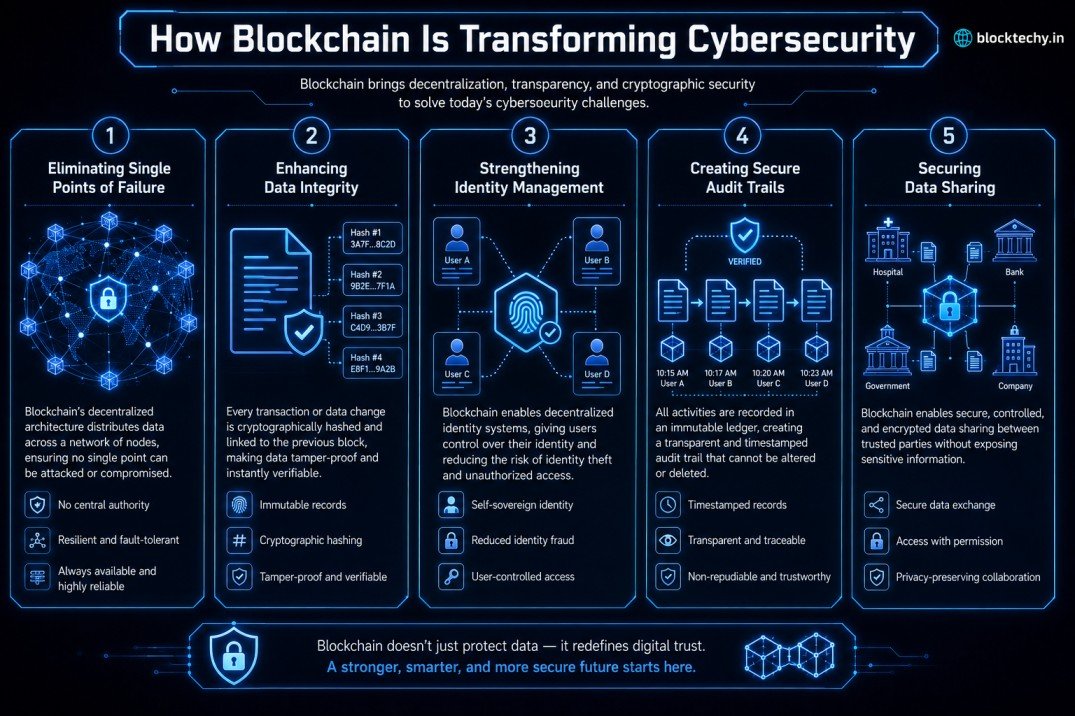
Blockchain distributes information across multiple nodes. Even if one node is attacked, the rest of the network continues to function securely.
This decentralized structure makes large-scale breaches significantly more difficult.
2. Enhancing Data Integrity
Data integrity is essential for maintaining trust in digital systems.
Blockchain records are immutable, meaning they cannot be modified without network consensus. Every transaction is linked to previous records through cryptographic hashes.
If an attacker attempts to alter information, the discrepancy becomes immediately visible.
This feature is especially valuable for:
- Financial records
- Medical data
- Government documents
- Legal contracts
- Supply chain information
3. Strengthening Identity Management
Digital identity has become a major cybersecurity concern.
Traditional identity systems often rely on usernames and passwords stored in centralized databases. These systems are vulnerable to hacking and credential theft.
Blockchain introduces decentralized identity management, allowing users to control their identities through cryptographic keys.
Benefits include:
- Reduced identity theft
- Enhanced privacy
- Stronger authentication
- Greater control over personal data
Decentralized identities represent a significant improvement over conventional authentication systems.
4. Creating Secure Audit Trails
Organizations must maintain accurate records of activities and transactions.
Blockchain automatically creates permanent, tamper-proof audit trails.
These records help organizations:
- Detect suspicious behavior
- Investigate security incidents
- Meet compliance requirements
- Improve accountability
The transparency of blockchain enhances trust and simplifies auditing processes.
5. Securing Data Sharing
Many organizations need to share sensitive information with partners, customers, and stakeholders.
Blockchain enables secure data sharing through encrypted transactions and permission-based access controls.
This reduces the risk of unauthorized access while maintaining transparency and control.
Blockchain Applications in Cybersecurity
Financial Services
The financial sector is one of the primary targets of cybercrime.
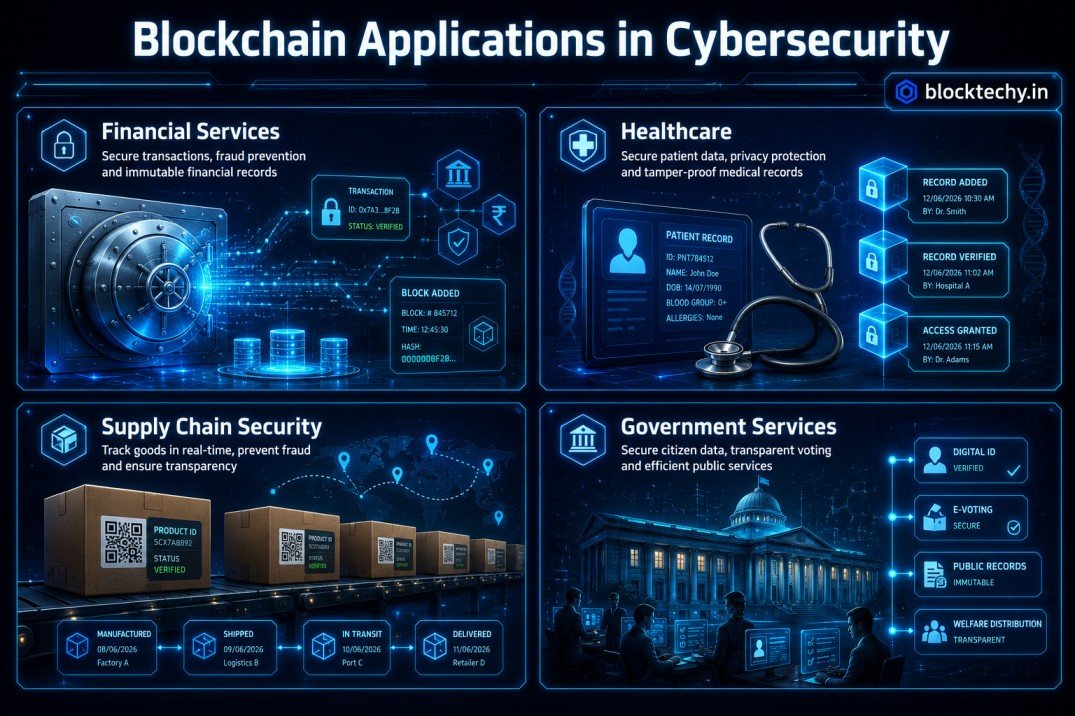
Blockchain improves financial cybersecurity by:
- Securing digital payments
- Preventing transaction fraud
- Enhancing identity verification
- Improving transparency
Many financial institutions are already exploring blockchain-based security solutions.
Healthcare
Healthcare organizations store highly sensitive patient information.
Blockchain can secure:
- Electronic health records
- Medical research data
- Insurance claims
- Prescription management systems
These capabilities improve patient privacy and data protection.
Supply Chain Security
Modern supply chains involve multiple organizations and large volumes of information.
Blockchain provides:
- Product traceability
- Fraud prevention
- Counterfeit detection
- Transparent record-keeping
Secure supply chains reduce risks and improve consumer trust.
Government Services
Governments manage vast amounts of sensitive citizen data.
Blockchain can support:
- Secure digital identities
- Election integrity
- Public record management
- Document authentication
These applications strengthen trust in public institutions.
Blockchain and the Internet of Things (IoT)
The Internet of Things (IoT) connects billions of devices to the internet, including smart homes, industrial equipment, healthcare devices, and transportation systems.
However, many IoT devices have weak security controls, making them attractive targets for cybercriminals.
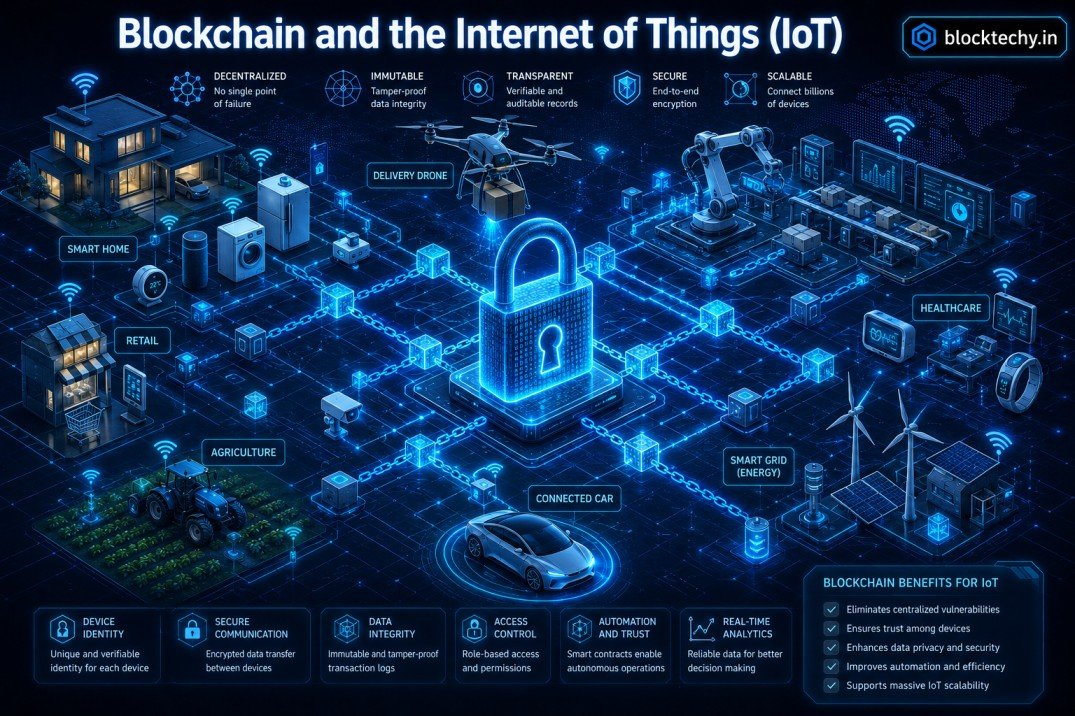
Blockchain helps secure IoT ecosystems by:
- Authenticating device identities
- Recording device activities
- Protecting communications
- Preventing unauthorized access
As IoT adoption grows, blockchain will become increasingly important for securing connected environments.
Blockchain and Artificial Intelligence
Artificial Intelligence (AI) is playing a growing role in cybersecurity by analyzing threats, detecting anomalies, and automating responses.

Blockchain and AI complement each other in several ways.
Improving Data Quality
AI systems depend on accurate data.
Blockchain ensures that data remains trustworthy and unaltered, improving AI reliability.
Securing AI Models
Cybercriminals may attempt to manipulate AI training data or algorithms.
Blockchain can maintain secure records of model updates and data sources, reducing the risk of tampering.
Enhancing Transparency
Blockchain can create transparent records of AI decisions, helping organizations improve accountability and trust.
The combination of blockchain and AI represents a powerful advancement in cybersecurity innovation.
Challenges of Blockchain Adoption
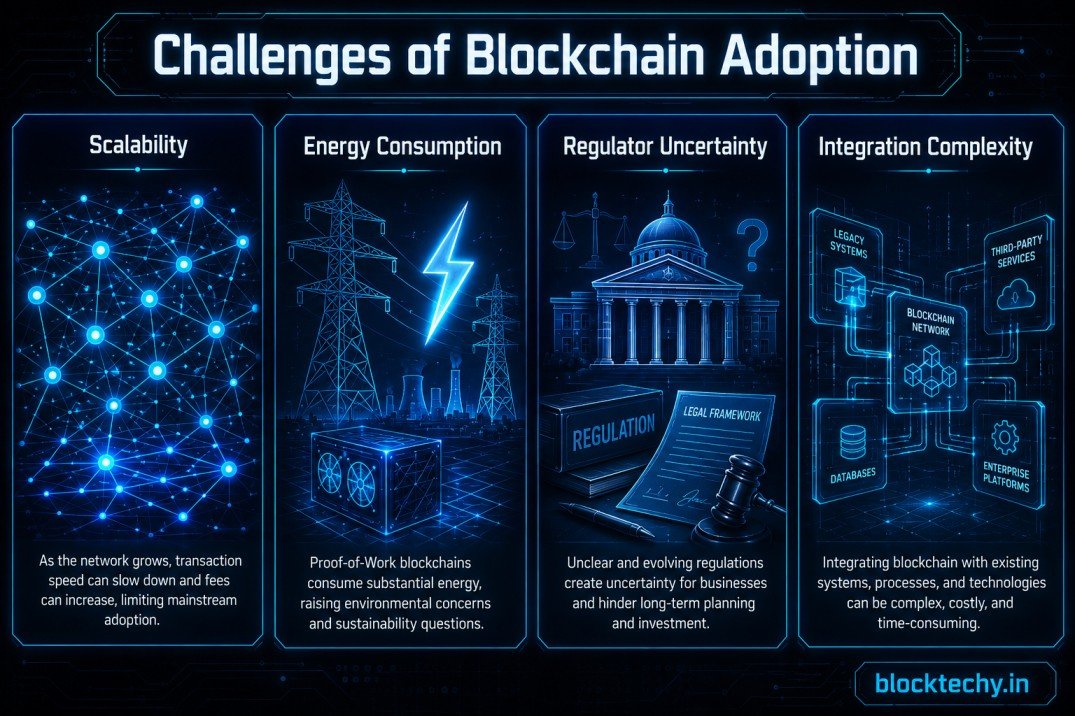
Despite its advantages, blockchain is not a perfect solution.
Scalability
Some blockchain networks experience performance limitations as transaction volumes increase.
Researchers continue to develop solutions that improve speed and efficiency.
Energy Consumption
Certain blockchain consensus mechanisms consume substantial amounts of energy.
More sustainable alternatives are being developed to address environmental concerns.
Regulatory Uncertainty
Governments worldwide are still developing regulations for blockchain technologies.
Organizations must navigate evolving legal and compliance requirements.
Integration Complexity
Implementing blockchain often requires significant technical expertise and infrastructure investments.
Organizations must carefully plan deployment strategies to maximize benefits.
The Future of Blockchain in Cybersecurity
Blockchain is expected to play an increasingly important role in future cybersecurity frameworks.
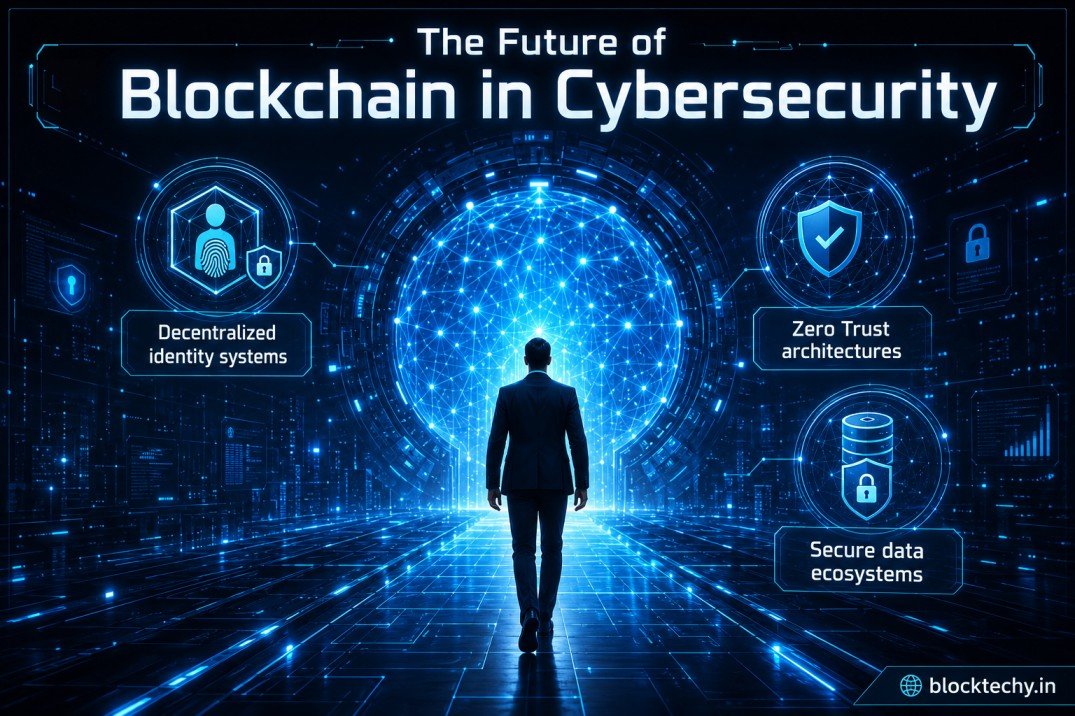
Several trends are driving adoption:
Decentralized Identity Systems
Blockchain-based identities may eventually replace traditional password systems.
Zero Trust Security
Blockchain supports Zero Trust architectures by continuously verifying identities and transactions.
Secure Digital Ecosystems
Organizations will increasingly rely on blockchain to create trusted environments for collaboration and data sharing.
Protection Against Emerging Threats
Blockchain’s decentralized architecture provides strong defenses against many forms of cybercrime and data manipulation.
As technologies continue to evolve, blockchain will likely become a foundational component of cybersecurity strategies worldwide.
Conclusion
The cybersecurity landscape is becoming increasingly complex as digital transformation accelerates and cyber threats grow more sophisticated. Traditional security measures remain important, but they often struggle to address challenges such as centralized vulnerabilities, identity theft, data manipulation, and lack of transparency.
Blockchain technology is changing the cybersecurity game by introducing a decentralized, transparent, and highly secure approach to managing information. Its ability to eliminate single points of failure, protect data integrity, secure identities, and create tamper-proof audit trails makes it one of the most promising innovations in digital security.
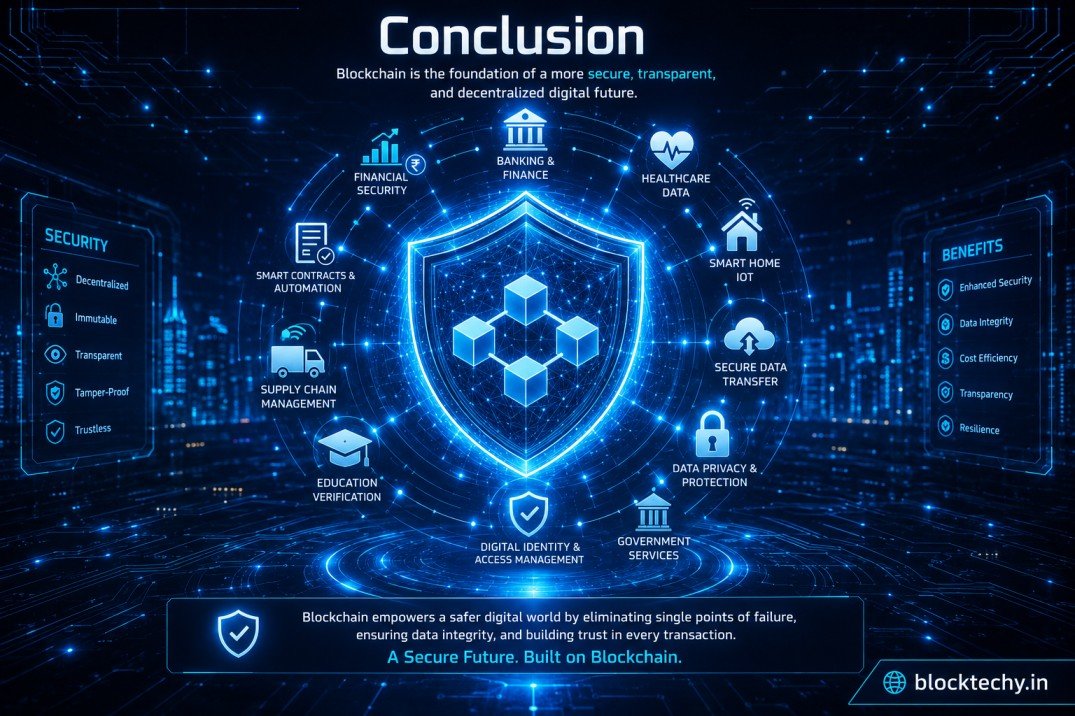
From financial services and healthcare to government systems and IoT networks, blockchain is already demonstrating its value in strengthening cybersecurity. Although challenges such as scalability and regulatory uncertainty remain, ongoing advancements continue to improve the practicality and effectiveness of blockchain-based solutions.
As organizations seek stronger defenses against evolving cyber threats, blockchain will play an increasingly important role in creating secure, trustworthy, and resilient digital environments. Its impact extends far beyond cryptocurrencies, positioning it as a transformative force in the future of cybersecurity.
Follow this link to join my WhatsApp group: https://chat.whatsapp.com/JvmrMTxkdgt9u6kGMT73XY